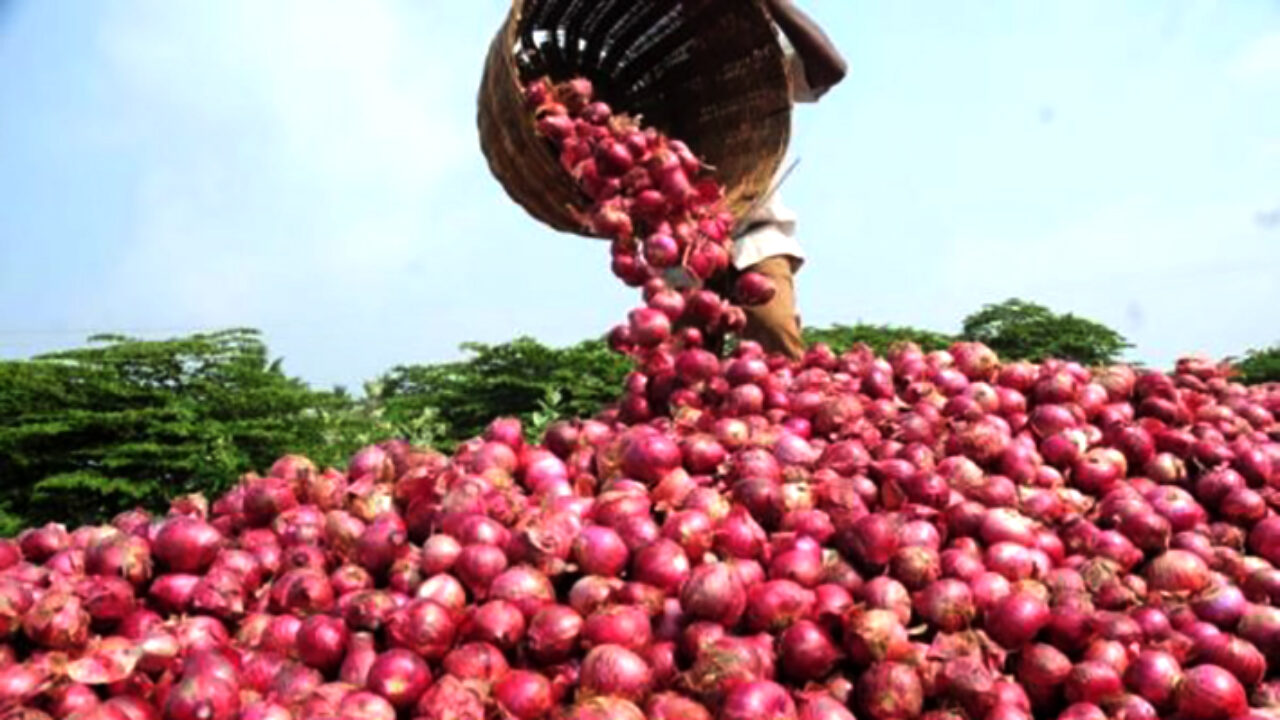

A growing trade conflict between Nigeria and Ghana over onions and tomatoes is exposing how fragile regional supply chains have become, as protectionist pressures and enforcement of local market laws disrupt access to key staples across West Africa. The suspension of onion exports by the National Onion Producers, Processors, and Marketers Association of Nigeria (NOPPMAN), following allegations of harassment of Nigerian traders in Accra, has collided with parallel calls in Ghana for import restrictions on tomatoes. Together, these developments point to a troubling shift toward inward-looking policies that threaten the very foundations of the Economic Community of West African States (ECOWAS) trade integration project.
At the centre of the onion dispute is Ghana’s retail trade law, which reserves small-scale trading for citizens. Enforcement actions against Nigerian traders operating directly in local markets triggered a backlash from producers and traders in Nigeria. What began as a domestic regulatory issue has now evolved into a cross-border trade conflict, highlighting how internal policy decisions can spill over into regional economic tensions. However, the roots of the current standoff lie deeper, in Nigeria’s own past decisions. The previous administration under President Muhammadu Buhari closed or heavily restricted the country’s land borders, and critics warned at the time that this would set a dangerous precedent that other African countries might copy for decades. That warning has now materialised. The current Ghana‑Nigeria tensions are a direct fallout from those earlier choices.
The damage such disputes inflict on traders’ working capital is severe. Perishable goods like onions and tomatoes cannot simply be stored until political disagreements are resolved. When trucks are held up at borders or markets, entire consignments can rot, effectively wiping out a trader’s business. There is also the risk that when formal channels are blocked, some actors may be tempted to use unsafe chemicals to preserve goods in transit, introducing additional health and safety risks into the supply chain. The economic risk is immediate and tangible. Disruptions to onion and tomato supply, both essential to everyday diets, could lead to sharp price increases, deepen food insecurity, and weaken gains made in stabilising inflation across the subregion.
The positions of key stakeholders reveal the depth of the rift. Isa Aliyu, President of NOPPMAN, addressing a press conference in Nigeria to announce the suspension of onion exports to Ghana, stated: “Our members have endured persistent harassment… the recent confiscation of our trucks is unacceptable and a clear violation of trade norms.” A formal joint statement issued by onion marketers’ associations in Sokoto on April 6, 2026, added: “This suspension will remain until there is a clear commitment to restoring a safe and lawful trading environment.” On the Ghanaian side, Anthony Morrison, CEO of the Ghana Chamber of Agribusiness, speaking on Channel One Newsroom, advocated for a ban on imported tomatoes, arguing: “Curbing imports would create space for local producers and agro-processing firms to expand… current import levels are undermining the domestic industry.”
Amid the tensions, there have been constructive moves toward resolution. Oscar Akaba, Cross-Border Traders Coordinator, announced a new roadmap to regulate cross-border trade following a high-level stakeholder meeting, stating: “The intervention by the Ministry of Trade is necessary… both countries have agreed to release trucks that were held up to restore trade flow.” As of April 10, 2026, both nations have reportedly begun releasing seized trucks, and the Ghanaian Ministry of Trade and Industry has formed a committee to develop a “structured roadmap” for future agricultural commerce to prevent local market clashes.
However, the human cost of the dispute is already visible. An anonymous Nigerian trader, interviewed by The Sun Nigeria after being stranded at the border due to truck confiscations, said: “This is our livelihood. To have our goods taken without explanation is devastating. Many traders are now stranded and counting losses.” On the other side, Imoro Sutan, Chairman of the Patriotic Onion Traders Union, explained why Ghanaian traders blocked Nigerian trucks at the Adjen Kotoku market: “If you live in a country, you follow the laws of the country. Nigerian traders are bypassing agreed systems and selling directly at lower prices.”
Neutral observers have urged caution. The Ecofin Agency, reflecting on the long-term impact of the dispute on the ECOWAS regional trade framework, noted: “Whether the scar in the minds of these two neighbors will heal depends on the willingness to formalize trade agreements beyond informal levels.” A Ghanaian market analyst, quoted in Graphic Online regarding the risks of immediate import restrictions on food prices, warned: “The government’s push for import bans is a double-edged sword; if we jeopardize food security before local production is ready, we are in trouble.” The Food and Agriculture Organisation and PFAG estimates provided statistical context, noting that “the exact share of Nigerian onions is hard to determine due to informal channels, but a prolonged disruption will push prices higher for the consumer,” with Ghana relying on imports for roughly 70 per cent of its onion needs, costing approximately $2 million weekly.
The contrast between moving goods within West Africa and trade inside Europe could not be starker. In Europe, goods often move freely because systems are built on trust and functioning agreements. In West Africa, by contrast, trucks can be stuck at borders for days or even months, and much of the actual trade is informal and unrecorded. West African trade routes long predate the colonial borders that now fragment the region, yet Nigeria has invested heavily in ports like Lekki to facilitate global trade while neglecting key land corridors such as the road to the Seme border, which underpins regional commerce.
West African countries, and Nigeria in particular, must confront the wrongs of the past. A necessary first step is for Nigeria to openly acknowledge that its earlier border closure policy was wrong and to apologise to its neighbours. As the region’s largest economy, Nigeria’s actions set norms for the entire subregion. If it does not correct course, other states will continue to resort to protectionist tactics that, over time, could cripple regional trade. Nigeria and its neighbours need robust protocols to prevent future unilateral blockages and to manage disputes without strangling trade in perishable goods. If it fails to act, rising protectionism will steadily undermine economic ties within West Africa, and the people who will suffer most are ordinary traders whose livelihoods depend on the free movement of goods across borders.