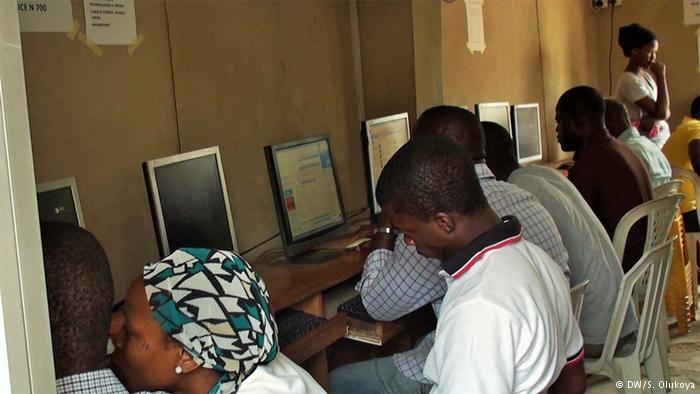

In the early 2000s, cyber cafés were at the centre of Nigeria’s digital awakening. At a time when personal computers were expensive, internet access at home was rare, and fixed telephone infrastructure was limited, these cafés became the primary gateway to the internet for millions of Nigerians.
The industry gained momentum after Nigeria liberalised its telecommunications sector in the late 1990s. Early internet service providers such as Skannet, Linkserve and IPNX helped expand internet access, while cyber cafés sprang up in cities and towns across the country to meet growing demand.
For many Nigerians, cyber cafés were more than places to browse the web. Students registered for WAEC, JAMB and university admissions, job seekers submitted online applications, families completed visa and passport forms, and entrepreneurs communicated with clients abroad through email and instant messaging platforms such as Yahoo! Messenger.
The industry’s fortunes began to change in the early 2010s as mobile telecommunications operators expanded 3G networks and affordable smartphones became widely available. Internet access gradually shifted from shared public spaces to personal mobile devices, fundamentally changing how Nigerians connected online.
Data from the Nigerian Communications Commission (NCC) illustrates the shift. Internet subscriptions have grown from just a few hundred thousand users in the early 2000s to well over 140 million active internet subscriptions in recent years, driven almost entirely by mobile broadband. At the same time, the use of cyber cafés has fallen to a negligible share of internet access, according to NCC consumer surveys.
Beyond changing consumer behaviour, cyber café operators also faced rising operating costs. Erratic electricity supply forced many businesses to depend on fuel-powered generators, while the cost of internet bandwidth and equipment maintenance continued to increase. As smartphones became cheaper and mobile data more accessible, fewer customers found it necessary to pay for internet access at business centres.
Some operators have survived by reinventing their businesses. Rather than relying solely on internet browsing, many now offer printing, scanning, document processing, passport photographs, computer training and other digital support services that continue to attract customers.
The evolution of cyber cafés also mirrors Nigeria’s broader digital transformation. Shared internet access has not disappeared entirely, it has simply evolved. Co-working spaces and innovation hubs now provide high-speed internet, reliable electricity and collaborative work environments for freelancers, startups and remote workers, serving a role that reflects the changing needs of a more digitally connected economy.
While the era of cyber cafés as Nigeria’s primary internet gateway has largely come to an end, their contribution to the country’s digital development remains significant. For millions of Nigerians, they provided a first introduction to the internet and helped lay the foundation for one of Africa’s largest and fastest-growing digital economies.