
The Federal Government has urged banks, fintech companies and other financial institutions to redesign their products for women, saying closing Nigeria’s gender financing gap could unlock an estimated $14.8 billion in annual economic value.
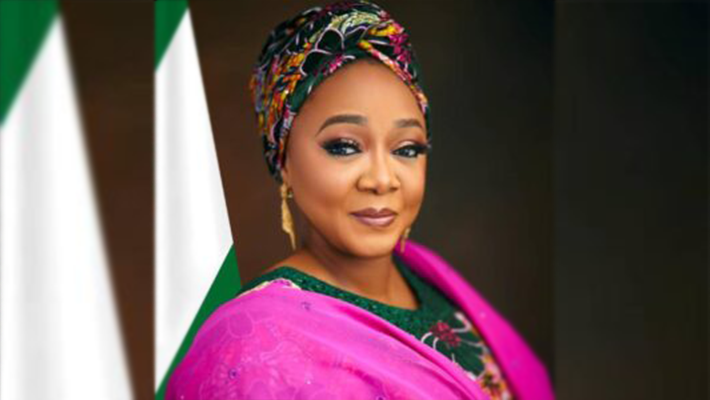
Women Affairs and Social Development Minister Imaan Sulaiman-Ibrahim made the call as the government intensifies efforts to expand women’s participation in the formal economy and support the growth of women-owned businesses.
The minister has previously cited the $14.8 billion estimate in reference to the potential economic value of closing the financing gap for women-owned small and medium-sized enterprises (SMEs).
Sulaiman-Ibrahim said conventional lending models often place heavy emphasis on physical collateral, an approach that can exclude women who lack sufficient assets to secure bank loans.
She urged financial institutions to consider alternative-data credit scoring, guarantee-backed lending and affordable interoperable payment systems that can help lenders assess businesses using transaction and cash-flow information rather than relying solely on conventional collateral.
The push reflects a broader effort to make women’s economic participation part of Nigeria’s growth strategy rather than treating gender inclusion as a social programme alone.
The government’s Nigeria for Women Programme Scale-Up is expected to extend the Women Affinity Group model to 4.5 million women organised into 300,000 groups nationwide, in partnership with the World Bank.
The figures from the programme’s first phase also illustrate the potential of group-based financial models. The government says more than 560,000 women were mobilised into over 26,000 groups, which collectively saved more than ₦4.9 billion and accessed about ₦15.6 billion in livelihood grants.
Sulaiman-Ibrahim has said her ministry is prepared to open programme pipelines to financial institutions seeking to test products at scale, potentially giving lenders access to organised groups of women entrepreneurs.
Vice-President Kashim Shettima has also linked women’s economic participation to President Bola Tinubu’s ambition of building a $1 trillion Nigerian economy, arguing that the target cannot be achieved without women playing a fuller role in productive activity.
For banks and fintechs, the opportunity extends beyond expanding credit. Better-designed financial products could deepen customer relationships, bring more women-owned businesses into the formal financial system and create new markets for payments, savings, insurance and investment services.
The challenge will be converting the estimated economic opportunity into commercially sustainable lending while managing credit risk and ensuring that women entrepreneurs receive financing on terms that allow their businesses to grow.
Nigeria’s gender-finance debate is therefore increasingly shifting from whether women should receive more financial support to how financial institutions can profitably serve an underserved market.