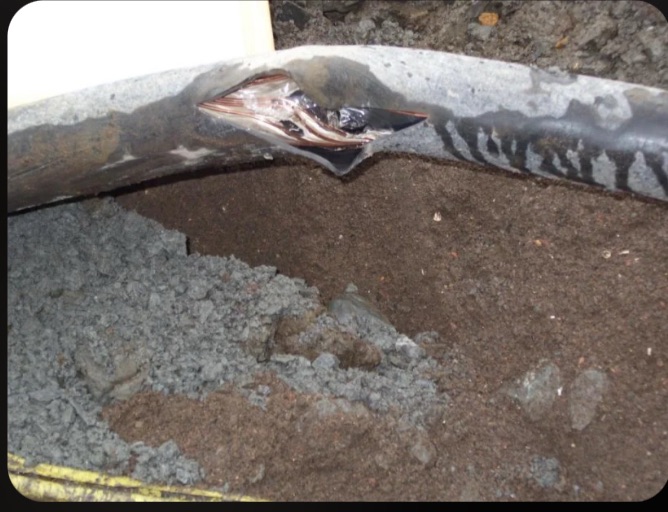

Every time an excavator bites into the wrong stretch of earth in Lagos, Abuja, or Port Harcourt, the damage rarely stops at a road contractor’s schedule. It travels — into bank ATMs that stop dispensing cash, POS terminals that freeze mid-transaction, hospital records systems that go dark, and call centres that lose their lines. Nigeria’s fibre-optic network, the physical backbone carrying the country’s calls, data and digital payments, is being severed at a rate regulators now describe as unprecedented — and the bill is landing squarely on businesses.
The Nigerian Communications Commission (NCC) says more than 5,000 fibre-optic cable cuts were recorded across the country in the first half of 2026 alone, with the regulator pointing to road excavation, construction and other civil works as the leading cause. But that figure, drawn from a mid-year stakeholder count, is dwarfed by data from the industry’s own quality-of-service tracking.
Telecom operators recorded more than 150,000 fibre-cut incidents across April and May 2026 alone — the highest two-month total on record — according to NCC quality-of-experience data reported by industry trackers. April saw 74,276 incidents, rising 6.5% to 79,121 in May. Vandalism accounted for more than 54,000 of those cases, degradation for over 40,000, cable and converter faults for roughly 30,100, and road construction for another 14,600 — a spread that shows this is not a single-cause problem but a structural one, blending criminality, ageing infrastructure and uncoordinated public works.
The scale of the jump is what has alarmed operators most. The two-month total represented a 2,428% increase compared to the first quarter of the year, when the industry recorded fewer than 6,000 cuts, or roughly 500 incidents per week. Earlier in the year, Nigerian telcos logged 577 network outages and 361 fibre cuts in the first quarter alone, with fibre cuts and power outages remaining the two leading causes of downtime. January was especially disruptive, with 238 outages — a 101.7% jump from December’s 118 — and fibre cuts responsible for 67.6% of that month’s incidents.
Fibre infrastructure underpins large parts of the Nigerian economy — banking, government services, education, healthcare, commerce, security and emergency communications — NCC Executive Vice Chairman Dr Aminu Maida said at a stakeholders’ workshop on fibre protection held in Abuja. Failed calls, lost internet access, disrupted digital payments, interrupted public services and lost business all add to the economic cost of every cut, he noted, framing the problem in terms accountants would recognise rather than purely as a technical nuisance.
Maida was direct about who ultimately pays: a damaged fibre cable is not simply a cost to the operator that owns it, but a cost to Nigerians and the wider economy. He compared it to a buried cable that looks insignificant to an excavator operator but whose destruction can trigger failed calls, delayed payments, service outages and lost business opportunities for companies that never touched the construction site.
The clearest illustration of that spillover risk dates back to February 2024, still cited by regulators as the industry’s cautionary tale. Multiple simultaneous fibre cuts caused by road construction triggered a near-nationwide outage for a leading telecom provider, stranding millions of subscribers for hours and pushing displaced users onto competing networks, which then buckled under the extra load. That cascading effect showed how a fault on one operator’s network can strain the entire telecommunications system, not just the company directly affected.
This is not a new phenomenon so much as a worsening one. MTN Nigeria alone suffered more than 6,000 cuts to its fibre cable in 2023, prompting the company to relocate 2,500 kilometres of vulnerable cable between 2022 and 2023 at a cost of more than ₦11 billion — enough, industry analysts noted, to have built 870 kilometres of entirely new fibre links in areas still without coverage. By August 2024, Airtel Nigeria’s then-CEO Carl Cruz told an industry forum that the company was recording an average of 1,000 fibre-cut cases every month, each one carrying its own repair cost and revenue loss.
At the city level, Lagos — Nigeria’s commercial capital and the epicentre of its fintech and e-commerce activity — carries a disproportionate share of the damage. The state recorded more than 2,500 fibre cuts in a single year, with commercial districts including Ikeja, Lekki and Victoria Island among the hardest hit because of ongoing road construction and private property development, while Alimosho and the Mainland have emerged as hotspots for outright cable theft and vandalism. Nationally, the industry lost at least $23 million to fibre cuts in 2023 — a figure that predates the record-breaking incident count logged in April and May of this year, suggesting the true 2026 cost could run considerably higher once operators disclose full-year losses.
Nigeria has deployed close to 78,700 kilometres of fibre-optic cable nationwide, concentrated in urban corridors such as Lagos, Edo, the Federal Capital Territory, Ogun and Niger state — a network that, on paper, should be capable of carrying the country’s growing digital economy. In practice, both regulators and operators say the problem is less about capacity and more about protection.
Maida told the Abuja workshop that the scale of the incidents demands stronger coordination among telecommunications operators, road contractors, government agencies, regulators and security institutions to protect what is now classified as critical infrastructure. He was careful to frame the issue as a systems failure rather than a fight over blame, noting that road contractors do not set out to cut off communities, just as telecom operators do not intend to obstruct construction work — the real fix, he argued, is a reliable coordination system that brings road builders, network operators and government bodies together before excavation begins and throughout a project’s execution.
The legal framework is already in place to back that up. The Office of the National Security Adviser’s Director of Critical National Security and Infrastructure Protection, Effiom Ewa, confirmed that fibre-optic infrastructure has been formally designated as critical national information infrastructure, and warned that damage caused by negligence or interference could constitute a criminal offence under Nigerian law.
For a company running POS terminals, cloud-hosted payroll, or customer support lines, a fibre cut two states away can still mean an afternoon of failed transactions and furious customers. As Nigeria’s digital economy — from banking apps to logistics platforms to remote work — leans more heavily on always-on connectivity, the physical vulnerability of the cables underneath it is becoming as material a business risk as foreign exchange volatility or power supply. Until road contractors, telcos and government agencies actually synchronise their digging schedules, the next four-hour outage is less a question of “if” than “which commercial district gets hit next.”