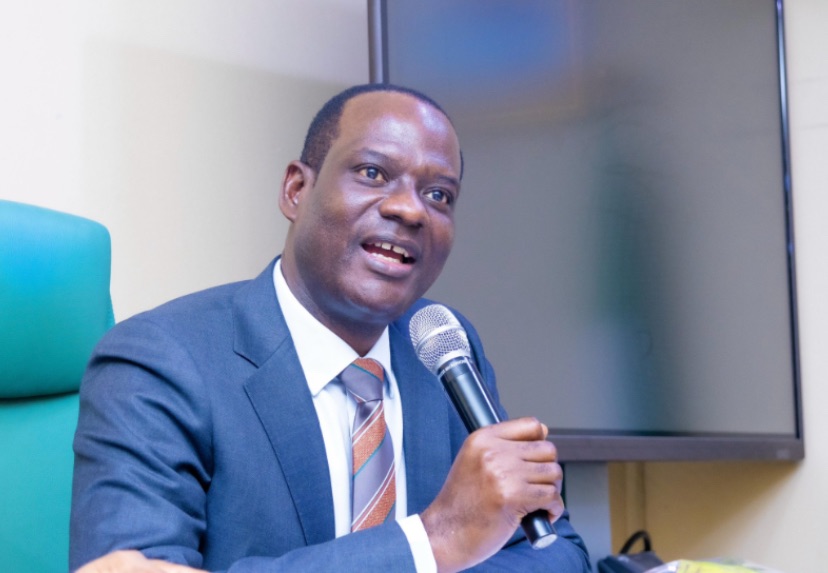

The Minister of Finance and Coordinating Minister of the Economy, Taiwo Oyedele, has defended the Federal Government’s $5 billion financing arrangement with First Abu Dhabi Bank, saying the facility was properly approved and is mainly designed to reduce the cost of Nigeria’s existing debt.
Oyedele spoke during a media briefing in Abuja, where he dismissed concerns that the government should provide a separate spending breakdown for the funds obtained through the facility.
The Federal Government has so far drawn about $1.5 billion from the $5 billion Total Return Swap arrangement. The facility was approved by the National Assembly on March 31, 2026, with the government expected to use the funds for areas including budget financing, infrastructure and refinancing of existing debt.
Oyedele said there was nothing unusual about the transaction, noting that the government regularly borrows through different channels, including Eurobonds, World Bank loans and Sukuk.
According to him, the First Abu Dhabi Bank facility has attracted unusual attention despite going through the required approval process.
He argued that the transaction was presented to the National Assembly and therefore was not carried out secretly or outside government procedures.
The minister also explained why the government was drawing the funds in stages rather than taking the entire $5 billion at once.
He said taking more money than the government could immediately use would create additional costs. By accessing the facility gradually, the government can limit the amount of interest and other charges it incurs.
Oyedele further explained that the financing arrangement differs from Nigeria’s traditional fixed-rate borrowing.
Unlike some existing Eurobonds, which carry fixed interest rates, the Abu Dhabi facility has a flexible rate. This means Nigeria could pay more if interest rates rise but could also benefit if rates fall.
The minister said the overall cost of the facility is lower than the cost of some existing government debts. He maintained that the main purpose is to refinance more expensive obligations and ultimately reduce the government’s borrowing expenses.
However, the arrangement has attracted concerns from international institutions. The International Monetary Fund and Fitch Ratings have questioned aspects of the financing structure, particularly transparency and the potential risks to Nigeria’s public debt.
Under the agreement, Nigeria is required to provide securities worth about 133 per cent of the amount drawn as collateral.
The IMF has previously raised concerns about derivative-based financing because such arrangements can be difficult to monitor and value, while Fitch warned that the facility could create additional sovereign debt risks and make debt reporting less transparent.
Oyedele rejected the suggestion that the transaction lacks transparency. He said the Ministry of Finance and the Debt Management Office would publish frequently asked questions to explain the facility and address concerns surrounding it.
The minister said the government wants Nigerians and investors to understand how the arrangement works and why it was chosen.
For the Federal Government, the central argument remains that the facility is not simply about adding new debt. Rather, it is being presented as a tool for replacing more expensive borrowing with financing that could lower the government’s overall debt-servicing costs.