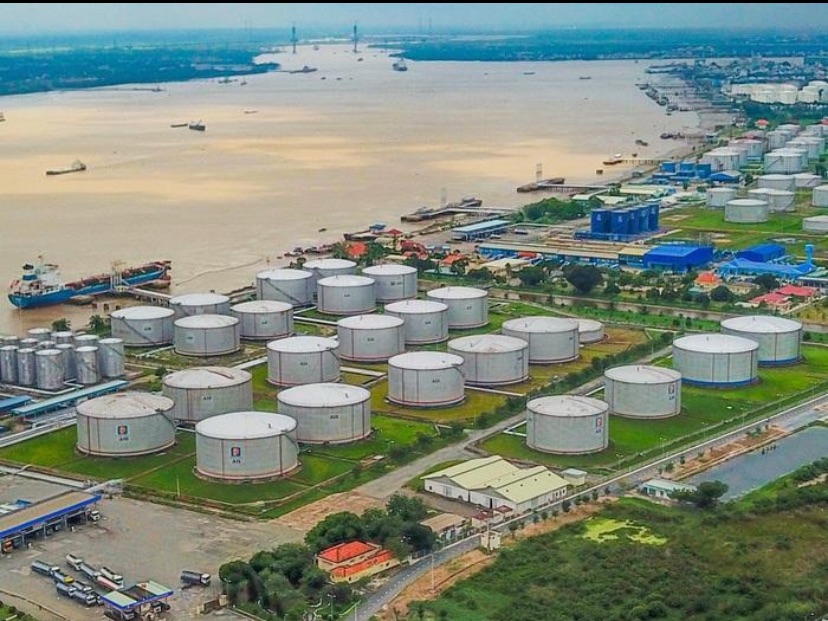

Nigeria is expected to receive about 154.2 million litres of imported Premium Motor Spirit (PMS) this week as five fuel vessels prepare to arrive at ports in Lagos and Calabar. The fresh shipments highlight that fuel importation remains an important part of the country’s energy supply despite the growing output from local refineries.
According to the latest shipping schedule released by the Nigerian Ports Authority (NPA), the vessels are expected to deliver a combined 115,000 metric tonnes of petrol between Monday and Wednesday.
Most of the vessels will berth at the KLT Phase 3A Terminal in Tin Can Island Port, Lagos, while another is scheduled to arrive at the North West Petroleum & Gas terminal in Calabar.
The latest imports come shortly after the Dangote Petroleum Refinery resumed selling petrol in naira instead of dollars. The refinery explained that the move was made to help stabilise fuel supply and prevent possible shortages after noticing that some importers were allegedly delaying the release of their products in anticipation of higher market prices.
According to a source familiar with the refinery’s operations, the decision was taken in the national interest and was not linked to an improvement in crude oil availability.
The source said the refinery decided to resume naira sales after observing that some fuel importers were waiting for petrol prices to rise before releasing their imported products into the market.
The continued arrival of imported petrol shows that marketers are still relying on international suppliers to complement local production under Nigeria’s deregulated downstream petroleum market.
The NPA schedule shows that the vessel LESTE will deliver 30,000 metric tonnes of petrol, while BORA is expected with another 10,000 metric tonnes at the Tin Can Island terminal.
Two additional vessels, ST ILHAAM and STELLAR, are also scheduled to discharge 30,000 metric tonnes each, bringing the total volume expected at Tin Can Island to 100,000 metric tonnes.
Another vessel, SL AREMU, is expected at the Calabar terminal with 15,000 metric tonnes of PMS. However, the shipping schedule indicates that the vessel is currently listed as “INB,” a shipping term that may suggest it is not yet carrying cargo and could be preparing for loading operations.
Using the industry’s standard conversion rate, the total expected cargo is equivalent to approximately 154.2 million litres of petrol.
Breaking down the figures, each vessel carrying 30,000 metric tonnes will supply roughly 40.23 million litres of fuel, while the 10,000-metric-tonne shipment equals about 13.41 million litres. The 15,000-metric-tonne cargo expected in Calabar represents approximately 20.12 million litres.
Industry experts say the continued importation of petrol is not unusual under the deregulated market. Marketers are free to purchase products from either local refineries or foreign suppliers, depending on availability, pricing and commercial advantages.
Although the Dangote Refinery has significantly increased local refining capacity and government-owned refineries are gradually returning to operation, imported fuel still plays a role in maintaining stable supplies across the country.
Petroleum marketers have also noted that imports help create healthy competition, improve supply security and reduce the risk of shortages whenever local production is unable to meet nationwide demand.
The Nigerian Midstream and Downstream Petroleum Regulatory Authority (NMDPRA) has repeatedly maintained that the downstream petroleum market remains open to qualified operators. The regulator also insists that petrol prices should continue to reflect prevailing market conditions under the deregulated system.
With both domestic production and imported supplies available, Nigerians are expected to enjoy a more stable fuel market while competition among suppliers could help improve product availability across different parts of the country.