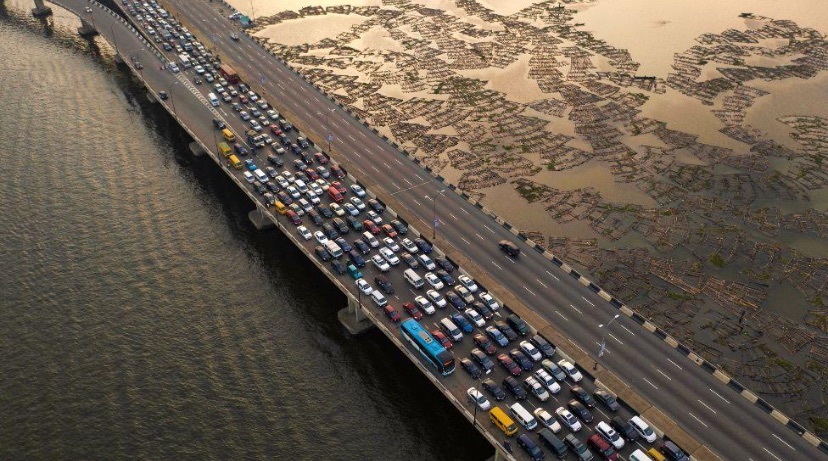

Lagos traffic is more than just a daily frustration. The endless hours spent on congested roads are quietly costing businesses billions of naira through lost productivity, wasted fuel, delayed deliveries and higher transportation expenses.
Lagos, Nigeria’s commercial hub, is home to about 20 million people and plays a major role in the country’s economy. But its growing population and limited road network have created severe pressure on the city’s transport system.
The result is a traffic problem that affects almost every part of business activity.
Research by the Danne Institute for Research, in partnership with the Financial Derivatives Company, found that Lagos workers spend an average of 2.21 hours in traffic every working day.
With about 6.39 million employed residents, that amounts to more than 14 million productive hours lost every day.
For businesses, those lost hours can mean fewer sales, missed deadlines, reduced productivity and employees spending less time doing actual work.
The research estimates that the wider economic cost of traffic congestion could be around ₦4 trillion every year when lost productivity, fuel consumption, vehicle maintenance and missed business opportunities are considered.
Traffic also forces motorists to burn more fuel while travelling shorter distances.
For businesses that depend on cars, trucks, dispatch riders and delivery vehicles, this creates an additional operating cost.
A delivery rider travelling between areas such as Lekki and Ikeja, for example, may spend hours covering a journey that should take much less time.
For companies making several deliveries every day, these extra fuel expenses quickly add up and can eventually push up the prices paid by customers.
Traffic congestion is particularly damaging to businesses that depend on the movement of goods.
Perishable products can spoil when deliveries are delayed, while companies transporting goods through busy areas can face additional charges and missed delivery schedules.
The Apapa port corridor is a major example. Heavy traffic around the area has historically caused long delays for trucks and cargo operators.
These delays can increase logistics costs and affect businesses that depend on regular supplies to keep their operations running.
The impact of congestion is not limited to employers.
Workers who spend several hours commuting may have to pay higher transport fares because of longer journey times and increased fuel consumption.
Businesses that provide transport allowances, staff buses or fuel support also feel the pressure as commuting costs rise.
For many employees, traffic means leaving home earlier, returning later and having less time for family and personal activities.
Small and medium-sized businesses are among those most affected.
Money lost to fuel, delays, transportation and reduced working hours could otherwise be used to buy more stock, employ additional workers or expand operations.
For a small business operating on tight margins, these hidden costs can make the difference between making a profit and struggling to stay afloat.
Solving Lagos’ traffic problem will require more than simply constructing new roads.
Experts have suggested remote work, staggered working hours, better logistics planning, improved public transportation and greater use of Lagos’ waterways as possible solutions.
If more workers could work remotely even a few days a week, the pressure on major roads could fall significantly.
Until major changes are made, Lagos businesses will continue paying the hidden price of congestion.
Every hour spent sitting in traffic represents lost time, wasted fuel and money that could have been used to grow the economy.