
Kwara State is stepping up efforts to transform livestock farming into a commercial industry, targeting higher productivity, increased dairy production, job creation and improved incomes for farmers and pastoralists.
Speaking in Ilorin on Tuesday, 8 September 2026, Kwara Commissioner for Livestock Development Oloruntoyosi Thomas said the government’s objective was to move the state from livestock keeping to a commercially driven livestock economy.
Thomas said average milk production had increased from 274.5 litres per cow per year at baseline to 352.2 litres in 2025, representing a 28.3 per cent increase. She also said average cattle carcass weight rose from 135kg to 190.8kg, while sheep carcass weight increased from 14.2kg to 23.7kg.
According to The Punch, which reported Thomas’ presentation on 8 September, 238,718 cattle, sheep, goats and poultry had been vaccinated against major livestock diseases, with more than 1,100 farmers benefiting. Thomas said the state had also trained 1,509 livestock farmers and established 10 integrated ruminant farming clusters equipped with facilities including water systems, livestock housing and pasture demonstration sites.
She added that 8,951 people had been profiled across selected livestock value chains and about 100 engagements had been held with communities and other stakeholders since L-PRES activities began in October 2023.
The state is also targeting a major expansion of dairy production. In May 2026, Thomas told journalists that Nigeria produces about 600,000 metric tonnes of milk annually, against estimated demand of 1.7 million tonnes. She said Nigeria spends more than $1.5 billion annually on milk imports, while Kwara is targeting 100,000 metric tonnes of dairy production, which she estimated could contribute about $150 million to the state economy.
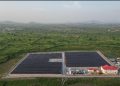
Infrastructure is another part of the strategy. On 4 April 2025, SAPZ State Coordinator Busari Isiaka said Kwara and the Islamic Development Bank were investing $57.2 million in an agricultural transformation project covering livestock production and beef and milk processing. The project includes five local government areas: Ifelodun, Kaiama, Baruten, Asa and Moro.
Kwara also ranked first among the 20 participating states in the final L-PRES performance assessment announced in January 2026. The assessment was conducted by the National Coordination Office in collaboration with the World Bank.
The government says the broader goal is to move livestock beyond subsistence production and build a stronger commercial value chain covering animal health, feeding, production, processing and markets.