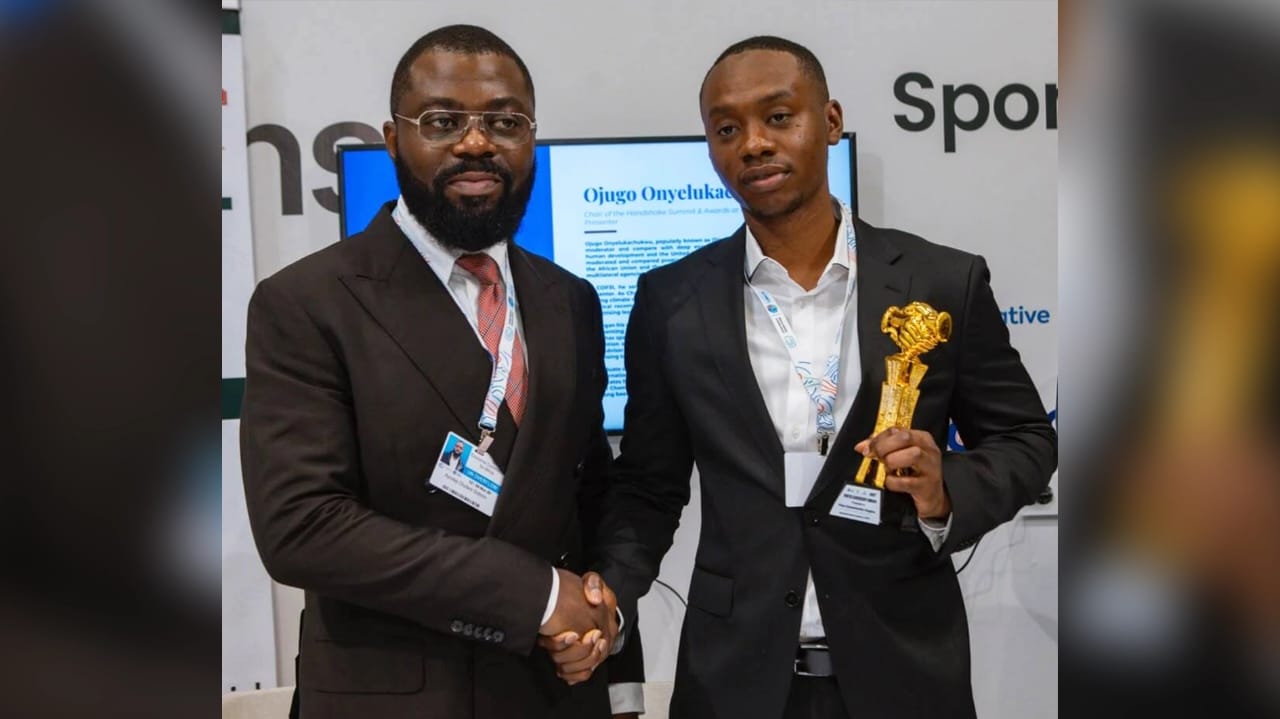

Ignova Energies has called on African governments, development finance institutions, and private investors to scale up funding for clean energy projects, warning that inadequate capital and weak policy frameworks are slowing the continent’s shift toward reliable and sustainable electricity.
In a statement issued on Tuesday, November 24, 2026, the company’s Chairman, Henry Ozonyia, made the call following his participation at the 31st United Nations Climate Change Conference of the Parties (COP31) in Antalya, Turkey, where he represented Nigeria.
Reflecting on engagements with government officials, financial sector representatives, and international development stakeholders at the summit, Ozonyia said Africa’s growing power demand cannot be met by public budgets alone. Greater private-sector participation, he noted, is essential to expanding electricity access, building renewable infrastructure, and lowering power costs across the continent.
“The conversation must now shift from what Africa intends to do about climate change to what it is actually building, financing and delivering,” Ozonyia said. “Our success should be measured by the investments attracted, the infrastructure developed, the businesses strengthened and the opportunities created for our people.”
Ignova Energies identified limited financing, infrastructure deficits, and perceived investment risks as major barriers preventing African economies from fully harnessing their solar, wind, hydroelectric, and geothermal resources.
To attract long-term capital, the firm urged policymakers to establish predictable regulations, targeted investment incentives, and risk-mitigation frameworks. It also pointed to blended finance, risk guarantees, and long-term funding instruments as vital tools for making clean energy projects commercially viable.
Beyond grid-scale generation, Ignova Energies highlighted the need for investment in battery storage, digital energy management, and decentralised electricity systems to reach underserved and remote communities where conventional grid infrastructure remains inadequate.
The financing gap cited by the company aligns with data from the International Energy Agency (IEA). In its report, Financing Clean Energy in Africa, published on September 6, 2023, the agency found that while Africa accounts for roughly 20% of the world’s population, it attracts less than 2% of global clean energy spending. The IEA also flagged high borrowing costs and scarce early-stage and equity funding as primary obstacles to project development.
Under the agency’s Sustainable Africa Scenario, the continent requires more than $200 billion in annual energy investment by 2030 to meet its energy and climate goals. Of that total, $90 billion in private capital must be mobilised each year, supported by about $28 billion in concessional finance. The IEA further estimates that annual spending on energy access alone must reach nearly $25 billion by 2030 to achieve universal access to modern electricity.
Ozonyia emphasised that private-sector engagement should extend beyond capital deployment to include technology transfer, workforce training, and support for domestic supply chains, ensuring the energy transition drives industrial growth and youth employment. He added that clean energy strategies must be tailored to the specific economic and infrastructure realities of individual African countries rather than following a uniform template.
During the summit, Ozonyia was also recognised at the Handshake Summit, where he received a leadership and sustainable development award presented by the Managing Director and Chief Executive Officer of Nigeria’s Bank of Agriculture (BOA), Ayodeji Oludare Sotinrin.