
Troops of the Nigerian Army have arrested three suspected high-tension electricity cable vandals in Abia State, amid growing concerns over attacks on critical national assets and renewed efforts by the Federal Government and lawmakers to curb the illegal scrap-metal trade.
The suspects were apprehended on Monday, November 23, 2026, during an ambush operation along the Ahaba–Abia State University (ABSU) Road in Isuikwuato Local Government Area. According to a statement issued the same day by the 14 Brigade of the Nigerian Army, Ohafia, troops of the 143 Battalion acting under Operation Eastern Sanity executed the operation after receiving credible intelligence at the Mgbelu Responsibility Area.
The Army identified the suspects as Ikenna Ogbonna, 38, Daniel Ogbonna, 26, and Chinedu Eyinna, 24, all reportedly from Afikpo Local Government Area of Ebonyi State. Items recovered from them included an Infinix mobile phone, ₦25,000 in cash, metal-cutting equipment, nine empty sacks, and extra clothing. The allegations against the suspects remain unproven at this stage, and their arrest does not constitute a conviction.
The arrests come barely a month after another major security operation in Isuikwuato, where troops arrested 19 suspected pipeline vandals along the Nkwonta axis. According to a report published by the Isuikwuato Local Government Area on October 26, 2026, the suspects were intercepted on October 23 while attempting to load stolen underground pipeline infrastructure onto a heavy-duty trailer.
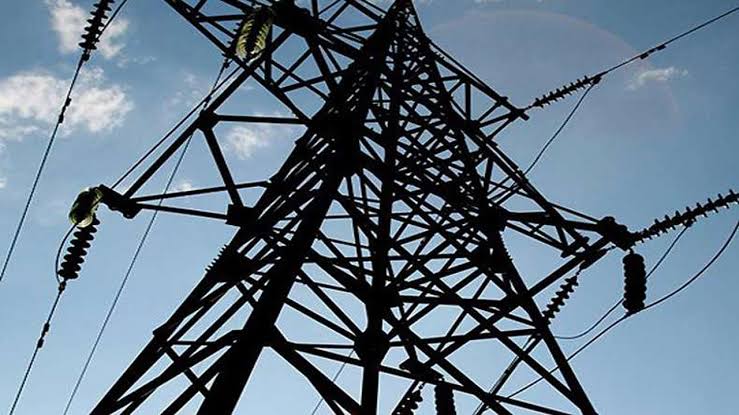
These repeated incidents reflect broader vulnerabilities across Nigeria’s power and energy networks, with transmission facilities facing sustained attacks nationwide. The Transmission Company of Nigeria (TCN) disclosed that 10 transmission towers along the Kano–Bauchi, Kano–Katsina, and Kano–Kaduna 330kV lines were vandalised between May and September 2026. Speaking during a community sensitisation campaign reported by THISDAY on October 29, TCN’s Kano Regional General Manager, Muhammad Bello, noted that the destruction disrupted electricity supply and cost the company millions of naira in repairs.
In response to the mounting losses, the House of Representatives moved on November 17 to investigate the destruction of the 10 transmission towers alongside other attacks on infrastructure operated by TCN and the Niger Delta Power Holding Company. According to a Premium Times report on November 17, the probe will assess the extent of the damage, financial losses, repair costs, and existing preventive measures, while directing relevant committees to review controls on the purchase, sale, and recycling of stolen transmission components.
Complementing the legislative inquiry, the Federal Government is moving to tighten oversight of the scrap-metal value chain. At a stakeholders’ validation meeting in Lagos on November 9 and 10, the Ministry of Steel Development presented the draft Scrap Metal (Collection, Trading, Recycling and Regulation) Regulations, 2026.
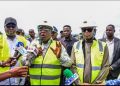
Designed to improve transparency and deter trade in stolen public assets, the framework, which remains at the draft stage and has not yet become law, aims to sanitise the sector without undermining the livelihoods of legitimate small-scale collectors, Minister of Steel Development Shuaibu Audu stated in a November 10 Voice of Nigeria report.
Together, the arrests, legislative probe, and regulatory push underscore growing pressure on security agencies, utility operators, and policymakers to safeguard critical infrastructure and dismantle the illicit markets driving infrastructure theft.