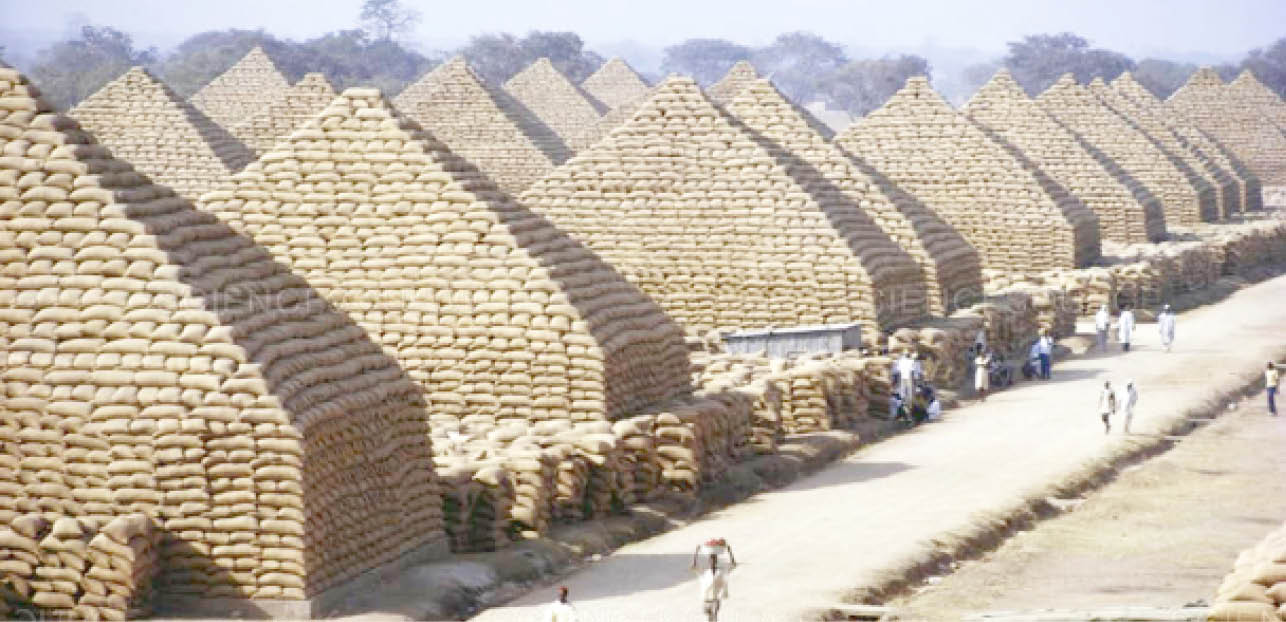

Long before crude oil defined Nigeria’s economic identity, the country’s most striking export symbol rose from the plains of Kano: towering stacks of neatly bagged groundnuts, arranged in geometric precision to form what became known as the groundnut pyramids.
From the 1930s through the 1960s, these pyramids, each built from tens of thousands of 200-pound jute sacks, stood as visible proof of Northern Nigeria’s dominance in global groundnut trade. Farmers across Kano, Kaduna, and the wider Sahel belt cultivated the crop as a cash export, feeding demand in Europe for cooking oil and animal feed. At their peak, the pyramids numbered in the dozens, some reaching heights that made them local landmarks and tourist curiosities.
The trade was structured through colonial-era marketing boards, which purchased groundnuts from farmers at fixed prices and organized their transport via the Nigerian Railway Corporation to Lagos and Port Harcourt for export. Kano’s pyramids became so synonymous with the trade that they appeared on postcards and in newsreels as emblems of Nigerian productivity.
The discovery and commercial exploitation of crude oil in the late 1950s and 1960s gradually eroded this agricultural base. As petrodollars flowed into federal coffers, government investment and policy attention shifted decisively toward hydrocarbons. Groundnut marketing boards were dissolved, infrastructure supporting the trade fell into disrepair, and by the 1970s the pyramids had largely disappeared from Kano’s skyline.
Today, the groundnut pyramids are frequently invoked in Nigerian policy discourse as shorthand for a lost era of agricultural self-sufficiency and export diversification. Analysts and lawmakers cite them when arguing for renewed investment in groundnut, sesame, and other non-oil agricultural exports, particularly as Nigeria seeks to reduce its dependence on volatile oil revenues. Kano State has periodically floated initiatives to revive groundnut cultivation at scale, though production volumes remain well below their historical peak.
The pyramids’ legacy endures less as physical monuments than as a reference point, a reminder that Nigeria’s economic history includes a period when agricultural exports, not crude oil, anchored the nation’s trade balance.