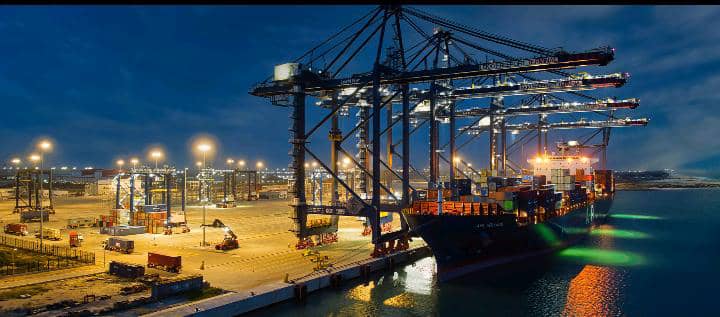

The Federal Government (FG) is exploring a major redesign for the Lekki Deep Seaport access road. Rather than building a three-kilometre bridge over a non-flowing lagoon, officials are now considering backfilling the lagoon to create solid ground for the road. This proposal emerged amid talks involving the Ministry of Works, China Harbour Engineering Company (CHEC), Lagos State, and other key stakeholders.
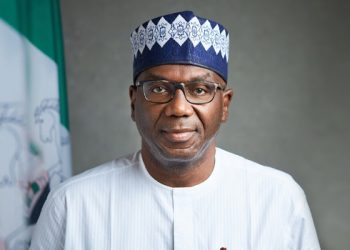
During a recent inspection, the Minister of Works, Senator Dave Umahi, revealed that discussions are underway to replace the planned bridge with landfill across the lagoon. He noted that environmental and technical challenges had been taken into account in the road’s original design.
The 25-kilometre access road links the Lekki Deep Seaport to Epe and Ijebu-Ode. The full project spans about 50 km, built as a six-lane dual carriageway. It was initially designed with major bridges, including the 3 km structure under reconsideration.
Under the current plan, CHEC would finance roughly 70% of the project cost through an Engineering, Procurement, Construction and Finance (EPC+F) model, while the government has already paid about 30%. The Minister affirmed that once the road is complete, tolls will help repay the loan.
According to ministerial sources, the feasibility study for the road confirmed strong traffic demand, suggesting that toll revenues could make the road self-sustaining. CHEC is expected to have the “right of first refusal” during the operation and maintenance phase.
One challenge is a shrine located along the corridor, which has reportedly caused some delays. Minister Umahi stated unequivocally: “If the people do not remove this one, I will come and remove it myself.”
On the technical side, China Harbour’s design uses Continuously Reinforced Concrete Pavement (CRCP) to manage the heavy industrial traffic expected from cargo trucks accessing the port. The Ministry of Works is also navigating issues around nearby gas pipelines supplying the Dangote Refinery and the free trade zone.
Supporters of the lagoon backfilling claim it could significantly reduce construction costs and time. However, critics warn of long-term environmental impacts on local ecosystems and water flows. The government has not yet confirmed whether environmental impact assessments will be updated to reflect the change.
If approved, the fill option could reshape how the access road is built and potentially accelerate completion, but balancing fiscal savings with ecological responsibility will be a key challenge.
By choosing to backfill instead of build a bridge, the FG could cut construction costs, speed up delivery, and repay debt faster via tolls. Considering Lekki Port is projected to generate up to $200 billion over 45 years, such savings could boost the port’s profitability and economic returns