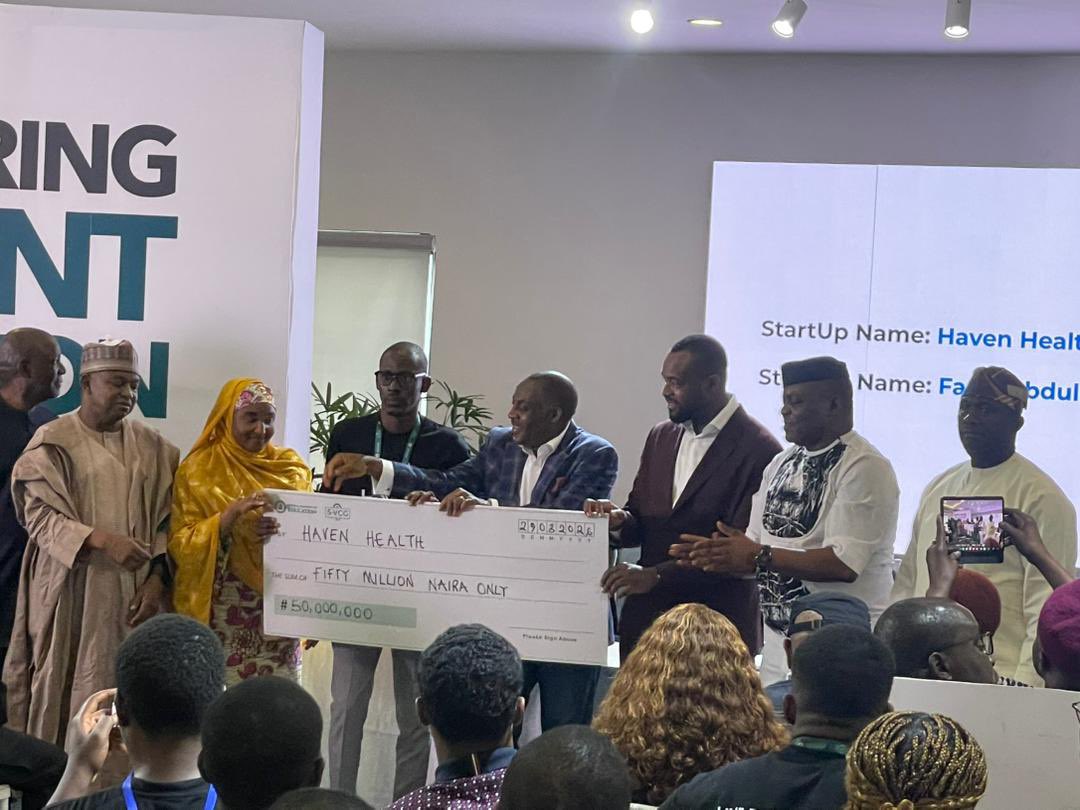

The Federal Government has awarded ₦2.25 billion to 45 students selected from a pool of finalists across Nigeria’s tertiary institutions under the Student Venture Capital Grant (S-VCG) programme.
Each awardee was given a ₦50 million grant. Speaking at the unveiling held at the UNDP Innovation Hub in Ikoyi, Lagos, Minister of Education, Tunji Alausa, described the initiative as a major step toward positioning Nigerian youths as drivers of global innovation.
According to him, the programme reflects a shift in education policy, focusing on entrepreneurship and innovation rather than traditional academic outcomes.
“Today is not just another programme event. Today, we are activating a new future and a new vision for Nigerian students. Great ideas should not die in classrooms but be nurtured into impactful solutions for our society,” Alausa said.
The grant provides equity-free funding alongside mentorship, incubation support, and access to digital tools, aimed at helping students transform ideas into viable businesses. Alausa noted that beneficiaries were selected from over 30,000 applicants across more than 400 institutions and had undergone a rigorous bootcamp before pitching their ideas to industry experts.
He added that the initiative is designed to move students from ideation to commercialisation, enabling them to become job creators and contributors to national economic growth.
Administered by the Federal Ministry of Education, the programme targets startups tackling challenges in sectors such as agriculture, healthcare, logistics, and financial technology.
Minister of State for Education, Suwaiba Ahmad, described student entrepreneurship as a critical strategy for job creation and economic development.
“Student entrepreneurship represents a powerful intersection between knowledge and action,” she said, urging institutions to prioritise real-world problem-solving.
Also speaking, Minister of Communications and Digital Economy, Bosun Tijani, commended the initiative for bridging the gap between theory and practice in education.
He advised beneficiaries to focus on building sustainable ventures rather than chasing short-term rewards.
“Believe in the principle of compounding. Do small things consistently; they accumulate and become meaningful outcomes,” Tijani said.
In her goodwill message, Elsie Attafuah, Resident Representative of the United Nations Development Programme, reaffirmed support for the initiative, noting its potential to strengthen Nigeria’s innovation ecosystem.
“What lies ahead is not the conclusion of the journey but the beginning of a far more demanding phase,” she said.
She urged beneficiaries to refine their ideas, engage with markets, and build scalable solutions that address real societal needs. The programme is supported by partners including UNDP, Google, and the Bank of Industry, as part of broader efforts to promote innovation and youth-driven enterprise in Nigeria.