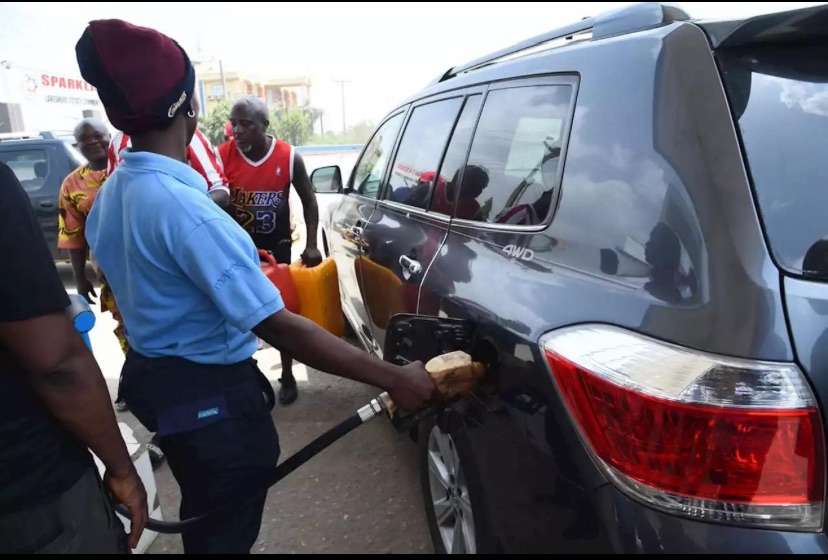

The Federal Government spent a total of N11.85 billion on fuel for vehicles and generators between January and April 2026, highlighting the growing impact of rising energy costs on public finances.
Data obtained from the Open Treasury Portal showed that fuel expenses during the four-month period increased by 113.4 percent compared to the N5.55 billion recorded during the same period in 2025. The sharp rise reflects the effect of higher petrol prices, exchange rate pressures, and global oil market uncertainties linked to tensions in the Middle East.
The Open Treasury Portal, which tracks government spending and budget implementation, revealed that spending on vehicle fuel alone rose significantly. Between January and April 2026, government agencies spent N6.60 billion on fuel for official vehicles, up from N3.17 billion during the corresponding period of 2025.
In April alone, spending on vehicle fuel reached N2.94 billion, compared to N1.73 billion in April of the previous year. The Federal Government also increased its annual budget allocation for vehicle fuel from N122.63 billion in 2025 to N207.37 billion in 2026.
Generator fuel costs followed a similar trend. Government agencies spent N5.24 billion on fuel for power-generating plants and generators during the first four months of 2026, more than double the N2.38 billion spent during the same period last year.
The increase reflects the continued dependence of many government institutions on generators due to unreliable electricity supply across the country. In April 2026 alone, spending on generator fuel stood at N2.99 billion, compared to N1.37 billion in April 2025.
Combined, the government allocated N393.18 billion for vehicle and generator fuel in the 2026 budget, representing a 73.2 percent increase from the N227.02 billion budgeted in 2025.
Beyond vehicles and generators, spending on other fuel-related items also surged. Fuel expenses for aircraft, boats, transport equipment, and cooking gas rose dramatically from N2.35 billion in the first four months of 2025 to N19.13 billion during the same period in 2026.
Aircraft fuel spending climbed to N8.01 billion, while sea boat fuel costs increased to N8.76 billion. The figures underline the broader impact of rising fuel prices on government operations across multiple sectors.
Maintenance expenses also increased sharply. The Federal Government spent N4.39 billion on maintaining vehicles, transport equipment, generators, and plants between January and April 2026. This represented a 164 percent increase from the N1.66 billion spent in the corresponding period of 2025.
Experts say the rise in fuel and maintenance costs is placing additional pressure on public finances at a time when government resources are already stretched by debt servicing obligations, security spending, and personnel costs.
The increase in petrol prices has been largely linked to developments in the global oil market. According to data from the National Bureau of Statistics, the average retail price of petrol rose by 45.8 percent between February and April 2026, moving from N1,051.47 to N1,532.93 per litre.
Despite calls for intervention, the Federal Government has maintained its commitment to market-based pricing of petroleum products. Officials argue that fuel prices should continue to reflect market realities rather than government subsidies.
As fuel costs continue to rise, industry stakeholders are increasingly advocating for alternatives such as electric vehicles, compressed natural gas (CNG), solar-powered systems, and renewable energy solutions. Supporters believe these alternatives can reduce operating costs, improve energy efficiency, and lessen dependence on petrol and diesel.
Recent easing of tensions in the Middle East has led to a decline in global crude oil prices, prompting industry groups to call for reductions in local petrol prices. Marketers argue that consumers should benefit from lower international oil prices as market conditions improve.
For now, however, the latest government spending figures highlight the growing financial burden that fuel and energy costs continue to place on public institutions and the wider economy.