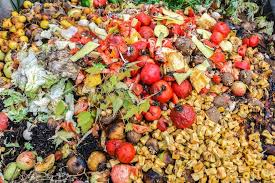

The European Union, in partnership with the federal government and the United Nations Industrial Development Organisation, has called for urgent action to curb food waste and promote sustainable consumption in Nigeria, warning that food waste not only squanders resources such as water, energy, and labour but also accelerates climate change and undermines efforts toward a zero-waste circular economy. The call comes as a Cadre Harmonisé report by the Nigerian government in collaboration with the Food and Agriculture Organization and Food Security Sector partners projected that 34.7 million people would face severe food shortages between June and August 2026.
Speaking in Abuja during the commemoration of International Zero Waste Day, EU Deputy Ambassador to Nigeria and ECOWAS, Zissimos Vergos, said Nigeria wastes about 38 million tonnes of food annually, more than any other country in Africa. Globally, he said nearly one billion tonnes of food, about one fifth of all food available to consumers, was wasted in 2022 alone. He added that food loss and waste contribute up to 10 per cent of global greenhouse gas emissions and nearly 40 per cent of methane emissions.
From an economic perspective, the paradox of high food waste coexisting with widespread hunger represents a profound market failure. Nigeria spends scarce foreign exchange on food imports while domestically produced food is lost due to inadequate storage, processing, and transportation infrastructure. Post harvest losses, particularly for perishable crops such as tomatoes, peppers, and leafy vegetables, can reach 40 to 50 per cent in some regions. These losses represent wasted inputs, including seeds, fertiliser, water, labour, and energy, and they reduce the income of farmers while increasing prices for consumers who must pay for the smaller proportion of produce that reaches markets.
Vergos acknowledged Nigeria’s efforts, including the Circular Economy Roadmap and moves to strengthen waste management policies, but stressed the need for more action. He recommended investment in rural roads, storage and cold chains, promotion of agro processing, and inclusion of zero waste education in school curricula. These recommendations target the structural causes of food waste. Better roads reduce transit times and damage to produce. Cold storage allows farmers to hold produce until prices are favourable rather than selling immediately at whatever price is offered. Agro processing converts perishable crops into shelf stable products such as tomato paste or dried vegetables, extending their useful life and creating value added employment.
Minister of Environment, Balarabe Lawal, described food waste as a major environmental, economic, and social challenge, especially amid widespread food insecurity. He said the government is implementing projects to reduce post harvest losses in major markets. UNIDO’s Country Representative, Amb. Philbert Johnson, noted that efficient food systems are critical for economic growth, health, and societal stability, warning that waste weakens resilience and development.
The 38 million tonnes figure places Nigeria in an unenviable position as Africa’s largest food waster. Addressing this challenge requires coordinated action across multiple sectors, including agriculture, transportation, energy, education, and trade. The EU’s call for urgency is timely, as the projected food shortages in 2026 will make every tonne of food saved a matter of potential life and death for vulnerable populations.