


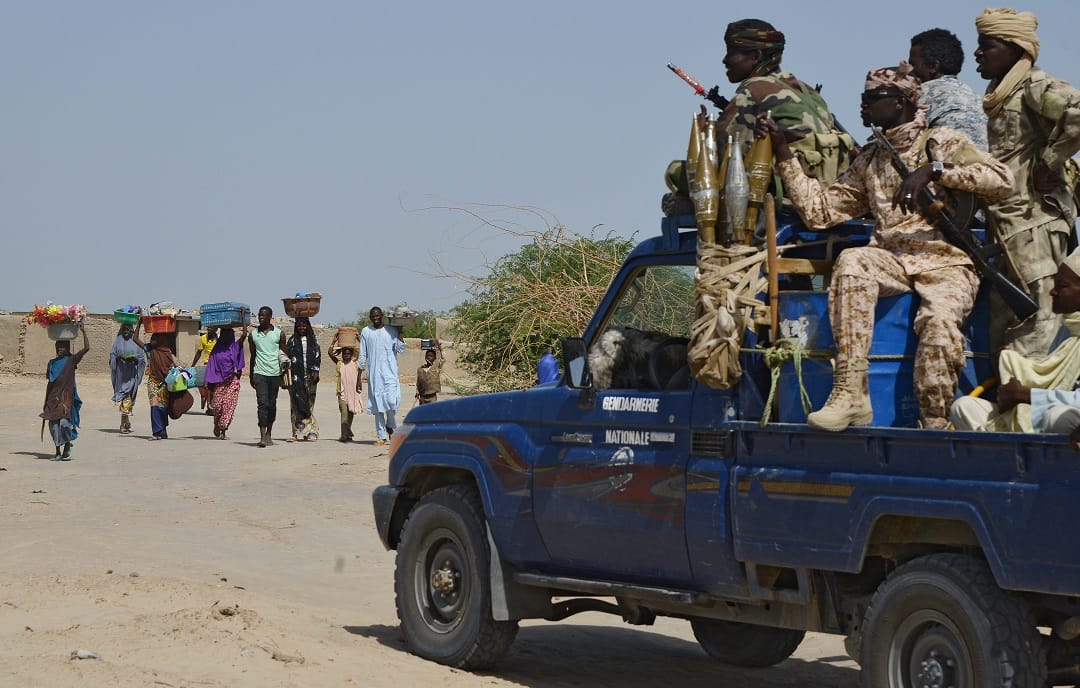

Clashes between Chadian government forces and a southern rebel group have left at least six people dead, highlighting persistent instability in a country already grappling with political uncertainty, regional insecurity and economic strain.
Fighting broke out early on Tuesday in Korbol, in Chad’s Moyen-Chari region, following an encounter between the army and fighters from the Movement for Peace, Reconciliation and Development. The Chadian military said three soldiers were killed and 10 were wounded. The group’s leader, Luc Beyam Bebha, confirmed that three rebel fighters were also killed and two were injured.
According to Remadji Hoinathy, a researcher at the Institute for Security Studies, the violence began when an army column moving towards rebel positions was ambushed. He said the military had recently reinforced its presence in the area, which lies close to the border with the Central African Republic, reflecting growing concern in N’Djamena over the group’s activities.
The Movement for Peace, Reconciliation and Development said it had received an ultimatum from the authorities on Sunday to surrender. Founded in 2003, the group operates mainly in southern Chad and has long opposed the country’s political system, calling for the overthrow of the current order.
Although Chad is more commonly associated with rebel movements advancing from the north or east, the latest fighting underscores the extent to which insecurity has spread across the country. Chad has been ruled by the same family for more than three decades, first under Idriss Déby Itno, who seized power in 1990 and ruled until his death on the battlefield in 2021, and now under his son, Mahamat Idriss Déby. The younger Déby was installed as transitional president by the military and later declared the winner of a 2024 election that was boycotted by much of the opposition and criticised by observers.
Southern Chad has historically been marginalised in political and economic terms, and analysts say this has contributed to recurring unrest. Rebel groups in the region often draw support from local grievances linked to exclusion from power, limited economic opportunities and heavy-handed security responses by the state.
The latest clashes also carry economic implications for one of Africa’s poorest countries. Chad’s economy is heavily dependent on oil revenues, which account for the bulk of government income and export earnings. Persistent insecurity raises the cost of doing business, discourages foreign investment and diverts scarce public resources towards military operations rather than social services and development spending.
Violence in border regions such as Moyen-Chari is particularly disruptive to local economies. The area relies largely on agriculture, cross-border trade and livestock rearing, all of which are highly sensitive to insecurity. Military operations and rebel activity can force farmers off their land, disrupt markets and restrict movement, undermining food production and household incomes.
Analysts warn that renewed instability could also affect regional trade routes linking southern Chad to the Central African Republic and Cameroon. Disruptions along these corridors would raise transport costs and worsen inflationary pressures at a time when many households are already struggling with rising prices.
For the government, maintaining security is closely tied to fiscal stability. Defence spending has risen steadily in recent years, squeezing budgets for health, education and infrastructure. Any escalation in fighting risks further stretching public finances, particularly as Chad faces limited access to international credit and relies heavily on external support.
The security situation also has implications for Chad’s international partnerships. The country has long been a key Western ally in the fight against Islamist militancy in the Sahel, hosting foreign troops and participating in regional counterterrorism efforts. However, persistent internal rebellions complicate this role and raise questions about the state’s ability to project authority across its territory.
Human rights groups have previously accused Chadian security forces of abuses during operations against rebel groups, allegations the government denies. Such claims risk further straining relations with donors and international financial institutions, whose support remains crucial for Chad’s economic survival.
For residents of the Moyen-Chari region, the immediate concern is safety. Past clashes between the army and rebel groups have often led to displacement, with civilians fleeing villages to escape fighting or reprisals. Aid organisations warn that renewed violence could exacerbate humanitarian needs in a country already facing food insecurity and limited access to basic services.
The government has yet to announce whether it will pursue negotiations or intensify military operations against the Movement for Peace, Reconciliation and Development. Analysts say a purely military response risks fuelling further resentment in the south, while dialogue without meaningful political reform may fail to address the underlying causes of rebellion.
As Chad continues its fragile transition, the fighting in Korbol is a reminder that political legitimacy, security and economic stability are deeply intertwined. Without progress on inclusive governance and development, analysts warn, sporadic clashes such as these are likely to persist, undermining both national cohesion and long-term economic prospects.


