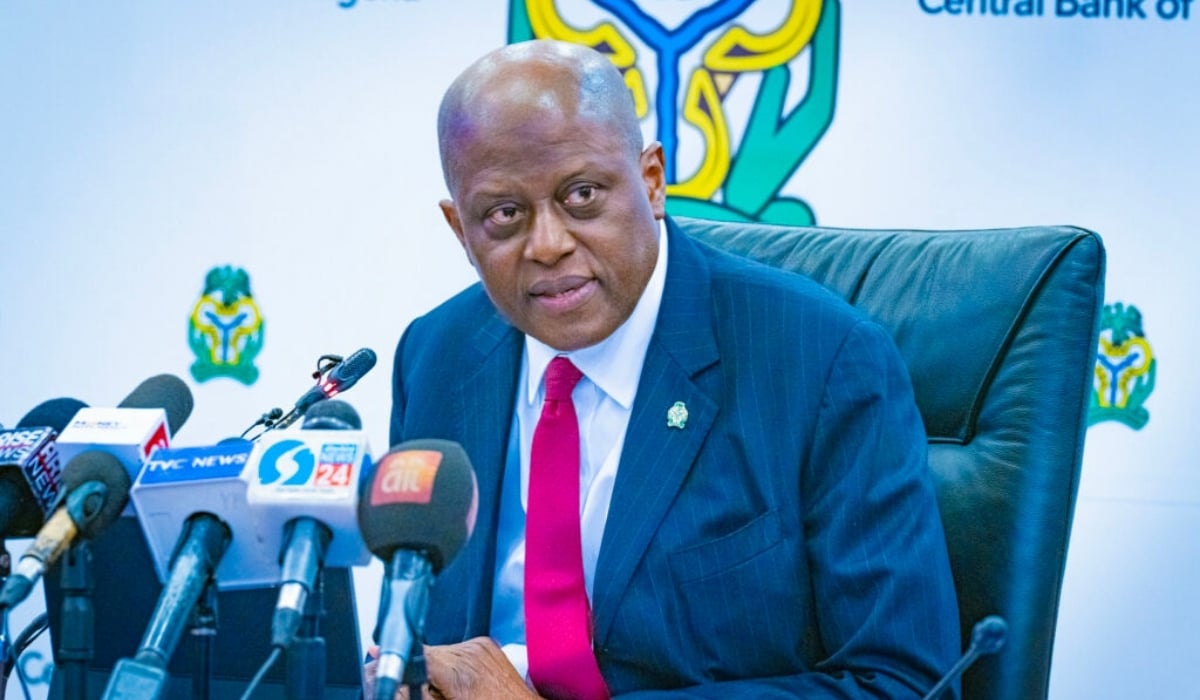

Nigeria is seeking to attract more Chinese investment into its financial markets as Central Bank of Nigeria (CBN) Governor Olayemi Cardoso pushes for stronger financial ties between both countries.
Cardoso made the appeal during a meeting with the leadership of the Industrial and Commercial Bank of China (ICBC) in Beijing, where he highlighted opportunities to increase investment in Nigerian financial instruments, improve cross-border payments and expand financial flows between the two economies.
According to a press release published by Premium Times on Thursday, October 22, 2026, Cardoso said closer financial cooperation should go beyond making transactions easier to generating more investment and business activity.
“Our ambition is not simply to make financial transactions between Nigeria and China easier. It is to create the conditions for more transactions, greater investment and stronger financial flows in both directions,” he said.
The governor identified ICBC’s corporate relationships, international network and institutional reach as potential channels for connecting Chinese financial institutions with investment opportunities in Nigeria.
He also highlighted naira-denominated instruments as an avenue for expanding Chinese participation in the Nigerian market.
The discussions formed part of a broader effort to strengthen financial connections between Nigeria and China, including through the Nigeria-China Cross-Border Finance Roundtable. The meeting brought together financial-sector executives and practitioners to examine payment arrangements, settlement efficiency, trade finance and challenges affecting transactions between businesses in both countries.
Cardoso stressed the need to address practical barriers that limit financial cooperation and ensure that discussions translate into measurable economic activity.
He proposed identifying priority areas and assigning teams to advance cooperation with ICBC, including efforts to address regulatory and institutional obstacles where necessary.
The CBN governor also linked the initiative to Nigeria’s efforts to turn recent economic reforms into stronger investment and deeper financial markets.
In a report published on Saturday, October 17, 2026, BusinessDay quoted Cardoso as saying that improved foreign exchange market stability had increased the prospects of attracting long-term naira-denominated capital.
He said the gap between the official and parallel-market exchange rates had narrowed from about 60% at its peak to approximately 3% to 4%, reducing a major source of uncertainty for investors considering long-term naira investments.
Nigeria is seeking to diversify its sources of capital by attracting investors from Asian markets, where Cardoso said participation in Nigerian financial instruments had remained limited despite the substantial liquidity available.
Greater Chinese participation could widen the pool of investors in Nigerian securities and support financial links between businesses in both countries. However, the outcome will depend on investors’ willingness to commit funds and the conditions under which they can enter, hold and exit the market.
The CBN’s engagement with ICBC does not, by itself, establish that the Chinese bank has committed a specific amount to Nigerian assets.
For Nigeria, the immediate task is to translate the discussions into workable financial arrangements that encourage investment, facilitate trade and support sustained participation in the country’s financial markets.