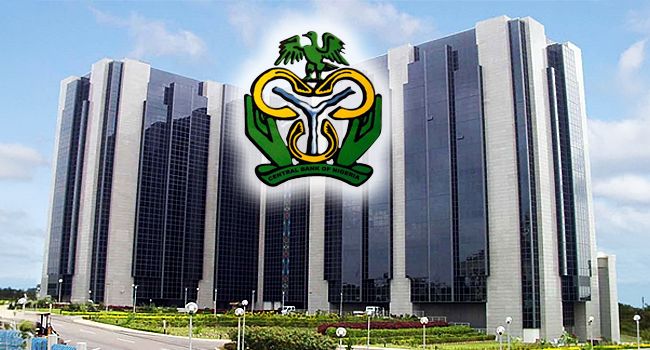

The Central Bank of Nigeria’s decision to reopen Open Market Operations to a wider group of investors is reshaping competition for funds in the domestic financial market.
The CBN’s return to OMO sales gives individuals, corporates and non bank financial institutions access to short term securities offering yields above 20 percent. This has created a stronger incentive for investors to move funds towards OMO bills, putting pressure on Treasury securities and raising concerns about the wider cost of credit. At the first OMO auction after the reopening, investors submitted N4.93 trillion in bids for the N600 billion offered by the CBN. The 103 day OMO bill cleared at 20.39 percent, while the 138 day instrument settled at 20.01 percent.
These yields were higher than those on comparable Treasury bills, making OMO securities more attractive to investors seeking strong returns with relatively low risk. Yemisi Ayediran, an economist and educator said the development could force the government to make Treasury bills more attractive if investors continue to favour OMO securities.
“The government may have to offer more attractive Treasury bill rates to compete for investors’ funds,” She said. According to her, the effect is already clear: “OMO is now pulling money away from Treasury bills, so DMO has to sweeten Treasury bill yields to keep raising funds at auction.” She explained that higher yields would increase the amount the government spends on servicing its domestic debt. The concern is driven largely by the difference in returns between the two instruments. Investors are naturally attracted to securities that offer better returns for comparable levels of risk.
With OMO bills offering returns above 20 percent while Treasury bills are yielding less, investors have a strong incentive to redirect some of their funds.
“Money always chases the better rate,” Ayediran said.
She warned that if the yield gap persists, Treasury bill auctions could attract weaker demand, leaving the Debt Management Office with the option of increasing rates to secure sufficient investor participation. The effects, however, could extend beyond government securities. The availability of high yielding OMO bills could influence how banks allocate their funds. If banks can earn attractive returns from relatively low risk securities, they may become less willing to lend at rates that do not adequately compensate them for the risks involved.
The development could result in higher lending rates as banks weigh the returns available from securities against lending to businesses and individuals. Ayediran described the potential impact on credit as “bad news”. She said banks could prefer investing in OMO bills offering returns above 20 percent instead of lending to businesses at similar or lower risk adjusted returns.
“Loan rates rise, credit gets tighter, SMEs will feel it first,” she said.
This could put additional pressure on small and medium sized businesses, which often depend on bank financing to maintain operations, purchase equipment and expand production. Higher lending rates could also weaken consumer borrowing and reduce demand for credit across the economy. Businesses facing expensive financing may postpone expansion plans, while households could become more cautious about taking loans.
The CBN’s decision also has a clear monetary policy objective. By selling OMO bills, the central bank can absorb excess liquidity from the financial system and tighten monetary conditions. This could support its efforts to control inflation by reducing the amount of money available for spending and investment. However, maintaining OMO yields above 20 percent for an extended period could come at an economic cost. Ayediran said the real sector could suffer if banks increasingly direct funds towards government and central bank securities rather than productive lending.
“The real sector gets starved of funding, banks over invest in government paper instead of lending,” she said.
She added that the naira could benefit from increased demand for local assets through the carry trade, but warned that economic growth could suffer if credit does not reach productive sectors. This creates a difficult balance for the CBN. Tightening liquidity may be necessary to address inflationary pressures, but excessive tightening could discourage investment and weaken economic activity. The central bank therefore needs to manage the policy without allowing its liquidity operations to significantly restrict private sector credit.
“The CBN needs to balance liquidity management with borrowing costs, using OMO sales and other monetary tools carefully so it can control inflation without unnecessarily pushing up government and private sector borrowing costs,” she concluded.
Matthew, an FX trader, pointed to other tools that could help the CBN manage liquidity, including adjustments to the Cash Reserve Ratio and foreign exchange interventions. The broader challenge is ensuring that OMO sales achieve their monetary policy objective without creating excessive pressure elsewhere in the economy. If OMO yields remain significantly higher than Treasury bill rates, investors are likely to continue favouring the central bank’s securities. This could weaken demand for government paper and increase pressure on Treasury yields.
If the CBN, however, scales back its liquidity tightening too quickly, excess naira liquidity could return to the financial system and complicate efforts to control inflation. The reopening of OMO sales has therefore created a new dynamic in Nigeria’s financial market. It gives investors another attractive avenue for deploying funds while forcing banks, government debt managers and businesses to adjust to tighter competition for capital.
For the government, the challenge is managing its financing needs in a market where investors now have more attractive alternatives. For businesses, the concern is whether tighter liquidity and stronger returns on securities will make bank credit even more expensive. The CBN must therefore strike a careful balance. Controlling inflation remains essential, but monetary policy must also consider its impact on credit, investment and economic growth.
The success of the OMO reopening will ultimately depend on whether the CBN can absorb excess liquidity and maintain monetary stability without starving the productive economy of the credit it needs to grow.