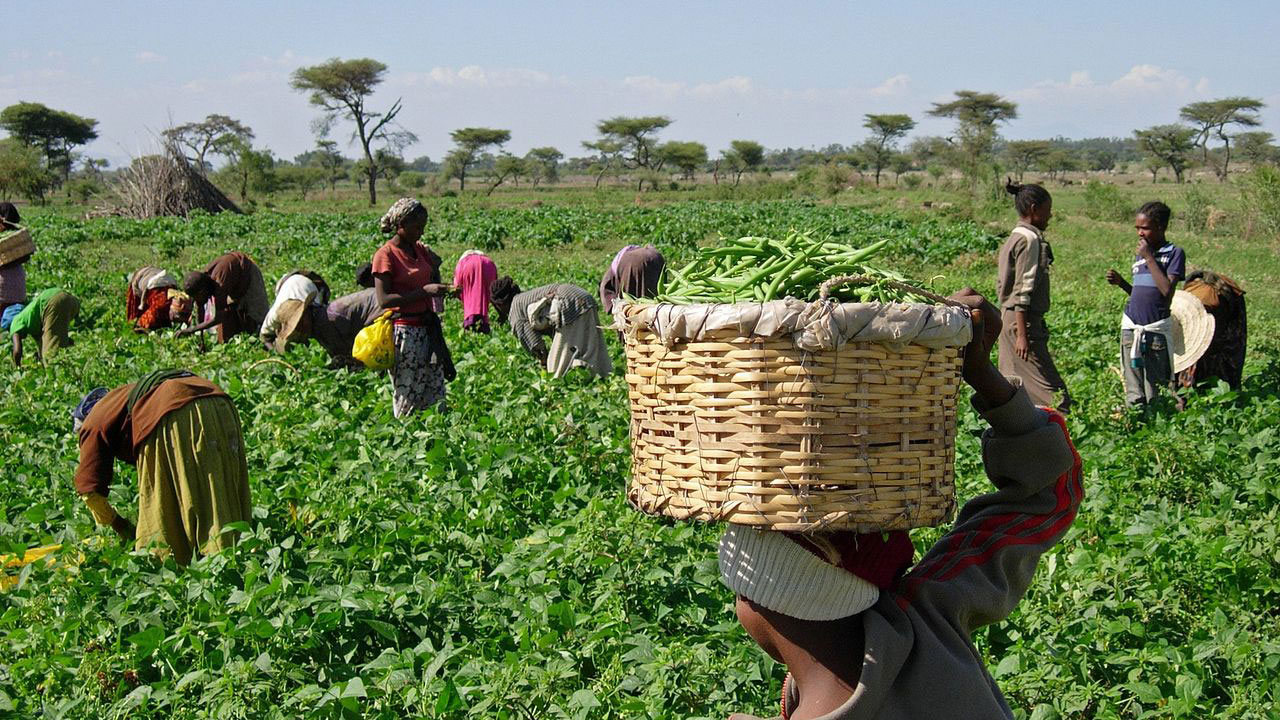

Before crude oil became the centre of Nigeria’s economy, agriculture was the country’s main economic engine. From the 1940s through the 1960s, crops such as cocoa, groundnuts, palm produce, cotton and rubber generated export income, supported millions of livelihoods and helped finance regional development.
The World Bank says that before independence and through the late 1960s, Nigeria’s economy was dominated by agriculture in terms of its contribution to GDP, employment and exports. By the mid-1960s, agricultural exports accounted for more than 70% of Nigeria’s merchandise exports.
The World Bank also says agricultural exports generated about 75% of Nigeria’s foreign-exchange earnings during the 1960s, when the country was a major producer of palm oil, cocoa and rubber.
Nigeria’s agricultural strength was spread across different regions.
In the North, groundnuts and cotton were major commercial crops. Nigeria was the world’s largest exporter of groundnuts in the 1960s, while Kano became famous for its groundnut pyramids. Northern farmers also supplied hides and skins for export.
In the Western Region, cocoa became one of the country’s most valuable exports. Production increased from about 110,000 tonnes in 1950–51 to 294,000 tonnes in 1964–65, according to historical World Bank records. Nigeria was the world’s second-largest cocoa exporter during the 1960s.
The Eastern Region was a major centre for palm oil and palm kernels, alongside rubber. Nigeria became one of the world’s leading palm-product producers and exporters.
This agricultural export economy helped Nigeria generate the foreign exchange needed to import machinery, industrial goods and other products while supporting public investment.
The shift away from agriculture was not caused by oil alone, and it did not happen immediately after the first discovery.
Shell-BP discovered commercially viable crude oil at Oloibiri in present-day Bayelsa State in 1956, while Nigeria’s first oil shipment left the country in February 1958.
The transformation accelerated in the 1970s as oil production expanded and international oil prices rose.
The World Bank records that between the mid-1960s and mid-1970s, agriculture’s share of value added fell by almost half to below 30%, while the fuels and mining sector expanded rapidly. Agricultural exports, which accounted for more than 70% of merchandise exports in the mid-1960s, fell to less than 5% a decade later.
By 1974, oil accounted for about 93% of Nigeria’s export earnings and 82% of government revenues, according to a World Bank assessment.
The oil boom also coincided with stagnation in agricultural production. The World Bank later reported that agricultural production grew at less than 1% annually during the oil-boom period, while food imports increased sharply.
Government responded with programmes including the National Accelerated Food Production Project and Operation Feed the Nation, launched in 1976 to encourage greater food production and participation in agriculture. However, contemporary assessments found that OFN struggled with organisational and implementation problems.
Environmental pressures, including drought in the Sahel during the 1970s, also added to the challenges facing farmers.
Nigeria’s agricultural era was not perfect. Most farming was small-scale, technology was limited and farmers faced infrastructure and market constraints. But agriculture provided the foundation for Nigeria’s exports and employment before petroleum transformed the economy.
The real lesson is not that Nigeria should return to the past. It is that an economy built around multiple productive sectors is less exposed to the fortunes of a single commodity.
Nigeria once earned substantial foreign exchange from farms, plantations and agricultural trade. The challenge today is not to recreate that era, but to build a modern agricultural economy capable of producing food, creating jobs and competing in global markets alongside oil, manufacturing and services.