
Electric vehicles are slowly moving from being a luxury conversation to a serious business opportunity in Nigeria. But as more electric cars appear on Nigerian roads, one question is becoming harder to ignore: Can electric cars really work in a country where electricity supply remains unreliable?
Nigeria is already taking steps to encourage electric mobility. In the first half of 2026, almost 4,000 electric vehicles received government-approved tax waivers as part of efforts to increase adoption. The government is also targeting a much larger role for electric vehicles in the country’s transport system, with a long-term goal of reaching 60 per cent of the vehicle fleet by 2050. (Reuters)
But there is a major obstacle — electricity.
Nigeria’s power system still struggles to provide enough reliable electricity for households and businesses. Recent reporting put available electricity supply at around 4,000 megawatts for a population of more than 200 million people. For electric vehicle owners, this creates an obvious problem: a car that depends on electricity cannot be useful if its owner cannot reliably charge it.
This is where Nigeria’s EV story becomes more complicated.
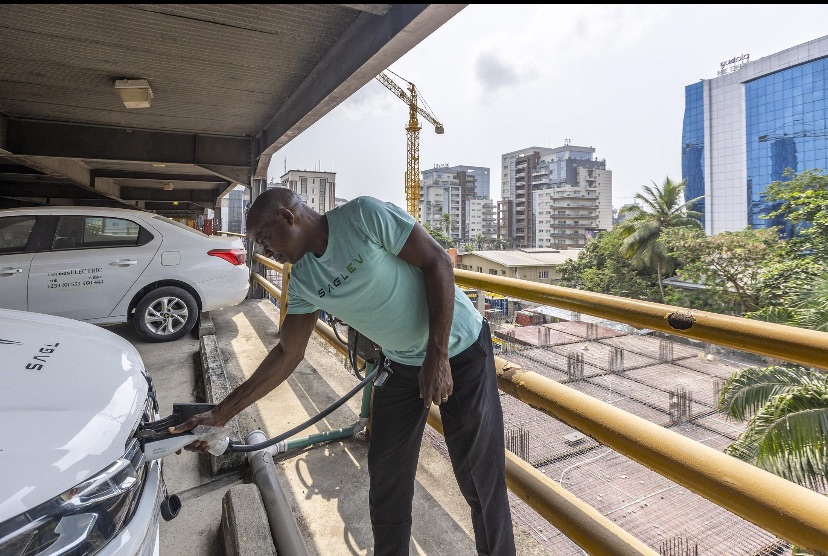
Unlike petrol vehicles, electric cars do not need fuel stations. They need charging infrastructure. At present, public charging stations are still limited, meaning many owners may have to depend on charging at home or at private facilities.
For businesses, however, this challenge is also creating an opportunity.
Companies are beginning to explore solar-powered charging stations, battery storage and other energy solutions that can reduce dependence on the national grid. One planned project announced in June includes 10 solar-powered charging stations and the deployment of more than 500 electric vehicles for commercial operations in Abuja. (Punch Newspapers)
Government policy is also moving in the same direction. In March 2026, President Bola Tinubu expanded the Presidential Initiative on Compressed Natural Gas to include electric vehicles. The renamed Pi-CNG & EV programme is expected to support the development of EV charging infrastructure and other clean-mobility investments. (State House Abuja)
There is also a financial argument for electric vehicles.
With petrol prices significantly higher than before the removal of the fuel subsidy, Nigerians and transport businesses are looking for ways to reduce operating costs. Electric vehicles could offer lower running costs if charging is affordable and reliable.
However, the high purchase price of many EVs, battery replacement costs, limited charging facilities and unreliable electricity remain significant barriers.
For Nigeria, therefore, the question may not be whether electric cars can work. They can.
The bigger question is whether Nigeria can build the power, charging and financing infrastructure needed to make them practical for ordinary Nigerians.
The opportunity is clear, but the transition will require more than importing electric cars. It will require investment in electricity, renewable energy, charging stations, local assembly and affordable financing.
Nigeria’s electric vehicle revolution has started. Whether it becomes a mass-market success will depend largely on what happens beyond the car itself.