
Brent crude settled at $90.12 a barrel on July 31, rising 1.2% on the day and capping a monthly gain of about 24%, its strongest performance since March, as heightened geopolitical tensions in the Middle East fuelled concerns over global oil supplies. U.S. benchmark West Texas Intermediate (WTI) also ended the month at $84.67, up roughly 21% over the same period.
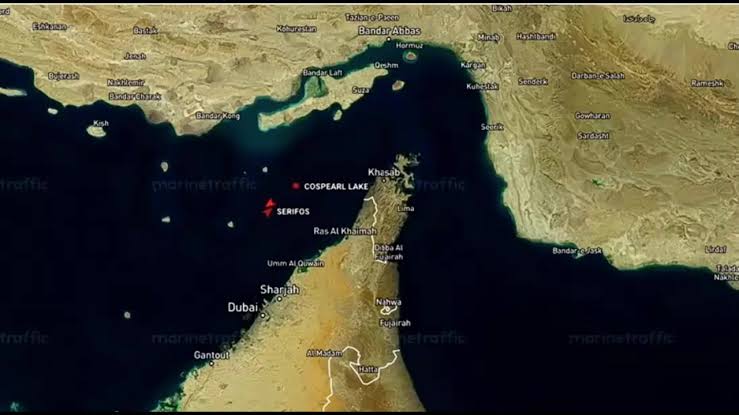
The latest rally has been driven largely by renewed security risks around the Strait of Hormuz, the vital waterway through which about one-fifth of global petroleum liquids consumption passes. On July 31, Iran’s Islamic Revolutionary Guard Corps (IRGC) claimed it had intercepted two tankers travelling under U.S. naval escort, although the assertion has not been independently verified by Western authorities. Shipping through the strait has nevertheless continued, with vessel-tracking data from Kpler showing that the very large crude carriers Spain B and Noble exited the waterway the same day, even as overall traffic remained below typical levels.
Supply concerns were further reinforced by attacks on energy infrastructure. Yemen’s Houthi movement claimed responsibility for missile and drone attacks on commercial oil tankers in the Red Sea in late July, while the United Kingdom Maritime Trade Operations (UKMTO) reported an incident involving a tanker that caught fire following an attack. In Russia, a Ukrainian drone strike triggered a fire at Lukoil’s Volgograd refinery on July 31, while operations at the Caspian Pipeline Consortium’s Black Sea export terminal were temporarily disrupted after earlier drone attacks, raising concerns over crude exports from Kazakhstan.
Market fundamentals also lent support to prices. The U.S. Energy Information Administration reported a sharp weekly decline in commercial crude inventories in late July, signalling tighter supply conditions in the world’s largest oil consumer and reinforcing bullish market sentiment.
Despite the rally, oil prices remain well below the worst-case scenarios of $150 to $200 per barrel that some analysts had warned could materialise if the Strait of Hormuz were completely closed. Continued vessel transits through the waterway, alternative export routes and expectations that major producers could increase supply have helped contain further gains.
For Nigeria, higher crude prices offer a significant fiscal boost. The 2026 federal budget is based on an oil price benchmark of $64.85 per barrel and a production target of 1.84 million barrels per day. While Bonny Light crude traded at around $93 per barrel in July, the country continues to fall short of its production target. According to the Presidency, average crude oil production, excluding condensates, stood at about 1.56 million barrels per day in the first half of 2026, constrained by crude theft, pipeline vandalism and maintenance outages despite intensified security operations against oil theft.
The outlook for oil prices will largely depend on developments in the Strait of Hormuz and the wider Middle East conflict. For now, the market appears to be pricing in sustained geopolitical risk rather than an imminent resolution.