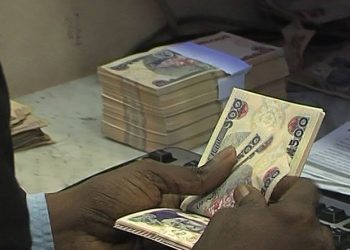
Nigeria has committed, guaranteed or earmarked more than ₦10 trillion in financing and intervention programmes for its electricity sector over the past 13 years, yet power supply remains unreliable for most of its estimated 240 million people, a disconnect that continues to draw scrutiny from policymakers and industry analysts.
The funding spans multiple interventions, including the Central Bank of Nigeria’s ₦213 billion Nigerian Electricity Market Stabilisation Facility, the ₦701 billion Payment Assurance Guarantee for generation companies, more than ₦200 billion under the National Mass Metering Programme, the ₦700 billion Presidential Metering Initiative, and the €2.3 billion Siemens-backed Presidential Power Initiative. More recently, the Federal Government unveiled the ₦4 trillion Presidential Power Sector Financial Reforms Programme to address the sector’s liquidity crisis, with verified legacy debts to generation companies and gas suppliers subsequently put at about ₦3.3 trillion.
Minister of Power Joseph Tegbe has acknowledged that much of the sector’s previous investment has failed to deliver commensurate improvements in electricity supply, attributing the problem largely to longstanding structural weaknesses across the electricity value chain. His reform agenda includes a technical audit of the national transmission network, closer coordination between federal and state electricity regulators, grid stabilisation measures and the development of a “super grid,” with the government targeting noticeable improvements in network reliability within the next two to three years.
The sector’s operational record helps explain persistent scepticism. Data from the Nigerian Electricity Regulatory Commission show the national grid has suffered more than 100 total and partial system collapses since the 2013 privatisation of the power industry. While Nigeria’s installed generation capacity is about 13,625 megawatts, actual electricity delivered to the grid typically averages between 4,000 MW and 5,500 MW because of transmission constraints, inadequate gas supply, ageing infrastructure and distribution bottlenecks.
At the centre of the crisis is a circular debt estimated at about ₦6.6 trillion. Generation companies struggle to pay gas suppliers because distribution companies are unable to recover sufficient revenue from electricity consumers, creating persistent liquidity shortages that discourage new investment and weaken the financial viability of the entire market.
The scale of Nigeria’s electricity deficit becomes clearer in comparison with regional peers. Egypt added more than 28,000 MW of generation capacity between 2015 and 2018 through large-scale power projects. By contrast, some energy analysts estimate Nigeria would require roughly 166,000 MW of installed capacity to approach South Africa’s current per-capita electricity availability, highlighting the enormous investment and reforms still required to meet growing demand.