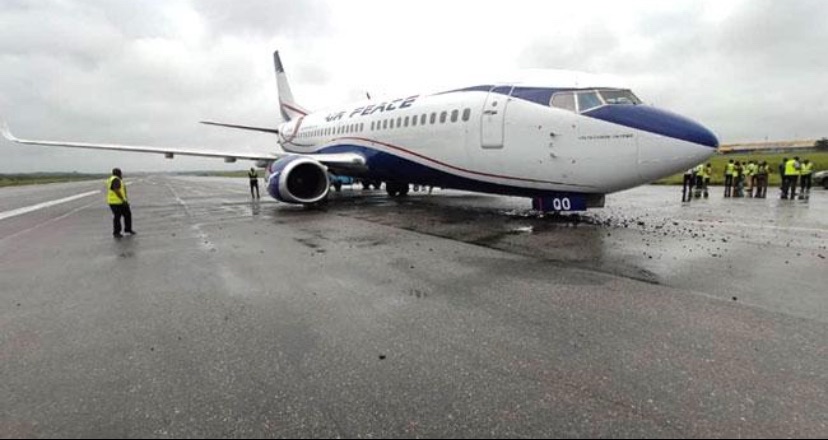

Two of Nigeria’s major airlines, Air Peace and United Nigeria Airlines, suffered major operational disruptions after aviation workers’ unions shut down flight activities at key airports, leaving thousands of passengers stranded and causing significant financial losses.
The industrial action began on Tuesday when aviation unions picketed Air Peace over allegations surrounding the non-remittance of the five per cent Ticket Sales Charge (TSC) collected from passengers. The unions involved included the National Union of Air Transport Employees, Air Transport Services Senior Staff Association of Nigeria and the National Association of Aircraft Pilots and Engineers.
The unions received backing from the Nigeria Labour Congress and the Trade Union Congress.
The dispute reportedly affected nearly 100 flights. About 70 Air Peace flights were disrupted, while more than 30 United Nigeria Airlines flights were also affected after the airline suspended its operations in solidarity with Air Peace.
United Nigeria was expected to carry about 1,200 passengers on the affected flights. Its disrupted aircraft included Boeing jets, CRJs and Embraer aircraft operating different routes across the country.
The action created widespread confusion at airports as passengers were forced to cancel, postpone or seek alternative means of travelling.
Air Peace has strongly rejected the allegations against it, describing the industrial action as unlawful and excessive. The airline’s Chief Operating Officer, Oluwatoyin Olajide, said the disruption caused the company losses of more than N2 billion.
She also questioned why Air Peace was singled out when the five per cent Ticket Sales Charge issue affects the wider aviation industry.
According to Olajide, the Nigeria Civil Aviation Authority had indicated that airlines were complying with the applicable payment directives. She therefore argued that the dispute should not have been directed at Air Peace alone.
The airline also denied preventing its workers from joining trade unions. Olajide said employees had voluntarily chosen not to unionise and argued that workers had a constitutional right to make that choice.
Air Peace further alleged that some of its employees were physically attacked during the protest. The airline called for an independent investigation into the incident, particularly concerns over how protesters gained access to operational areas at the airports.
The company also warned that repeated disruptions could hurt confidence in Nigeria’s aviation industry and raise concerns among international partners, aircraft lessors and passengers.
The unions, however, rejected Air Peace’s position. Francis Akinjole, Secretary General of the Air Transport Services Senior Staff Association of Nigeria, described the airline’s allegations as baseless.
He said the unions would provide a detailed response at the appropriate time and defended their right to determine how to pursue their demands.
At the centre of the dispute is the five per cent Ticket Sales Charge, which is intended to support aviation agencies. Labour groups have accused some airlines of failing to remit the money collected from passengers.
The unions have also raised concerns about workers’ freedom to join trade unions, alleging that employees in some airlines face pressure or fear discrimination if they attempt to unionise.
The latest confrontation highlights deeper tensions between airline operators and aviation workers over financial obligations, labour rights and industrial relations.
As the dispute continues, passengers and the wider aviation industry are bearing much of the immediate cost. The incident has also renewed calls for a lasting solution to disputes involving airlines, workers and aviation regulators before further disruptions affect Nigeria’s already pressured air transport system.