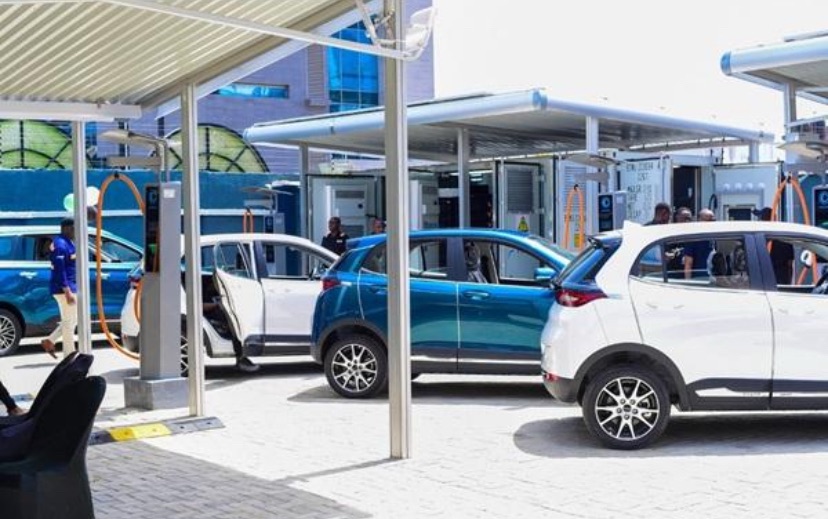

The Federal Government has approved tax waivers for nearly 4,000 electric vehicles (EVs) imported into Nigeria during the first half of 2026 as part of efforts to encourage cleaner transportation and reduce dependence on petrol and diesel vehicles.
The approvals represent the first batch processed under a new government programme designed to promote electric mobility through tax incentives and support for local vehicle assembly.
The move comes as Nigeria tries to expand the use of electric vehicles despite major challenges in the power sector. The country continues to experience unreliable electricity supply, while public charging stations remain limited.
Nigeria’s 2022 Energy Transition Plan targets electric vehicles making up about 60 per cent of the country’s vehicle fleet by 2050. However, electric vehicles currently represent less than one per cent of vehicles on Nigerian roads, according to estimates from industry players.
To make EVs more affordable, the government has introduced several incentives. Electric vehicles were exempted from Value Added Tax in 2024, while import duties on EVs were reduced to zero this year from five per cent.
The measures have become more important following the removal of the petrol subsidy in 2023, which pushed fuel prices higher and increased interest in vehicles with lower running costs.
However, electricity remains one of the biggest obstacles to Nigeria’s electric mobility plans.
The national power grid supplies only around 4,000 megawatts to a population of more than 200 million people. As a result, many businesses and households depend on petrol and diesel generators when grid electricity is unavailable.
The problem has also affected businesses operating in the EV sector. Some charging stations, dealerships and battery-swapping facilities rely on generators to continue operating during power outages.
Industry operators argue that Nigeria should not wait for electricity supply to become perfect before expanding electric mobility.
Bolanle Boboye, an executive at Saglev, an electric vehicle manufacturer linked to Chinese automaker Dongfeng, said Nigeria needed to develop its power and transportation systems at the same time.
He also noted that electric vehicles could still reduce emissions even when charged with electricity generated from diesel.
Another major challenge is the shortage of public charging infrastructure. Nigeria reportedly had only about 48 public EV charging stations by late 2025, with most concentrated in Lagos and Abuja. South Africa, by comparison, had more than 500.
Because of the limited network, many Nigerian EV owners charge their vehicles at home. But frequent power outages can make even home charging difficult.
This challenge is influencing the types of electric vehicles attracting buyers. Extended-range electric vehicles, which combine battery power with a fuel-powered backup system, are becoming more popular because they offer greater flexibility.
Chinese manufacturers, including BYD and Geely, are also expanding their presence in Nigeria with electric and hybrid vehicles designed to suit local conditions.
Electric motorcycles and tricycles could potentially achieve faster adoption than private cars. Nigeria has millions of motorcycles, while commercial riders face high fuel costs.
Industry players say electric motorcycles can significantly reduce operating expenses. Battery-swapping networks are also being developed to allow riders to replace empty batteries with charged ones within minutes.
Companies such as MAX and Spiro are investing in this model, helping commercial riders avoid lengthy charging periods.
The tax waiver for nearly 4,000 EVs is therefore an important step for Nigeria’s energy transition. However, experts believe that incentives must be matched with reliable electricity, more charging stations, affordable vehicles and stronger local manufacturing.
Without those improvements, reducing the cost of buying an electric vehicle may not be enough to achieve widespread adoption across Nigeria.