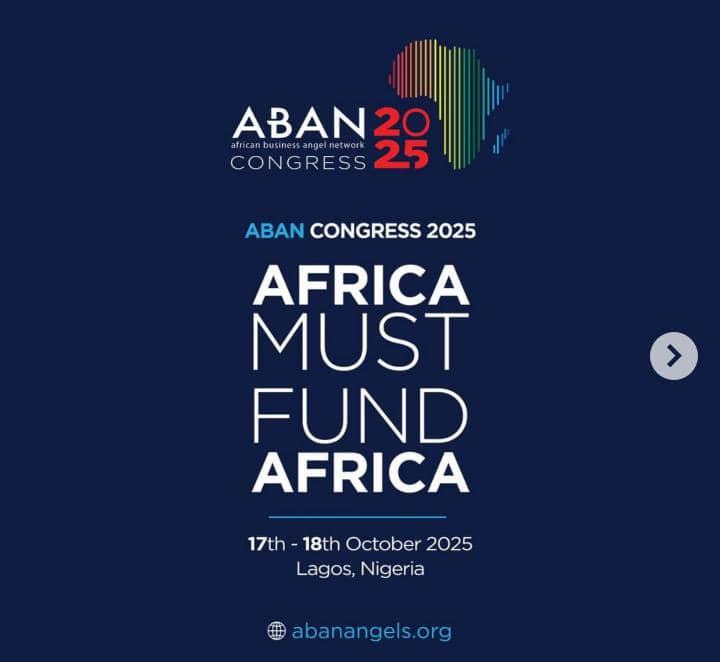

At the recent African Business Angel Network (ABAN) conference, 2025, industry leaders emphasized a transformative vision: Africa must fund Africa. At the forefront of this movement is Kemi Keri, Co-founder of Rising Tide Africa, who in an interview session with Business Times, emphasized that Africa’s future lies in its ability to invest in itself.
“We need to start putting our money in the right places,” Keri stated. “For us to attract global funding, we, as a people of the continent, must show up, invest our resources, nurture our talent, and develop our businesses and entrepreneurs. Only then can we draw international funds to augment our efforts. When we build our enterprises, the economic benefits remain in Africa, rather than being extracted.”
This sentiment was echoed by Benjamin Adeyemo, CEO of SmartParcel, a logistics company dedicated to simplifying secure transport across Africa. Adeyemo highlighted the stark reality of Africa’s funding landscape, noting that in 2024, African startups secured just $2.2 billion which represents a mere 0.6% of global startup funding.
“Our ecosystem cannot survive, let alone thrive, on such limited resources,” he remarked. “Africa cannot continue pointing fingers at Western institutions or blaming external forces. Instead, we must ask ourselves: how much have we done to support our own growth?” Adeyemo praised initiatives like the ABAN conference and collaborations with Angel Network for fostering critical discussions that inspire Africans to invest in their continent’s future.
Ibrahima Kalil Kaba, CEO of Trustee SAS, a company dedicated to strengthening Africa’s entrepreneurial ecosystem, expanded on the theme of self-reliance. “When we say Africa must fund Africa, we’re not just talking about money. We’re talking about ownership, independence, and long-term growth,” Kaba asserted. He acknowledged the value of foreign investment but cautioned that it often comes with constraints. “If we want to build strong, resilient companies that address African challenges, local investors and the African diaspora must take a leading role.”
Kaba further emphasized the untapped potential of diaspora remittances, which exceed $100 billion annually. “Imagine if just 5% or 10% of those funds were redirected into startup investments,” he said.
“We would not only be funding companies but fueling innovation, creating jobs, and driving inclusive growth across the continent. To achieve this, we need organized systems, co-investment syndicates, shared deal rooms, and cross-border angel platforms that make it seamless and secure for diaspora investors to participate.”
Adding a broader perspective, Dele Badejo, the Vice Chairman of OES Energy Services, highlighted the global funding landscape, noting that over the past four to five years, $250 to $300 billion has been invested in startups worldwide, with Africa receiving less than 6% of that total.
“Africa is the third-largest continent, so why are we not attracting more funding?” he asked. Answering his own question, he stated, “Those providing global funding are human beings, just like us. Why do we always expect them to fund our ventures? There’s enough money in Africa, not just from billionaires, but from the average person spending on luxury goods, Ponzi schemes, crypto, or forex. If educated Nigerians, for example, invested just $1,000 annually, with a million participants, that’s $1 billion: a sum that surpasses recent startup investments in Nigeria.”
Badejo stressed that local investment keeps wealth within Africa, directly impacting national economies and boosting GDP.
“The true measure of growth and impact, globally recognized, is GDP,” he said. “If we fund Africa, the money stays in Africa, and the impact remains in Africa.”