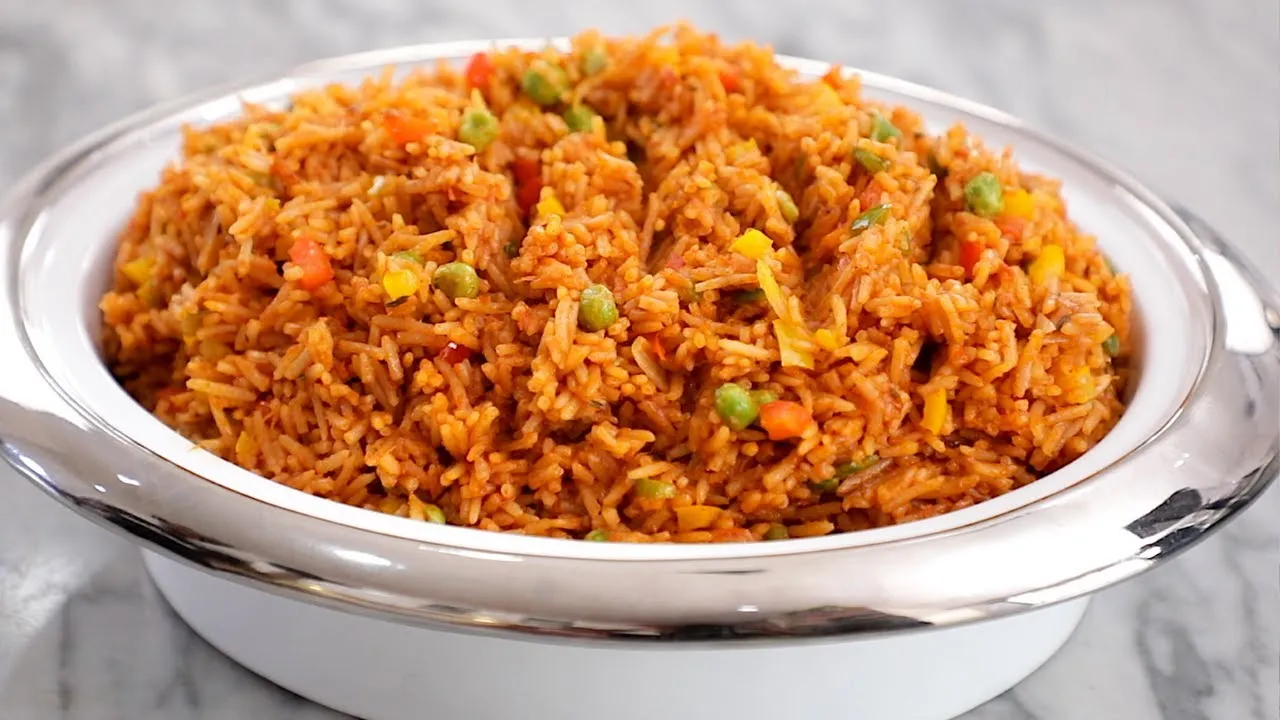

In the bustling aisles of Mile 12 Market, a key barometer for Nigeria’s food economy, a cautious narrative is emerging that complicates the stark picture of unrelenting inflation. While official statistics and national reports speak of a deep crisis, interactions with those at the heart of the food supply chain reveal a fragile, yet tangible, sense of relief.
The Jollof Index, developed by SBM Intelligence to monitor fluctuations in the cost of preparing this West African staple, will indicate a slight moderation when it is published this Wednesday. This technical easing finds its human counterpart in the experiences of traders and transporters. Musa, a long-distance truck driver who regularly moves goods from Jos to Lagos, confirmed a slight dip in prices. “It’s not a big drop, but tomato is cheaper now than it was some months ago,” he said, attributing the change to the harvest season and, crucially, fewer disruptions on interstate roads. “Before, every checkpoint meant extra money. Now, things are more stable, and it helps the traders too.”
Within Lagos, this stability is being carefully managed. Tunde, who handles last-mile delivery from the market, noted that while fuel remains expensive, better planning and cooperative logistics are helping. “I hear traders saying it’s a bit easier now to get their goods to market, so they don’t have to push up prices too much,” he said.
This trickle-down effect is visible to sellers. Mama Titi, a tomato and pepper seller, observed that prices have cooled. “A small bowl that used to sell for ₦1,500 is now around ₦800 to ₦1,000. It changes every week, but at least we’re no longer shocking customers with every price,” she said with a laugh, pointing to improved transport and a steadier supply from the North.

Yet, this glimmer of hope exists against a backdrop of profound and persistent hardship. The slight statistical decline, which officials hail as disinflation, is viewed by many as a mirage. “They say the inflation rate is 18%, but the price of one tuber of yam is now double what it was last month,” said Mrs. Zainab Mohammed, a market trader in Abuja. “Those government numbers are for London, not for us in the market.”
For consumers, the crisis has forced a permanent reshaping of diets and purchasing habits. Aunty Dupe, a rice and beans seller at Mile 12, confirmed the shift. “Foreign rice still costs a lot, but local rice is moving. People use beans or crayfish instead of meat for Jollof. It’s cheaper, and it works.” She also noted an increase in group purchasing, with families pooling resources to buy half a bag of rice and split it.
This adaptation is a nationwide story of survival. In Kaduna, Hajia Bintu explained, “We now buy cooking oil in cups, not gallons. We have switched from our trusted brands to stock cubes just to give the children some flavor. We are settling for a lower life standard.” In Kano, housewife Halima Umar detailed the nutritional compromises: “Instead of beef or chicken, many are using crayfish, stock cubes, or smoked fish to add flavour.” For the poorest, she said, meat is skipped entirely.
The root cause of the high price floor, according to analysts, remains unaddressed: a structural collapse in security that imposes a massive unofficial tax on commerce. Mallam Idris Salihu, an onion seller in Kano, stated, “The insecurity on the highways adds an unofficial tax of 20-30% to my goods. The final price in the market is not the cost of the onion, but the cost of paying bandits and checkpoints.”
The human toll of this economic pressure is devastating. From Lagos, young professional Tunde Oladapo, described a vanished middle-class life: “My salary hasn’t changed since last year, but my rent, transportation, and feeding have all tripled. I was once middle-class; now I’m just living hand-to-mouth.” The sentiment of desperation is echoed by Amaechi K., a civil servant in Owerri: “They tell us to be patient, but how can we be patient when the news is full of people stealing pots of soup just to survive? Desperation has become the new national currency.”
Despite the slight easing noted in Mile 12, the overarching reality is one of fragility. All interviewees confirmed that households still buy in tiny quantities, planning for just one or two meals at a time. The optimism is cautious. “With December around the corner, everyone is watching prices,” said transporter Tunde. “We all want to enjoy Christmas.”
For now, the slight cooling in Mile 12 Market offers a fragile hope. But for millions of Nigerians, the price of a single pot of Jollof rice remains the ultimate measure of an economy still deeply in crisis, where a minor statistical reprieve has done little to lift the heavy weight of daily survival.