
The Nigeria Premier Football League has imposed its most severe disciplinary package in recent memory on Kwara United, handing down a N10 million fine, a three-point deduction, and an effective stadium ban following the violent assault of Rivers United officials in Ilorin. This decisive regulatory action transcends the immediate sporting consequences, sending a powerful signal about the economic stakes involved in professionalising Nigeria’s top-flight football. For an industry struggling to attract corporate sponsorship, broadcast investment, and fan loyalty in an increasingly competitive global entertainment market, the NPFL is making a calculated statement: the era of unchecked stadium violence as an acceptable cost of doing business is over.
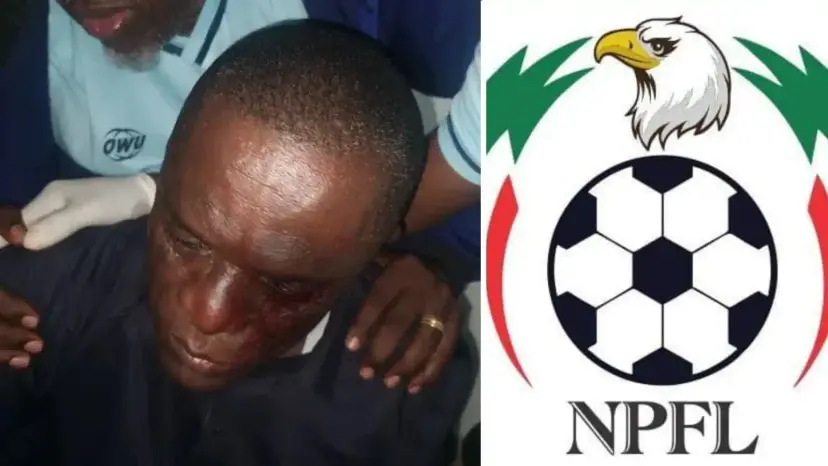
The incident, which left the Rivers United General Manager with visible facial injuries and saw match officials and visiting team personnel held hostage for hours after the final whistle, represents a catastrophic failure of operational security. The NPFL’s detailed charge sheet catalogues multiple breaches: inadequate security provision, failure to control supporters, assault on officials, and the unprecedented detention of match participants. The financial penalties reflect this gravity, with N2 million specifically allocated for compensatory costs to injured officials and another N2 million for the security failure that enabled the violence.
From an economic perspective, this disciplinary action addresses a fundamental barrier to the commercialisation of Nigerian football. The league operates in a marketplace where potential investors, broadcast partners, and sponsors conduct rigorous risk assessments before committing capital. A product associated with physical danger to participants, unpredictable match outcomes determined by points deductions rather than on-field performance, and reputational damage from international media coverage of stadium violence becomes exceedingly difficult to monetise. The NPFL’s swift and punitive response signals to the market that governance structures exist to protect the integrity of the product.
The three-point deduction carries immediate sporting consequences for Kwara United in a tightly contested league table, but the broader economic message is aimed at every club in the division. By relocating the club’s remaining home fixtures to the MKO Abiola Sports Arena in Abeokuta, the NPFL has imposed a revenue penalty that extends beyond the fine. Home matches generate gate takings, concession sales, and local economic activity that clubs rely on for operational sustainability. Forcing a club to play on neutral territory directly attacks its revenue model, creating a powerful deterrent for future misconduct.
Kwara United’s prompt acknowledgment of culpability and public apology suggests an understanding that reputation management is itself an economic asset. The club’s statement committing to “accountability, respect, and sportsmanship” is an attempt to contain reputational damage that could otherwise alienate sponsors and supporters. Yet the structural damage to the league’s brand is more difficult to repair. Each incident of violence reinforces the perception among Nigerian football fans that the domestic product is unsafe and unprofessional, driving them toward European leagues whose broadcast quality and stadium security offer predictable, family-friendly entertainment.
The NPFL’s governing body has demonstrated awareness that its primary economic challenge is not simply attracting investment but retaining the attention of a domestic audience with unprecedented access to global alternatives. The fine, points deduction, and stadium ban collectively represent an investment in the league’s long-term commercial viability. By establishing that violence carries existential consequences, the NPFL is attempting to build the institutional credibility upon which sustainable revenue models depend. For Nigerian football, the economic logic is inescapable: without safety, there can be no spectators; without spectators, there can be no sponsors; without sponsors, there can be no league.