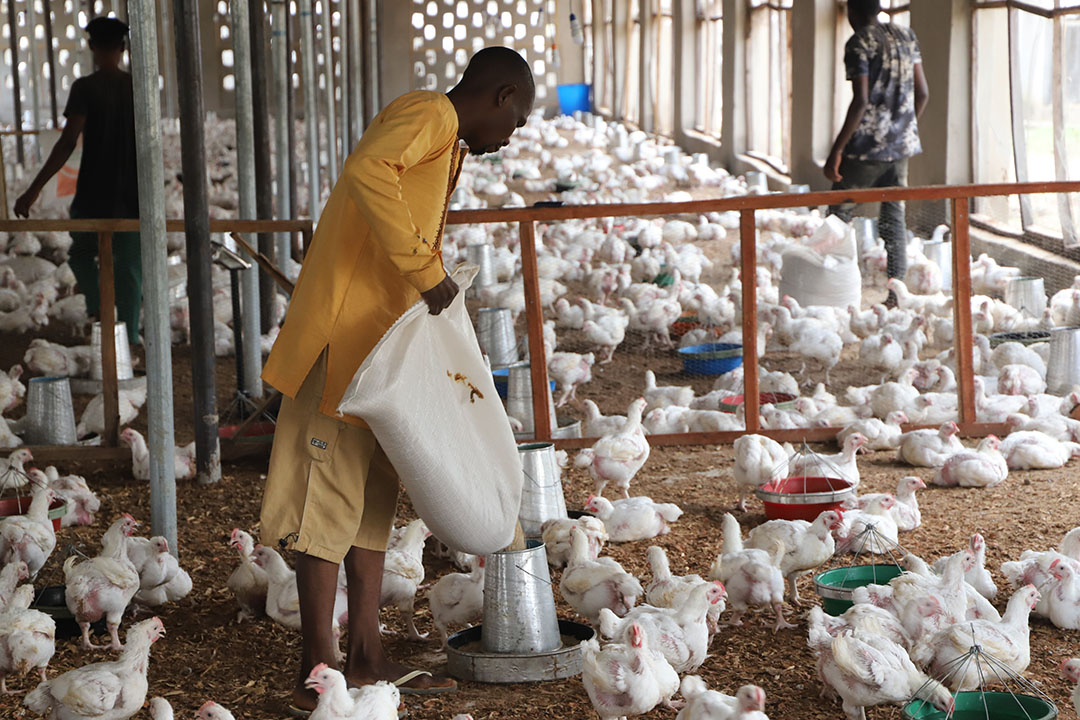

Poultry farmers in Nigeria are facing mounting production costs as animal feed accounts for about 75% of the cost of raising birds, squeezing profit margins ahead of the Christmas season.
Olalekan Odunsi, chairman of the Nigerian Poultry Show, put the share of feed costs at about 75%, according to a Punch report summarised in the Nigeria Business & Investing Digest on October 26, 2026. He also identified shortages and rising prices of day-old chicks, particularly pullets, as additional challenges for farmers.
The pressure comes as poultry producers prepare for increased demand for chicken during the festive season, when households, restaurants and food businesses typically buy more poultry products.
Farmers are calling for single-digit interest rates on agricultural loans and improved insurance coverage against losses caused by disease. They say more affordable financing and protection against production risks would help them sustain operations and meet seasonal demand.
However, access to cheaper credit remains a concern despite the Central Bank of Nigeria’s September decision to reduce its benchmark interest rate by 350 basis points to 23%.
The Nigeria Business & Investing Digest reported on October 22 that the rate cut had yet to translate into meaningful relief for businesses. RateCaptain reported on October 19 that bank lending to manufacturers fell 26.8% year-on-year to ₦5.19 trillion in June, highlighting the financing challenges facing businesses in the real sector.
Although manufacturing and poultry farming are different sectors, the lending figures point to broader concerns about access to credit for productive businesses.
Currency weakness also presents a potential risk for poultry production costs. The naira closed at ₦1,361.84 to the dollar on the official market on Friday, October 23, according to Legit.ng’s report of October 25. A weaker currency can increase the cost of imported inputs, although the available reports do not establish how much exchange-rate movements have contributed to the current cost of poultry feed.
The Nigerian Poultry Show is scheduled to hold from November 3 to 5, 2026, as industry players discuss challenges facing the sector ahead of the peak festive trading period.
With feed accounting for the largest share of production expenses, farmers face the challenge of managing costs while preparing to supply a market expected to see stronger demand for chicken in December.