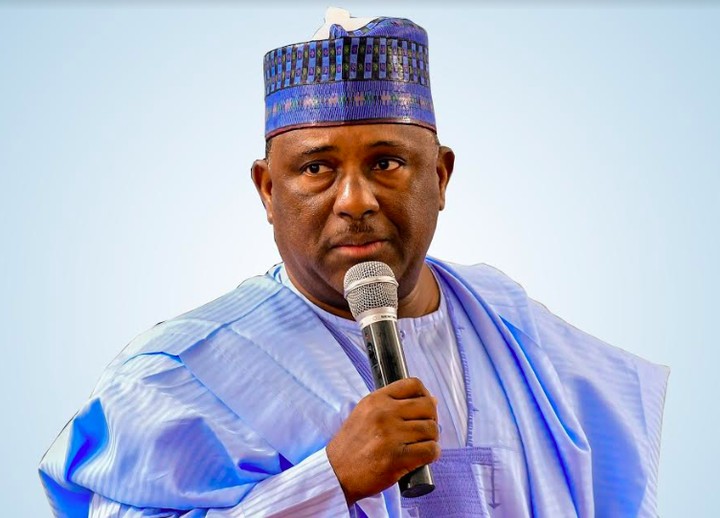

BUA Group Chairman Abdul Samad Rabiu has urged Nigeria to build at least 100 major industrial companies, warning that the country cannot achieve sustainable prosperity by relying on imported finished goods instead of expanding domestic production.
Rabiu made the call on Monday, October 26, 2026, while delivering his keynote address at the 32nd Nigerian Economic Summit in Abuja. He said Nigeria must move beyond supplying raw materials to foreign manufacturers and develop industries capable of processing local resources, meeting domestic demand and exporting finished products.
“The question we must ask ourselves is not simply how BUA can continue to grow. It is how Nigeria can create another 100 BUAs,” Rabiu said, according to New Telegraph in its report published on October 26.
He argued that a new generation of large Nigerian businesses would create jobs, support local suppliers, expand exports and provide more opportunities for young people.
The industrialist said Nigeria must change its approach to economic development by investing more heavily in manufacturing and other productive sectors rather than relying on economic reforms alone to deliver improved living standards.
The scale of the opportunity is highlighted in the Nigerian Manufacturing Opportunity Report 2026, published by SEID Intel. According to BusinessDay on October 8, the report estimated that imports supplied 64% of Nigeria’s demand for manufactured goods in 2025, leaving a $29.4 billion market that domestic producers could potentially capture.
The report also found that manufactured goods accounted for 53% of Nigeria’s total import bill, while manufacturing’s contribution to gross domestic product declined from 8.42% in 2023 to 8.05% in 2025.
The figures point to a gap between the size of Nigeria’s domestic market and the capacity of its industries to meet demand competitively.
Rabiu cited the cement industry as an example of how investment in local processing can reduce import dependence. He recalled that Nigeria previously imported almost 80% of the cement it consumed but has since developed domestic production capacity and become an exporter.
He attributed the transformation to deliberate industrial policies and major private-sector investments that enabled companies to process locally available limestone into finished cement.
Rabiu urged the government and businesses to replicate that experience in agriculture, food processing and other manufacturing industries, where local raw materials could support larger domestic industries and generate export revenue.
BUA’s own operations span cement and food production, with its listed subsidiaries, BUA Cement and BUA Foods, among the major companies on the Nigerian Exchange.
The group is also investing in flour milling, pasta, noodles, edible oils, rice milling and animal feed. Rabiu said the projects were expected to be completed in 2027 and would double production capacity in the relevant businesses, according to PUNCH’s report published on October 27.
He also highlighted BUA’s integrated sugar project in Lafiagi, Kwara State, which combines sugarcane cultivation with sugar refining, ethanol production and electricity generation.
However, Rabiu warned that expanding Nigeria’s industrial base would require affordable long-term capital, reliable infrastructure and greater consistency in government policies.
He said manufacturing projects often take between 10 and 20 years to realise their full potential, making expensive short-term borrowing unsuitable for businesses investing in factories, machinery and production capacity.
“You cannot build a strong industrial economy primarily with expensive, short-term finance,” he said, according to BusinessDay on October 26.
Rabiu called for pension funds, insurance companies, banks, development finance institutions and capital market operators to direct more long-term funding towards productive enterprises.
He also acknowledged that petrol subsidy removal and foreign exchange liberalisation had imposed costs on households and businesses. However, he argued that a transparent foreign exchange market offered manufacturers greater certainty for planning and investment than a system in which access to dollars depended on official allocations.
According to BusinessDay, Rabiu said businesses needed predictable policies because they could not commit capital to investments spanning decades without confidence in the operating environment.
He further urged Nigeria to take advantage of the African Continental Free Trade Area by improving transport infrastructure, port efficiency and payment systems to help local manufacturers reach markets across the continent.
The challenge is to convert Nigeria’s large domestic market into competitive local production. As the SEID report indicates, capturing the $29.4 billion manufacturing opportunity will require more than replacing imports with locally made alternatives; producers must also achieve the quality, scale and cost efficiency needed to compete.
Rabiu’s call for 100 additional industrial giants therefore places long-term financing, infrastructure and policy stability at the centre of Nigeria’s effort to expand manufacturing, create jobs and increase exports.