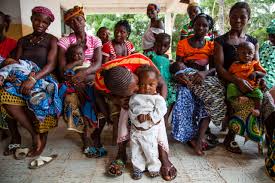

Nigeria stands to gain an estimated 1.7 million working mothers by the year 2030, but only if the country makes strategic investments in providing affordable, high-quality childcare services. This is the core finding of the “Childcare Dividend Initiative,” a new report unveiled by Economist Impact this week.
The study, which aligns with the G20 agenda on women’s economic empowerment, reframes childcare not just as a social service but as a fundamental driver of inclusive economic growth and national productivity. The findings suggest that Nigeria could experience the largest increase in working mothers, as a percentage of the workforce, among the countries surveyed, with the potential gain equating to 2.7 per cent of the country’s total labour force.
The research provides a compelling economic case for action: universal childcare coverage is projected to boost Nigeria’s Gross Domestic Product (GDP) by 1.09 per cent. This growth would be driven by several factors, including the direct increase in female labour participation, higher household incomes leading to increased consumer spending, and expanded tax revenues that can then be reinvested into national development priorities.
Katherine Stewart, the lead researcher for the Childcare Dividend Initiative at Economist Impact, stressed the need for a shift in government perspective. “Our research demonstrates that childcare investments strengthen economies, improve productivity, and empower women to contribute meaningfully to national prosperity,” she said. Ms. Stewart urged governments to recognize affordable childcare as an economic necessity rather than a luxury reserved for privileged households. She pointed out that a failure to address this issue is already costing economies, noting that inadequate childcare services cost Nigeria, South Africa, and Kenya billions in lost income during 2022 alone. She added that across Sub-Saharan Africa, the care economy remains underdeveloped despite its enormous potential to generate employment and support children’s well-being.
Echoing this sentiment, Jasmina Papa, a social protection specialist at the International Labour Organisation (ILO), highlighted the dual benefit of investing in this sector. She noted that expanding affordable, quality childcare could be one of the greatest engines for both decent job creation and social progress. “Investing in the care economy is both an economic and social imperative,” Ms. Papa affirmed.
The report also emphasized the critical need for cross-ministerial collaboration, urging ministries spanning finance, education, health, and social development to work together to build integrated and sustainable care systems. Experts at the G20 forum where the report was discussed called on policymakers to make childcare a central component of economic recovery strategies and fiscal planning, ensuring that the benefits of inclusive growth opportunities reach both women and men.
The economic reality is that when strong care systems are readily available and well-designed, they enable women to participate more fully in the workforce, boosting the national labour supply and simultaneously creating new, formal jobs within the care sector itself. The study therefore serves as a clear roadmap for the Nigerian government to turn a crucial social necessity into a powerful economic multiplier.