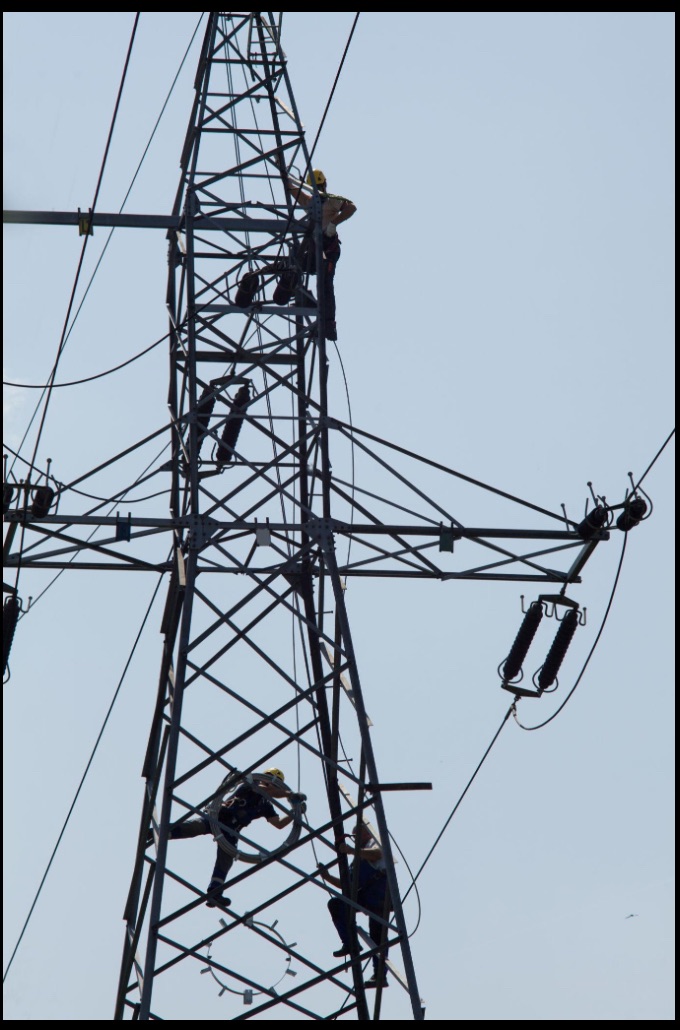

Thousands of residents and businesses in Nasarawa and Plateau states have been affected by a major power outage following the collapse of several electricity transmission towers.
According to the Transmission Company of Nigeria (TCN), six transmission towers along the Apir–Lafia 330kV transmission route were damaged by vandals and later collapsed during a heavy rainstorm. The incident disrupted electricity supply across parts of the two states, leaving many communities without power.
TCN explained that the affected towers, identified as T125 to T130, are located on the Apir–Lafia Transmission Lines I and II. The towers reportedly collapsed at about 1:15 a.m. on May 30, 2026, during a period of intense rainfall.
Following the initial power disruption, system operators attempted to restore electricity by reconnecting one of the transmission lines. However, the effort was unsuccessful as the damaged infrastructure could not support the operation.
To determine the cause of the outage, TCN engineers carried out a detailed inspection of the transmission corridor. Their findings revealed that important parts of the towers had been vandalized before the collapse. The company said the damage confirmed that criminal activities had weakened the structures, making them vulnerable to failure during the storm.
TCN’s General Manager of Public Affairs, Ndidi Mbah, stated that both transmission lines remain out of service while reconstruction work is being planned. She added that engineers have already been deployed to assess the extent of the destruction and identify the materials needed to rebuild the towers and restore normal electricity transmission.
To reduce the impact on affected customers, TCN has introduced a temporary power supply arrangement. The Lafia 330kV Transmission Station is currently receiving electricity through the Lafia–Jos transmission line. This alternative route is expected to provide limited support to customers served by the Abuja Electricity Distribution Company (AEDC) and the Jos Electricity Distribution Company (JEDC).
Despite the temporary solution, many residents and businesses are still experiencing power shortages, raising concerns about economic activities and daily living conditions in the affected areas.
The company strongly condemned the repeated vandalism of power infrastructure across the country. TCN warned that such acts not only damage critical national assets but also reverse years of investment aimed at improving electricity supply.
The agency called on local communities, security agencies, and members of the public to help protect transmission facilities by reporting any suspicious activities around power installations. According to TCN, safeguarding electricity infrastructure is a shared responsibility that is essential for ensuring a stable and reliable power supply across Nigeria.
As repair efforts continue, affected residents are hoping for a quick restoration of electricity and stronger measures to prevent future attacks on the nation’s power network.