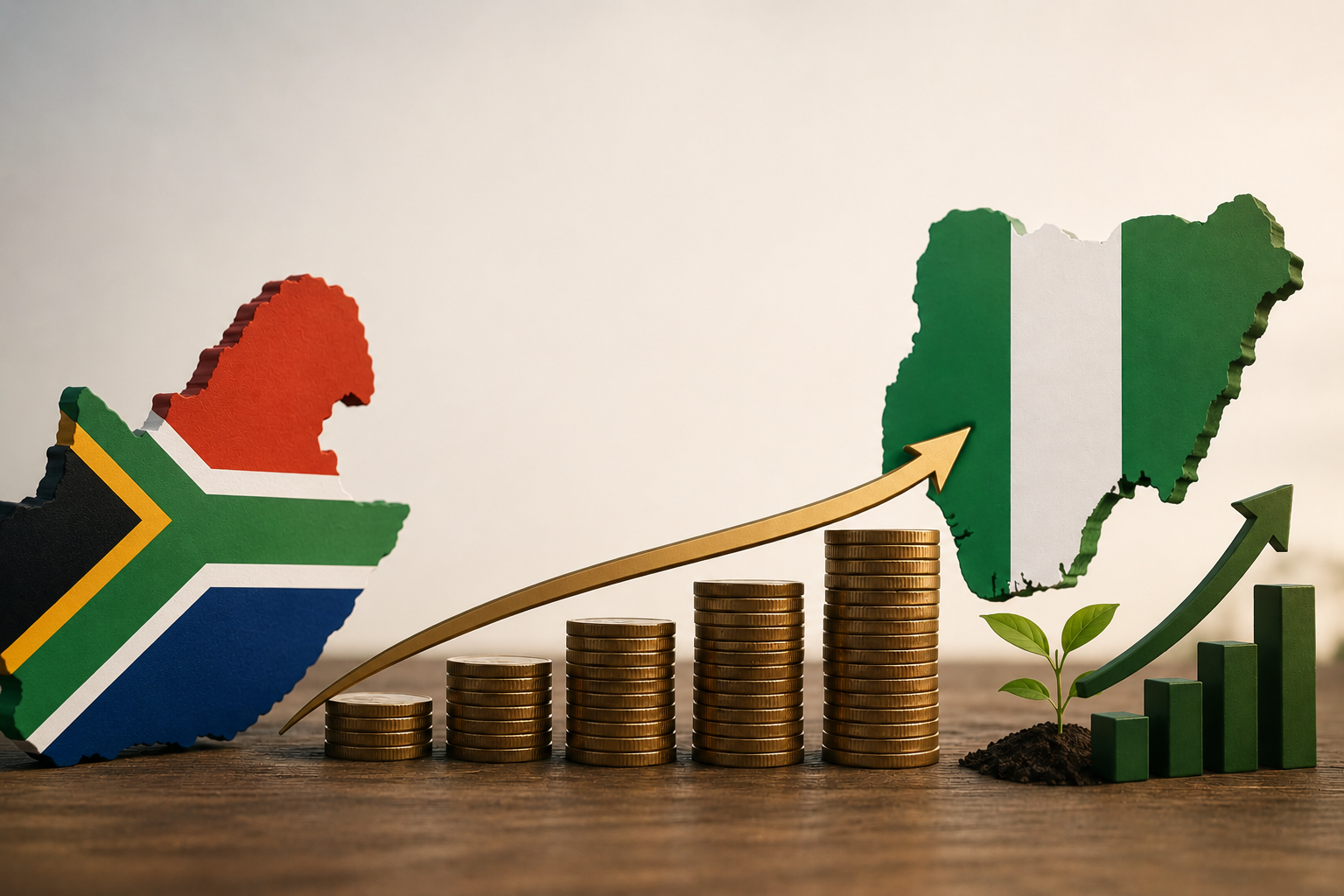

South African investment in Nigeria rose sharply during the first quarter of 2026, highlighting the resilience of commercial ties between Africa’s two largest economies despite recurring diplomatic tensions linked to xenophobic attacks and other bilateral disputes.
According to the National Bureau of Statistics (NBS) Capital Importation Report, investors from South Africa committed $983.83 million to Nigeria between January and March 2026. The figure represents a 90.31% increase from the $516.96 million recorded in the fourth quarter of 2025.
The latest inflow made South Africa the third-largest source of foreign capital into Nigeria during the quarter, behind only the United Kingdom and the United States. It also marks the second-highest quarterly investment from South Africa on record, surpassed only by the $1.01 billion recorded in the second quarter of 2025.
The data suggests that long-term commercial interests continue to outweigh periodic diplomatic disagreements between the two countries. While relations have occasionally been strained by concerns over the treatment of foreign nationals, particularly Nigerians living in South Africa, cross-border investment has remained robust.
South African companies have maintained a substantial presence across key sectors of Nigeria’s economy, including telecommunications, retail, financial services and manufacturing. These firms continue to view Nigeria’s large population, expanding consumer market and long-term growth potential as attractive investment fundamentals despite macroeconomic challenges.
Economists say the latest figures underscore the strength of the economic relationship between both countries. Nigeria remains one of South Africa’s most significant investment destinations on the continent, while South African businesses continue to play an important role in supporting employment, technology transfer and private sector development within Nigeria.
The increase in capital inflows also reflects improving investor sentiment towards Nigeria following policy reforms aimed at attracting foreign capital. Higher foreign investment strengthens the country’s external reserves, supports liquidity in the foreign exchange market and provides funding for business expansion and infrastructure development.
Beyond South Africa, the NBS report showed that Nigeria recorded stronger capital importation from several major investment partners during the first quarter, reinforcing expectations of a gradual recovery in foreign investment activity in 2026.
While geopolitical and diplomatic issues remain a source of uncertainty, the latest data indicates that investors continue to focus on long-term economic fundamentals. For policymakers, sustaining this momentum will depend on maintaining macroeconomic stability, improving the ease of doing business and providing a predictable regulatory environment capable of attracting even greater foreign investment.