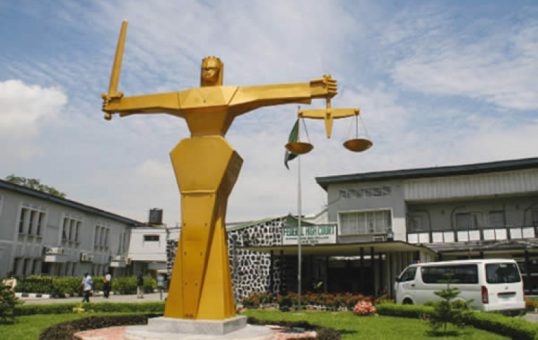

A Federal High Court in Abuja has issued a major ruling against Nigeria’s main opposition, the People’s Democratic Party (PDP), restraining the Independent National Electoral Commission (INEC) from recognising the outcome of the party’s planned national convention. The convention was scheduled to take place in Ibadan, Oyo State, in mid-November. The decision is a significant setback for the crisis-ridden party, throwing its internal leadership structure into fresh uncertainty.
Justice James Omotosho, delivering the judgement on Friday, held that the PDP had failed to comply with its own constitution and relevant laws regarding the necessary steps for conducting such a significant convention. The court heard evidence from INEC and other respondents showing that mandatory party congresses were not held in several states across the federation, representing a serious breach of internal regulations. Furthermore, the judge ruled that key party correspondences and notices were null and void because they were signed only by the National Chairman, without the essential counter-signature of the National Secretary, in clear violation of the law. The party was also found to have neglected the requirement to issue the statutory twenty-one-day notice of its meetings and congresses to INEC, which is necessary to allow the electoral body to perform its mandatory monitoring duties.
The suit was brought by three aggrieved members of the party including state chairmen and a zonal secretary who expressed their dissatisfaction with the way the national leadership was managing the party’s affairs. Justice Omotosho explicitly advised the PDP to rectify all these procedural and legal failings before attempting to proceed with any convention or election. The court order ensures that until the party cleans up its internal processes and adheres to the law, INEC is legally barred from receiving, publishing, or accepting any result from the proposed Ibadan convention.
This judicial intervention into the internal affairs of a major political entity carries a crucial economic angle. Persistent internal party crises, such as this one plaguing the main opposition, contribute to an overall environment of political instability in the country. For foreign and domestic investors, a lack of predictable political stability creates market uncertainty and heightens perceived risk. When a significant political player is locked in prolonged legal battles, it signals a deeper institutional fragility. This can deter long-term foreign direct investment, cause capital flight, and slow down crucial national policy implementation, as the focus of the political class shifts from governance to internal fighting. Investors prefer environments where policy direction is clear and political succession is orderly, making swift resolution of this and similar party conflicts essential for maintaining confidence in Nigeria’s economy.