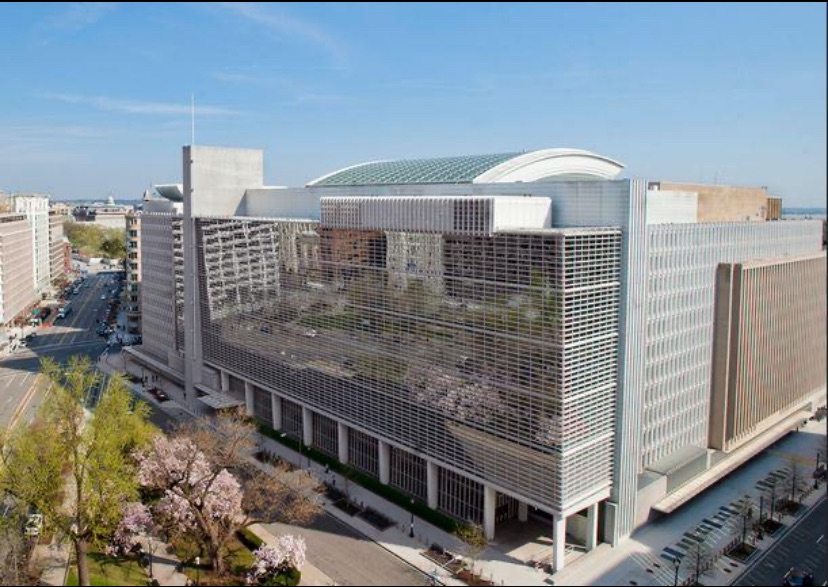

The World Bank has announced plans to provide up to $100 billion in financial assistance over the next 15 months to help developing countries cope with the economic effects of the worsening conflict in the Middle East.
According to the bank’s latest Global Economic Prospects report, the ongoing crisis is putting significant pressure on the global economy through rising energy costs, increasing inflation, and tighter financial conditions. These challenges are expected to slow economic growth across many countries, especially those already struggling with debt and weak economic conditions.
The World Bank forecasts that global economic growth will decline from 2.9 percent in 2025 to 2.5 percent in 2026. Although growth is expected to improve slightly to 2.8 percent in 2027, it will still remain below the average levels seen during the 2010s. The report also revealed that nearly two-thirds of the world’s economies have had their growth projections reduced since the bank’s previous forecast released in January.
To help countries manage the crisis, the World Bank is immediately making between $50 billion and $60 billion available through existing funding programmes. This package includes $25 billion in pre-arranged financing that can be quickly deployed where needed. The funds are expected to support social welfare programmes, strengthen government finances, and provide emergency liquidity to businesses and farmers affected by the economic disruptions.
The institution stated that more than 30 countries are already working closely with the World Bank to improve their readiness and ensure a rapid response to the crisis. If the conflict continues and economic conditions worsen, the lender said it could increase its support to between $80 billion and $100 billion.
One major concern highlighted in the report is the disruption of global energy markets. The closure of the Strait of Hormuz, a key shipping route for oil exports, has significantly affected supply chains. As a result, Brent crude oil prices are projected to average $94 per barrel in 2026, representing a 36 percent increase compared to 2025 levels.
Higher energy costs are also expected to push up fertiliser prices, making food production more expensive worldwide. This could contribute to rising food prices and increase global inflation to around 4 percent in 2026, up from 3.3 percent in 2025.
World Bank President Ajay Banga noted that developing countries have faced multiple economic shocks over the past decade and stressed the importance of protecting citizens while maintaining economic stability. He said the bank is prepared to provide additional financing, guarantees, and private-sector solutions if economic pressures intensify.
The report also warned that risks remain high. If energy supply disruptions become more severe and trigger instability in financial markets, global growth could fall sharply to just 1.3 percent in 2026. Inflation could also rise further to 4.4 percent under such a scenario.
Developing economies are expected to experience slower growth, dropping from 4.4 percent in 2025 to 3.6 percent in 2026 before recovering to 4.2 percent in 2027. Countries in the Gulf region that are directly affected by the conflict may face the biggest slowdown, while Sub-Saharan Africa is likely to experience higher inflation and food costs due to fertiliser shortages.
The World Bank also expressed concern about rising debt levels in developing nations. Government debt has increased from less than 40 percent of GDP in 2010 to over 70 percent today. The bank warned that growing debt burdens are reducing governments’ ability to respond to crises and invest in critical sectors such as infrastructure, healthcare, and education.
Despite the challenges, World Bank Deputy Chief Economist Ayhan Kose urged governments to use the crisis as an opportunity to strengthen economic policies, improve infrastructure, encourage business reforms, and attract private investment that can create jobs and support long-term growth.