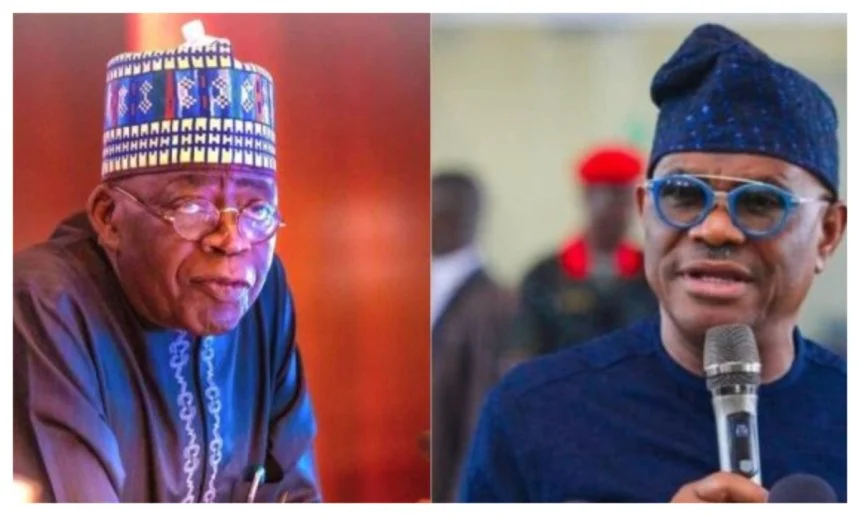

Minister of the Federal Capital Territory, Nyesom Wike, has expressed strong support for President Bola Ahmed Tinubu following the signing of the Electoral Act (Repeal and Re-enactment) Bill 2026. In a statement released on Wednesday, February 18, 2026, Wike characterized the new legislation as a vital masterstroke for Nigerian democracy, asserting that it will sanitize the electoral process and rebuild the confidence of the voting public. For the FCT Minister, this legislative milestone represents a definitive transition toward a more transparent and legally resilient democratic framework.
The economic and political consequence of this new Act is rooted in the potential for significantly reduced post-election litigation. By mandating that all election-related court cases be concluded before the May 29, 2027 inauguration date, the law seeks to eliminate the “governance paralysis” that typically occurs when leaders spend their first year in office distracted by legal battles. From a fiscal perspective, Wike noted that early clarity on election results will bolster investor confidence, as the “uncertainty premium” often associated with Nigerian election cycles is mitigated by a more predictable legal environment.
Analytically, the Electoral Act 2026 introduces several critical changes designed to curb the excesses of political actors. The Bimodal Voter Accreditation System (BVAS) has been officially granted full legal backing, effectively replacing the “Smart Card Reader” in all federal and state elections. Furthermore, while maintaining INEC’s discretion on the exact method, the Act emphasizes the electronic transmission of results to the IReV portal as a standard of accountability. The National Identification Number (NIN) has also become a mandatory requirement for voter registration to purge the register of double entries and underage voters.
The impact on “Institutional Integrity” is a vital dimension of Wike’s commendation. He emphasized that by signing the Act well ahead of the 2027 general elections, President Tinubu has avoided the “last-minute legislative rush” that plagued previous administrations. The Minister highlighted that the provision requiring INEC funds to be released at least one year before the general election will prevent the “emergency procurement” pitfalls that often lead to logistical delays on election day. Wike also lauded the inclusionary move of granting voting rights to inmates, provided INEC makes the necessary arrangements, aligning Nigeria with global human rights standards.
The long-term economic outlook for Nigeria’s democracy depends on the strict implementation of these rules. Wike called on the Independent National Electoral Commission (INEC) and security agencies to match the President’s political will with operational excellence. By strengthening the penalties for electoral offenses—including a N5 million fine for PVC-related fraud the Act aims to make the “business of election rigging” an unprofitable and high-risk venture. As the “Pacesetter of the FCT,” Wike remains a central figure in the administration’s drive for institutional reform, and his endorsement signals a unified front to ensure that the 2027 polls are the most credible in the nation’s history.