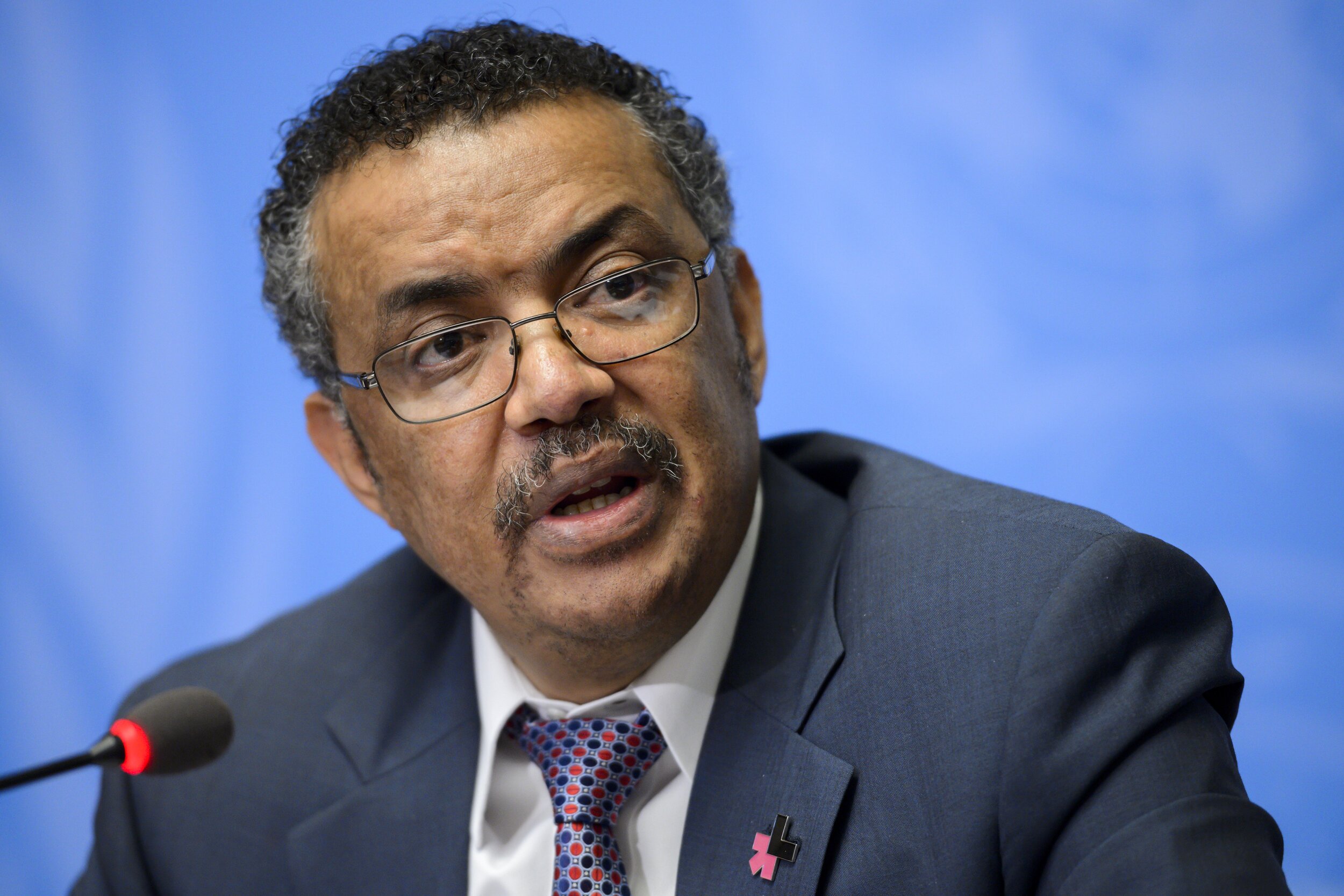

The World Health Organization (WHO) has raised alarm over escalating public health and environmental risks following reported military strikes near sensitive nuclear facilities in Iran and Israel.
WHO Director-General, Tedros Adhanom Ghebreyesus, issued the warning on Sunday, March 22, urging all parties involved in the Middle East conflict to exercise maximum restraint and avoid actions that could trigger a nuclear-related emergency.
According to Ghebreyesus, the conflict has entered a dangerous phase, with hostilities now occurring close to nuclear-linked infrastructure. He noted that strikes were reportedly carried out near Iran’s Natanz Enrichment Complex and the Israeli city of Dimona, where a nuclear facility is located.
He explained that global monitoring bodies, including the International Atomic Energy Agency, are assessing the situation. While no abnormal or increased off-site radiation levels have been detected, he stressed that attacks targeting nuclear sites significantly heighten risks to public health and environmental safety.
WHO Intensifies Preparedness Efforts Since the Beginning of the Conflict
The WHO chief added that the agency has intensified preparedness efforts since the outbreak of hostilities, including providing critical training and readiness support, but emphasised that de-escalation remains essential. He urged all parties to exercise restraint, warning that any miscalculation near nuclear infrastructure could trigger far-reaching humanitarian consequences, noting that “peace is the best medicine.”
As the conflict enters its fourth week, military targets that initially focused on conventional assets have expanded to include high-risk infrastructure. On March 21, Iran claimed that U.S. and Israeli forces struck its Natanz enrichment complex but maintained that no radioactive leakage occurred at the Shahid Ahmadi Roshan facility.
In what appeared to be a retaliatory move, Iran reportedly launched missile strikes on two southern Israeli towns near a nuclear research facility located about 13 kilometres from Dimona. Although the IAEA said it has not detected damage to the facility, Israeli emergency officials reported that more than 160 people were injured, with some sustaining serious wounds.
The WHO warned that continued strikes near nuclear-related sites could escalate humanitarian and environmental risks, urging immediate restraint to prevent a potential nuclear health emergency.