Bandits have reportedly abducted 25 students from the Government Girls Comprehensive Senior Secondary School in Maga, Kebbi state, in a pre-dawn attack that has once again shaken the nation’s conscience. The gunmen invaded the school around 4:00am, shooting their way in, killing a staff member, and whisking away the girls into nearby forests. For residents of Maga, this tragedy is personal. For the rest of Nigeria, it is another reminder of the widening cracks in a fragile security and economic landscape.
The immediate horror of the attack has dominated the headlines. Parents gathered in clusters outside the school, some frozen in shock, others weeping quietly as they waited for any word on their daughters. Police tactical units and military personnel scoured surrounding forests in pursuit of the attackers, while government officials attempted to reassure an anxious state. But behind the grief and fear lies a deeper story—one with profound implications for Nigeria’s economy, its development future, and the stability of communities already stretched thin by years of violence.
Insecurity in Nigeria is often discussed through the lens of lives lost, communities attacked, and the moral cost of state fragility. What is less discussed—but equally devastating—is how violence disrupts economic life in ways that can take decades to repair. Each school abduction is not just a security incident; it is an economic event with real, measurable consequences that shape the future of families, local markets, state finances, and national development.
The attack in Kebbi occurred at a time when Nigeria’s economy is already grappling with high inflation, sluggish growth, declining investor confidence, and rising poverty. Incidents like this exacerbate existing vulnerabilities. For a rural community like Maga, where agriculture and petty trade form the backbone of livelihood, a major security breach instantly destabilises the rhythm of daily life. Farmers who would normally set out early are forced indoors, markets slow down, and households tighten spending because fear limits mobility. The economic activity of a community depends heavily on the confidence of its residents, and insecurity destroys that confidence overnight.
The educational disruption caused by the abduction is central to understanding the long-term economic cost. When schools are attacked, families instinctively pull their children out, especially girls. Northern Nigeria has long struggled with school attendance, gender gaps, and early marriage, and incidents like this deepen these structural problems. Parents now face a painful calculation: send children to school and risk their lives, or keep them at home and limit their future earnings and opportunities.
Education economists around the world consistently highlight the strong link between schooling and economic growth. Every additional year of education increases an individual’s lifetime earnings and raises productivity across the economy. Nigeria cannot address its human capital deficit while allowing violence to push children out of classrooms. The kidnapping in Kebbi does not just traumatise 25 families; it threatens the future labour force of an entire region by reinforcing an environment where education is unsafe and uncertain.
The labour market implications stretch far beyond the immediate community. Nigeria already faces shortages of skilled workers in health, technology, engineering, and education. These shortages limit the country’s global competitiveness and deepen dependency on foreign expertise. When girls in northern communities are unable to complete schooling due to fear of attacks, the country loses out on future nurses, teachers, agronomists, and entrepreneurs—roles that are essential for national development. The economic damage is not abstract; it is measurable and permanent.
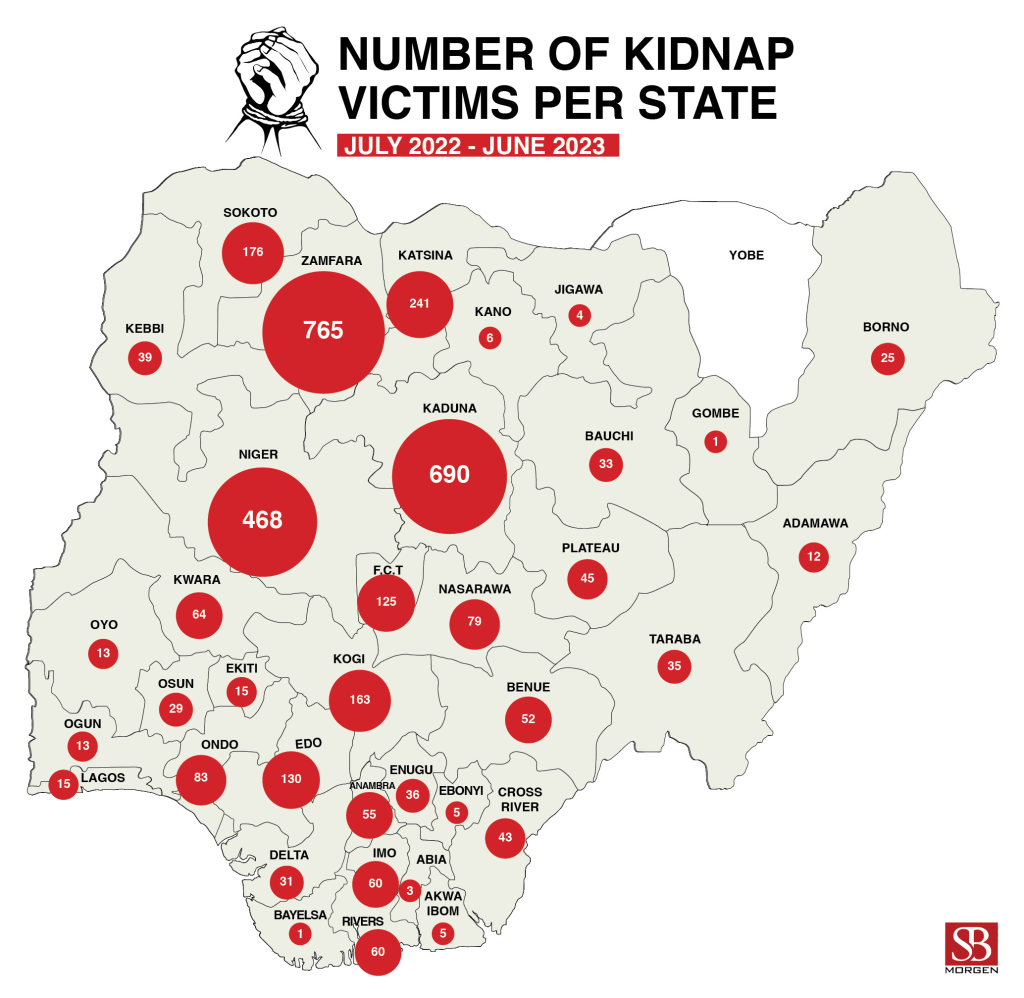
The attack also raises questions about the cost of insecurity to state finances. After every major kidnapping, governments deploy tactical teams, launch search operations, negotiate, and in some cases, pay ransoms. All of these carry financial implications, diverting resources away from development projects into crisis response. Kebbi state, like many others in the North West, relies heavily on federal allocations to fund its budget. Unexpected security expenditures leave even less room for investment in infrastructure, healthcare, or agricultural support. Over time, this undermines the state’s capacity to provide services, further eroding public trust.
Investor confidence is another casualty of insecurity. States battling banditry often struggle to attract private investment, even in sectors where they have natural advantages. Kebbi, for example, has significant potential in rice production, livestock, and cross-border trade. But investors are wary of placing capital in environments where workers cannot safely commute, where logistics risk disruption, and where kidnapping remains a persistent threat. The abduction in Maga reinforces the perception of northern Nigeria as a high-risk zone for business operations, pushing private capital toward safer states or even outside the country entirely.
The ripple effects of insecurity are also felt in the agricultural sector. Danko/Wasagu local government area has a predominantly farming population. Violence, even when not directly targeting farmers, reduces the number of workable hours, decreases access to farmlands, and disrupts market routes. Nigeria is already battling food inflation—driven in part by insecurity in major farming belts. Every attack pushes food prices higher by limiting supply, squeezing household incomes and weakening purchasing power. The economic shock from a school abduction therefore extends into household budgets and national inflation trends.
Beyond the macroeconomics, there is the question of social capital—the networks of trust and cooperation that underpin local economies. Communities thrive when residents feel safe enough to engage in trade, share resources, and plan for the future. Violence destroys these networks by creating fear, suspicion, and displacement. Families relocate when possible, skilled workers leave for safer states, and local businesses lose their customer base. The long-term consequence is a hollowing-out effect, where rural communities lose their most productive members and gradually sink deeper into poverty.
The psychological toll also feeds into economic behaviour. When people are afraid, they save more and spend less, not out of financial planning but out of fear of uncertainty. Reduced consumer spending hurts small businesses, while reduced mobility affects markets and transport workers. Over time, even a single event like the Maga school abduction can slow the economic pulse of an entire local government area.
Nationally, the incident adds to Nigeria’s growing reputation as a country struggling to guarantee basic security. School abductions attract global attention more rapidly than almost any other form of violence because they involve children and education—two pillars of societal progress. International perception matters in the global economy. It shapes investment inflows, affects tourism, influences foreign government advisories, and impacts Nigeria’s ability to negotiate partnerships or attract development funding. Each high-profile abduction makes it harder for the country to project stability and build the economic relationships it needs.
The broader concern is that the economic cost of insecurity is cumulative. Every attack compounds the damage of previous ones. When 25 girls disappear from a school in Kebbi, the country is not only mourning; it is losing productive capacity, future taxpayers, future professionals, and future contributors to GDP. The tragedy is immediate, but the economic wounds last for decades.
As Nigeria grapples with economic reforms aimed at stabilising inflation, boosting revenue, and reviving growth, the Kebbi attack is a reminder that no economic strategy can succeed without addressing insecurity. Monetary policy cannot fix violence. Fiscal reforms cannot replace the human capital lost when children disappear. Investment incentives cannot overcome the fear that grips communities under attack.
The abduction in Maga is not just another headline in Nigeria’s security crisis. It is a warning that unless the country confronts insecurity as a central economic priority, every reform effort will continue to be undermined by instability at the community level. Growth cannot happen where children are taken from their classrooms. Development cannot flourish where parents are afraid to send daughters to school. An economy cannot expand when fear limits movement, investment, and opportunity.
Nigeria must recognise that insecurity is not only a law-and-order challenge—it is one of the most significant economic threats facing the country today. Until that becomes the foundation of policy action, communities like Maga will continue to pay the highest price, and the nation will continue to feel the cost in lost growth, weakened human capital, and a future perpetually delayed.