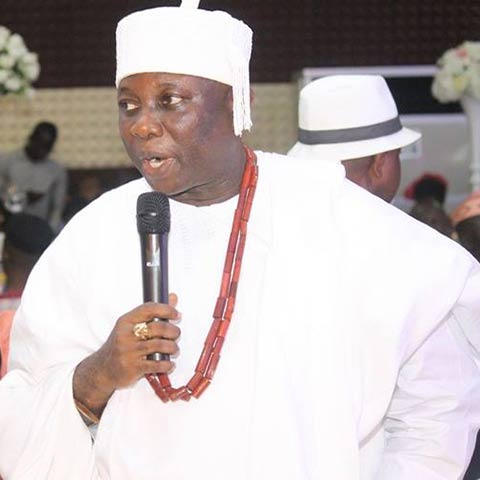

Nigeria, the continent’s most populous nation, is at a critical “crossroads” and faces the risk of squandering its immense potential unless it immediately pursues crucial economic and political reforms. This was the urgent message delivered by the Asagba of Asaba, Professor Epiphany Azinge, at the 28th edition of the Zik Prize in Leadership Awards in Lagos.
Addressing an influential audience of diplomats, business leaders, and policymakers, Professor Azinge lamented that the country’s potential is currently “dimmed by persistent economic, political and leadership challenges.” He stressed that these issues are severely testing the “resilience of our collective will.”
The Asagba pinpointed Nigeria’s continued and dangerous over-reliance on crude oil as a major threat to economic stability, describing it as a “paradox.” He highlighted the disproportionate role of the petroleum sector in the national economy: it contributes a “mere 5.8 per cent to GDP” yet commands 90 per cent of exports and provides 65 per cent of federal revenue. This dependence, he argued, leaves the nation acutely “vulnerable to global oil price volatility.”
To reclaim economic stability, the monarch called for a “renaissance of ethical, effective and inclusive leadership” dedicated to aggressive diversification. This effort must include massive investment in gas, renewable energy, agro-industrial hubs, and digital technology. Crucially, he emphasised the full implementation of the African Continental Free Trade Area (AfCFTA) as a path to unlocking new global markets.
Beyond economics, Professor Azinge asserted that Nigeria must “evolve from transactional to transformational leadership.” This evolution, he argued, requires fundamental governance reforms, starting with constitutional amendments to devolve more powers to the states. Strengthening anti-corruption frameworks and deliberately creating space for youth leadership are also non-negotiable steps towards a more robust democracy.
In a plea for national healing, he stressed the importance of deliberate inclusion, particularly the need for South-East reintegration. This demands “equitable appointments, infrastructural viability and robust dialogue.”
Further necessary reforms touched on the social sector, where he called for enhanced funding for healthcare, deep educational reform, and a complete overhaul of security systems, including the adoption of community policing and modern AI-driven security technologies.
The Zik Prize in Leadership Awards, organised by the Public Policy Research and Analysis Centre (PRAC), honours individuals who exemplify excellence in public service and governance, echoing the ideals of the late Dr. Nnamdi Azikiwe, Nigeria’s first president—popularly known as the “Zik of Africa.” Professor Azinge stated the ceremony was more than an award; it was a commitment to the values of Pan-Africanism, intellectual rigour, and nation-building.
“Zik was not just a leader, he was a philosopher-king whose Pan-African vision transcended borders,” he said.
Among the notable recipients at the 2025 ceremony, the governors of Enugu and Osun States, Dr. Peter Mbah and Senator Ademola Adeleke, were recognised for good governance.
Representing Governor Mbah, the Secretary to the Enugu State Government, Professor Chidiebere Onyia, asserted that the award was “an empirical recognition showing that good governance built on transparency, traceability, and accountability truly brings change.” Governor Mbah was specifically spotlighted for his work in transforming Enugu State within just 24 months.
Governor Adeleke, represented by his deputy, Kola Adewusi, dedicated the accolade to the people of Osun State, stressing the importance of service and “creative progress.” He used the moment to challenge his political peers, asking, “We in the political class—what are we doing to be celebrated as these icons?”
The First Lady of Kwara State, Ambassador Professor Olufolake Abdulrazaq, was honoured for humanitarian leadership. Highlighting her initiatives, she noted, “For me, humanitarian service is about ensuring that no child is left behind, giving women and youth hope.” She cited the Ajike Peoples Support Centre’s role in equipping over 15,000 women and youth with skills, noting that the recognition “strengthens our resolve to do even more.”
In the business and professional categories, awards went to Dame Winifred Akpani, founder and CEO of Northwest Petroleum and Gas Ltd, and Mr. Bolaji Balogun, CEO of Chapel Hills Denham. Dame Akpani expressed her commitment to continue serving with “integrity,” while Balogun noted the rare privilege of receiving an award his late father had also once received.
The event also paid a solemn tribute to the former PRAC Board Chairman, the late Professor Jubril Aminu, a former Education and Petroleum Minister, who was honoured posthumously.
Ultimately, the consensus from the leadership summit was clear: Nigeria possesses the talent and resources to thrive, but it must shed the old habits of oil dependence and transactional politics. The call for reform is now framed as a fundamental requirement to ensure the nation’s future prosperity.