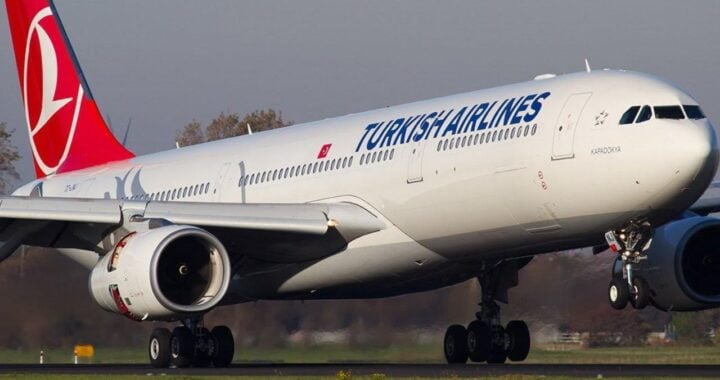

Turkish Airlines has reported a strong start to 2026, carrying 7.6 million passengers in January as the carrier recorded growth in traffic, capacity and cargo operations.
In a statement detailing its monthly traffic results, the airline said the figures reflect sustained demand across both its domestic and international networks.
“Our January performance demonstrates the continued confidence of passengers in our network and service quality. We remain focused on expanding capacity in line with growing global travel demand.”
Passenger capacity, measured in Available Seat Kilometres, increased by 10 per cent year-on-year to 23.7 billion in January 2026, compared to 21.5 billion in the same period last year. The airline attributed the rise to deliberate investments in fleet expansion and route development.
“The growth underscores our ongoing investment in fleet expansion and network development to better connect the world through Istanbul,” the statement added.
Seat occupancy remained strong during the month, with the airline posting an overall load factor of 84 per cent. International routes recorded a load factor of 83.7 per cent, while domestic services performed even higher at 87.5 per cent.
“The solid load factors across both domestic and international routes highlight the strength of demand in our home market and across our global operations,” the airline noted.
A standout feature of the January performance was the increase in international-to-international transit passengers, a core element of the airline’s hub strategy centred on Istanbul. Transit traffic rose by 10.8 per cent, climbing from 2.8 million in January 2025 to 3.1 million in January 2026.
“This growth further reinforces Istanbul’s role as a key global hub and validates our strategy of connecting continents through efficient transfer operations,” the airline said.
Cargo and mail operations also posted notable gains. The airline reported an 18.8 per cent year-on-year increase in cargo volumes, reaching 178,300 tonnes in January. It described cargo as “a strategic growth area that continues to support global trade flows and supply chain resilience,” adding that demand for air freight and e-commerce logistics contributed to the expansion.
As part of its growth drive, Turkish Airlines expanded its fleet to 522 aircraft by the end of January 2026.
“Our expanding fleet enables us to support network growth, improve operational flexibility and deliver a better travel experience for our customers,” the statement stressed.