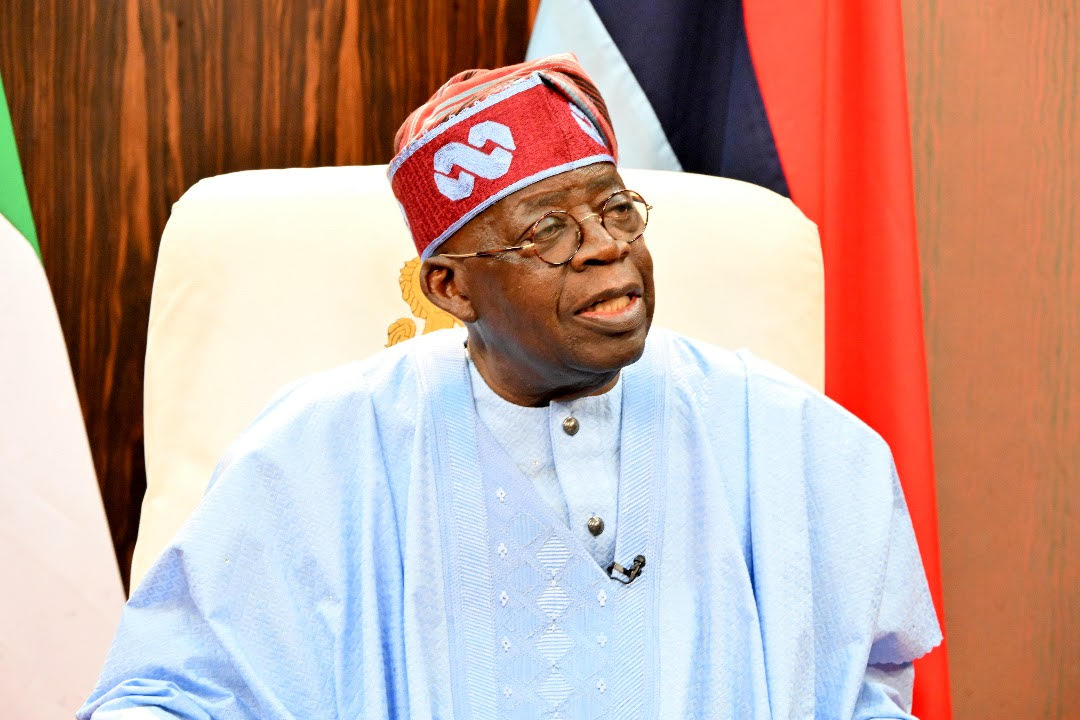

President Bola Tinubu’s request for the National Assembly’s approval of a ₦1.15 trillion domestic borrowing plan to plug the 2025 budget deficit underscores the persistent fiscal pressures confronting Nigeria’s economy. The move, while expected within the framework of ongoing deficit financing, raises questions about the sustainability of the country’s rising debt profile, the limited scope for revenue expansion, and the potential macroeconomic implications for inflation, interest rates, and private sector credit.
The president’s appeal came after lawmakers expanded the 2025 budget to ₦59.9 trillion, exceeding the executive’s original proposal of ₦54.74 trillion. The upward revision, largely attributed to constituency projects, additional sectoral allocations, and inflationary adjustments, created a deficit of about ₦14 trillion. With ₦12.95 trillion already approved for borrowing, the new request seeks to cover the residual funding gap of roughly ₦1.15 trillion. Under Section 44 of the Fiscal Responsibility Act of 2007, any increase in borrowing requires parliamentary approval, making the president’s letter to the Senate a procedural necessity.
At the surface level, the additional borrowing seems modest when viewed against Nigeria’s overall budget size. However, in a fiscal environment characterised by declining oil revenues, weak non-oil tax mobilisation, and mounting debt service costs, even small increments carry significant implications. Nigeria’s debt service-to-revenue ratio remains among the highest in the developing world, and with domestic debt accounting for roughly two-thirds of the total public debt stock, further expansion of local borrowing could intensify pressure on the financial system.
From an economic standpoint, borrowing domestically to finance the deficit may have mixed consequences. On the one hand, it allows the government to raise funds more quickly without the exchange rate risks associated with foreign loans. On the other hand, it risks crowding out private investment, as increased government demand for credit could push up domestic interest rates. This would make borrowing more expensive for businesses already struggling under high operational costs and limited access to affordable finance.
The timing of this request is also telling. It follows recent legislative approval for $2.35 billion in external borrowing and the issuance of a $500 million debut sovereign sukuk in the international capital market. Combined, these efforts reflect the government’s reliance on both domestic and foreign debt to sustain budget implementation amid widening fiscal gaps. The sukuk, in particular, is aimed at funding infrastructure projects and diversifying the country’s financing options, but it also adds to the overall debt burden that future administrations will have to manage.
The fiscal situation is further complicated by the erosion of real revenue due to inflation and exchange rate volatility. The continued depreciation of the naira and the persistence of double-digit inflation have reduced the real value of government revenue, particularly from oil exports, while increasing the cost of debt servicing. As the government borrows more in naira, it must also contend with higher yields on government securities, as investors demand compensation for inflation risk.
Critically, the increasing reliance on borrowing underscores the slow progress in domestic revenue mobilisation. Efforts to expand the tax base through digital economy taxation, value-added tax (VAT) reforms, and the removal of certain subsidies have yielded limited fiscal space. Non-oil revenues have improved marginally but remain inadequate relative to expenditure growth. The Tinubu administration’s reforms, including the recent creation of the Tax Ombudsman’s Office and proposed fiscal policy measures to improve compliance, may strengthen medium-term prospects, but short-term revenue performance remains constrained.
The economic impact of sustained borrowing extends beyond fiscal arithmetic. High public debt can influence investor confidence and the perception of sovereign risk. Nigeria’s credit rating outlook has remained under watch, with rating agencies cautioning against unchecked deficit financing and inconsistent foreign exchange policies. Continued reliance on debt rather than revenue-led fiscal consolidation could lead to higher borrowing costs, not only for the government but also for subnational entities and private firms.
However, supporters of the borrowing plan argue that in a period of low growth and revenue shortfall, government borrowing is necessary to maintain public investment and social spending. Capital expenditure, in particular, is seen as critical to supporting economic recovery and addressing Nigeria’s infrastructure deficit, which continues to constrain productivity and private sector competitiveness. The challenge, therefore, lies in ensuring that borrowed funds are directed toward productive investments rather than recurrent expenditure or politically motivated allocations.
In the longer term, fiscal sustainability will depend on whether Nigeria can strike a balance between revenue generation and prudent borrowing. The 2025 budget, already stretched by social spending commitments, infrastructure priorities, and debt service obligations, reflects the broader tension between economic stabilisation and political realities. The administration’s economic team has repeatedly emphasised fiscal discipline, but the widening deficit indicates that achieving such a balance remains difficult amid competing pressures from inflation, social unrest, and demands for subsidy relief.
As the National Assembly considers the president’s latest request, the broader economic context cannot be ignored. The decision will test the government’s ability to manage its debt responsibly while sustaining critical public spending. If properly managed, the borrowing could provide short-term fiscal relief and maintain public investment momentum. However, without corresponding improvements in revenue generation, fiscal efficiency, and debt transparency, Nigeria risks deepening its structural fiscal vulnerabilities, with lasting implications for growth, inflation, and economic stability.