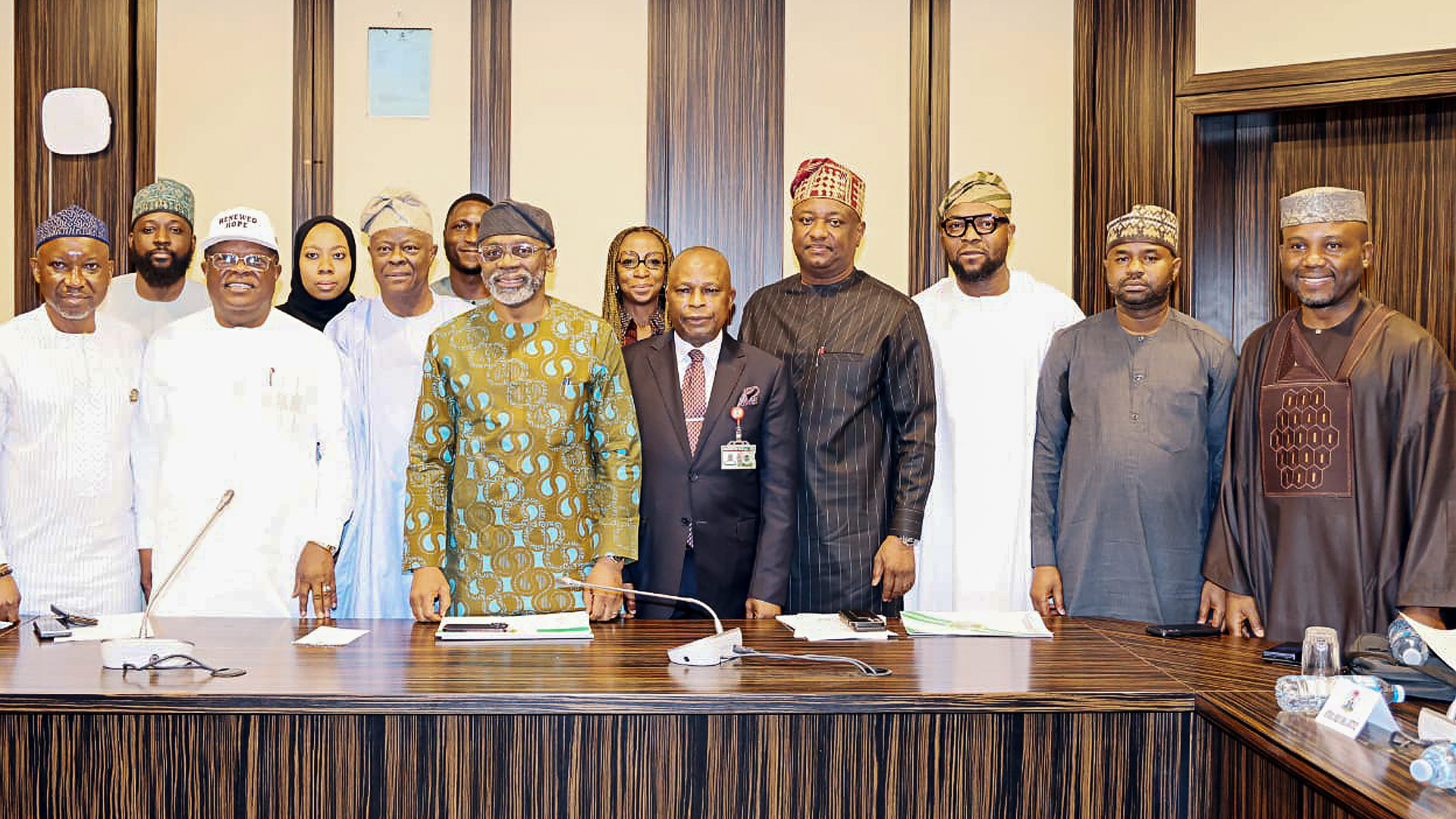

President Bola Tinubu has inaugurated an 11-member committee to drive the incorporation of the proposed Grid Asset Management Company Limited (GAMCO), a new federal vehicle aimed at addressing transmission bottlenecks and unlocking stranded electricity generation in Nigeria. The move follows Federal Executive Council approval for the initiative earlier this week.
The committee, chaired by Chief of Staff Femi Gbajabiamila, was inaugurated at the State House in Abuja on Friday as part of the administration’s wider power sector reform push. According to the presidency, GAMCO is expected to serve as a government-owned commercial platform focused on improving grid management and expanding transmission evacuation capacity.
Speaking at the inauguration on behalf of the President, Gbajabiamila described the initiative as a major intervention in the electricity sector. “The proposed establishment of GAMCO is one of the revolutionary steps taken by Mr President and this administration in the all-important power sector,” he said. “We are here for the inauguration of the Committee on Grid Asset Management Company (GAMCO), which is basically to optimise and revolutionise power generation, and in particular, the grid and transmission sector.”
The committee has been tasked with reviewing the legal, regulatory and institutional frameworks governing electricity generation, transmission, distribution and market operations. It will also assess how the proposed GAMCO structure fits into the Electricity Reform Laws 2025 and the ongoing unbundling arrangements in the sector, especially around asset ownership, management and regulatory oversight.
A major part of the review will focus on the assets of the Niger Delta Power Holding Company and the National Integrated Power Project, particularly the Omotosho, Olorunsogo and Ihovbor plants, which have been selected for the pilot phase. Combined, the three plants have installed capacity of about 1,775 megawatts, and the government says the intervention is intended to recover at least 1,600 megawatts of stranded electricity within 18 to 24 months.
The pilot will also include plans for a new high-capacity transmission line along the Benin-Lagos corridor, a key route for supplying electricity to Ogun and Lagos, two of Nigeria’s biggest industrial hubs. Officials say the project could improve grid stability, raise industrial productivity and create a model for similar interventions nationwide.