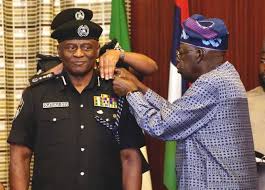

In a significant leadership transition for Nigeria’s primary law enforcement agency, President Bola Ahmed Tinubu on Wednesday, February 25, 2026, decorated Mr. Tunji Disu with the rank of Acting Inspector-General of Police (IGP). The ceremony, held at the State House in Abuja, formally marks Disu’s elevation as the 23rd head of the Nigeria Police Force, following the sudden resignation of his predecessor, Kayode Egbetokun, on Tuesday.
The administrative and structural consequence of this appointment is a shift in the police hierarchy under the Police Act 2020. While Disu has assumed immediate command, his position remains in an acting capacity pending a formal meeting of the Nigeria Police Council and subsequent confirmation by the Senate. President Tinubu’s choice of Disu a decorated officer known for his tenure leading the Rapid Response Squad (RRS) and the Intelligence Response Team (IRT) signals an administrative preference for officers with proven track records in high-pressure urban policing and intelligence.
Analytically, the transition was marked by an uncharacteristically emotional tone. Speaking to journalists after the decoration, Disu admitted the appointment was a surprise that brought him “almost to tears,” noting that the President’s detailed knowledge of his career achievements felt like both a reward and a profound challenge. The new IGP identified several immediate operational pillars for his tenure, including a commitment to ending the era of impunity by enforcing strict adherence to human rights protocols. He also pledged to implement a zero-tolerance regime toward corruption and emphasized a strategic focus on community-led policing, asserting that the force can never succeed without the cooperation of the public.
The impact on “National Security and Officer Morale” is a vital dimension of Disu’s inaugural address. Facing a landscape of mandatory insurgency and persistent internal security threats, the Acting IGP emphasized that his first priority would be the welfare of his officers. By channeling the morale of a workforce he described as hardworking, Disu aims to optimize performance through motivation rather than just mandate. This welfare-centric approach is viewed by analysts as an attempt to stabilize the force following the abrupt exit of the previous IGP for personal family reasons.
Furthermore, the appointment of Tunji Disu is seen as a tactical move to address the morality and thought of the rank and file. His background in intelligence suggests a likely pivot toward more data-driven and proactive policing strategies. As the Senate prepares to consider his nomination, the focus will be on how quickly Disu can translate his zero-tolerance rhetoric into visible reforms that curb the excesses of the force while effectively tackling the nation’s security challenges.
The long-term outlook for the Nigeria Police Force under Disu’s leadership depends on his ability to maintain the momentum shown by the President while navigating the complex politics of the Police Council. For now, his decoration marks a new regime in Abuja one that promises to balance aggressive anti-insurgency efforts with a renewed respect for the rights of the Nigerian citizenry.