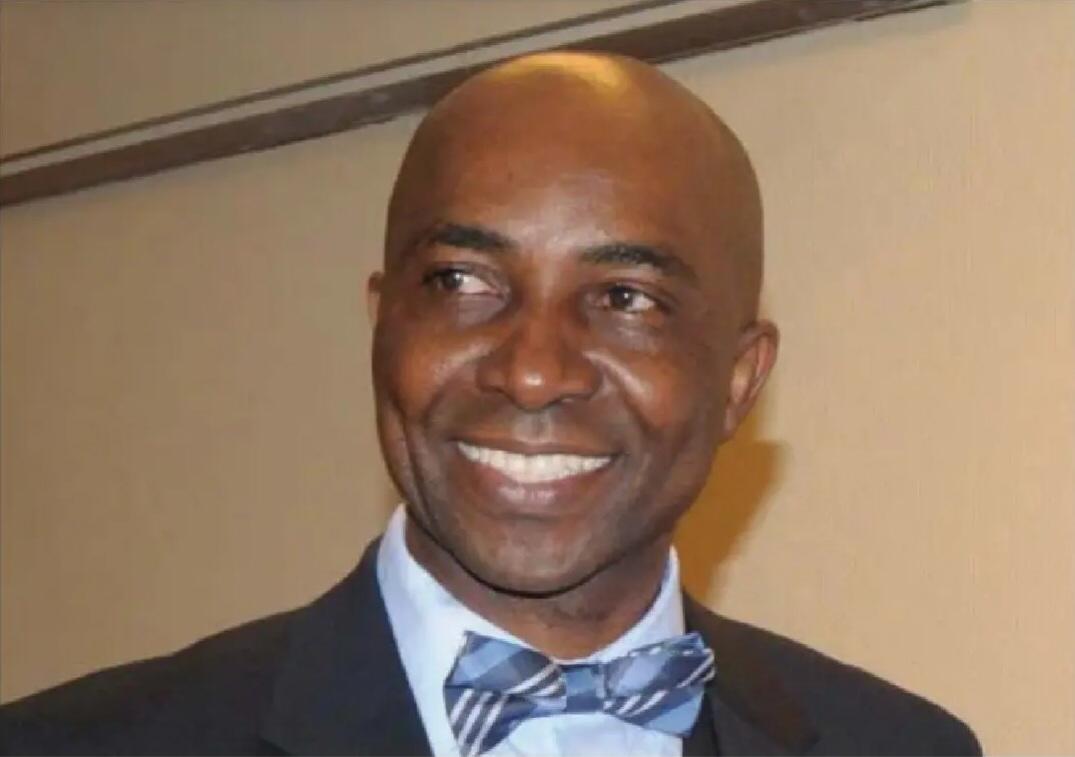

President Bola Tinubu has appointed Dr John Nwabueze as Nigeria’s first Tax Ombudsman under the newly enacted Joint Revenue Board of Nigeria (Establishment) Act, 2025, marking a major step in the administration’s broader push to reform the country’s complex and often contentious tax system. The appointment, announced by the Presidency on Tuesday, is seen as part of Tinubu’s effort to deepen transparency, accountability, and efficiency in tax administration, a crucial plank of his economic recovery agenda.
Dr Nwabueze, who hails from Oshimili South Local Government Area of Delta State, brings over two decades of experience spanning the public and private sectors. He previously served as Managing Partner at a leading tax advisory firm, Technical Adviser to the Senate Committees on Finance and the Federal Capital Territory, and as Adviser to the Chief Economic Adviser to former President Olusegun Obasanjo. He holds a Doctor of Business Administration (Finance) from Walden University, USA, a Master’s in Accounting from Strayer University, Washington D.C., and dual Bachelor’s degrees in Accounting and Mathematics from the University of Jos.
Strengthening trust in Nigeria’s tax framework
The Office of the Tax Ombudsman, established by statute earlier this year, is designed to function as an independent body responsible for receiving, reviewing, and resolving complaints relating to taxation, levies, regulatory fees, customs duties, excise matters, and other fiscal issues. It will serve as an impartial arbiter between taxpayers and revenue authorities, ensuring that disputes are managed efficiently and without bias.
In recent years, Nigeria’s tax system has faced growing criticism from businesses and individuals who accuse tax officials of arbitrary assessments, harassment, and inconsistent application of laws. The establishment of a Tax Ombudsman is therefore seen as a necessary corrective measure, aimed at improving confidence in public revenue institutions such as the Federal Inland Revenue Service (FIRS) and the Nigeria Customs Service (NCS).
According to the Presidency, Dr Nwabueze’s mandate includes protecting taxpayers’ rights and ensuring that complaints are handled “in an impartial, non-adversarial, and transparent manner.” By acting as a bridge between the public and the government’s revenue agencies, the office is expected to help reduce tax-related litigation and encourage voluntary compliance, both of which have direct implications for government revenues and investor confidence.
Economic context and fiscal pressures
Nigeria’s renewed focus on tax reform comes at a time of mounting fiscal strain. With declining oil revenues and growing debt obligations, the government has increasingly turned to domestic revenue mobilisation to fund public expenditure. According to the International Monetary Fund (IMF), Nigeria’s tax-to-GDP ratio, at roughly 10.8 per cent, is among the lowest in sub-Saharan Africa, far below the continental average of 16 per cent.
President Tinubu’s administration has made tax modernisation a central policy objective under its “Renewed Hope” economic agenda. Earlier this year, the government set up a Presidential Committee on Fiscal Policy and Tax Reforms, led by Taiwo Oyedele, to streamline Nigeria’s multiple tax systems, reduce compliance costs, and expand the tax base without stifling growth. The appointment of a Tax Ombudsman complements these reforms by addressing a key obstacle: the lack of public trust in how taxes are assessed, collected, and utilised.
Analysts say an effective ombudsman could significantly improve Nigeria’s investment climate. By ensuring that businesses have a fair and transparent channel to resolve tax disputes, the country could see reduced friction between regulators and the private sector, encouraging both domestic and foreign investment. “A credible dispute resolution mechanism reduces uncertainty for investors,” said an Abuja-based tax consultant. “When companies trust the system, compliance rates rise naturally.”
Building confidence and fairness
The introduction of a Tax Ombudsman also aligns with global best practices. Countries such as South Africa, Canada, and the United Kingdom have similar institutions that operate as independent bodies to protect taxpayers’ rights and mediate between citizens and tax authorities. Nigeria’s adoption of this model suggests an effort to strengthen governance standards and align with international norms.
The office is also expected to play an educational role by improving taxpayers’ awareness of their rights and responsibilities. In a country where informal economic activity accounts for more than half of total output, boosting awareness could have a transformative effect on compliance. Nigeria’s tax debate has been adversarial; citizens see the government as overreaching, while the state sees taxpayers as evaders. The Ombudsman provides an institutional middle ground that can restore balance.
Implications for governance and reform
President Tinubu’s choice of Dr Nwabueze has drawn praise from both industry experts and policymakers, many of whom describe him as a “technocrat with deep institutional knowledge.” His combination of academic credentials and practical policy experience is expected to help him navigate the often-political terrain of fiscal administration.
The Office of the Tax Ombudsman will report periodically to the Joint Revenue Board and the Federal Executive Council, offering policy recommendations to address systemic challenges within Nigeria’s tax ecosystem. Over time, it could also serve as a data-driven accountability mechanism, helping the government identify recurring issues and areas of inefficiency across agencies.
Ultimately, the success of the Tax Ombudsman will depend on its independence and enforcement authority. Without autonomy, experts warn, it risks becoming a symbolic institution.
Towards a fairer fiscal future
For President Tinubu, the establishment of the Tax Ombudsman is another signal of his intent to rebalance Nigeria’s public finances and modernise its institutions. Beyond its immediate administrative function, the office represents a broader shift towards fairness, accountability, and institutional trust, principles that are essential if the government is to increase revenue without deepening public resentment.
If effectively implemented, the move could help stabilise Nigeria’s fiscal position, widen its revenue base, and strengthen the social contract between citizens and the state. As the country continues to navigate a challenging economic landscape, the appointment of Dr John Nwabueze marks not just a bureaucratic milestone but a potential turning point in how Nigeria manages and sustains its tax economy.