


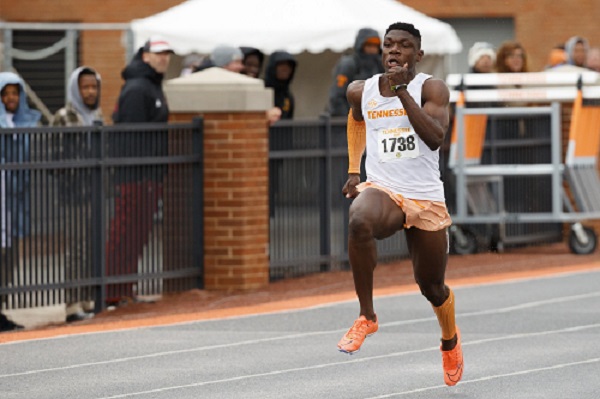

When Florence Ekpo-Umoh defected from a training camp in Germany in 1995, she offered a chilling explanation that would echo through Nigerian sports for the next three decades: she felt her career would end if she stayed in Nigeria. Three decades later, in 2026, sprinter Favour Ashe cited “poor treatment at the 2025 National Sports Festival, substandard tracks in Nigeria, and better opportunities in Qatar” as reasons for his departure. Between these two statements lies a trail of Olympic and World Championship medals won for other nations, a parade of talent lost, and an unbroken record of administrative failure that successive sports federations have proven unable or unwilling to address.
The list of prominent Nigerian athletes who switched allegiance reads like an indictment. Daniel Igali remained in Canada as a refugee during the 1994 Commonwealth Games due to political unrest in Nigeria and won Olympic gold for Canada in 2000. Francis Obikwelu switched to Portugal after alleging unjust treatment from Athletics Federation of Nigeria (AFN) officials during and after the 2000 Sydney Olympics; he won Olympic silver for Portugal in 2004. Glory Alozie went to Spain in 2001, later expressing regret. Femi Ogunode moved to Qatar in 2009 after being inexplicably left off Nigeria’s rosters for the 2007 All-Africa Games and 2008 Olympics; he became a double Asian Games champion. Salwa Eid Naser, born Ebelechukwu Agbapuonwu, switched to Bahrain at age 16 and became World Champion in 2019. Annette Echikunwoke was among 14 athletes barred from Tokyo 2020 due to the AFN’s failure to conduct required drug tests; she won Olympic silver for the USA in 2024. Favour Ofili announced her switch to Turkey in September 2025, citing administrative negligence that cost her two Olympic appearances. Favour Ashe and Sunday Akintan both departed for Qatar in 2026.

Accountability and Incompetence
Peter Akinbo, a sports journalist who spoke with us, raises a fundamental question: are there enforceable provisions within the NOC constitution to address incompetence and administrative failures? He points to the Nigerian Boxing Federation, where three boxers qualified for the last Olympics but only one competed after two were disqualified for doping violations. “Despite the magnitude of that setback, there was no visible disciplinary action against the board,” Akinbo observes. “The same pattern has occurred in other instances—apologies are issued, tenures end, and new boards take over, but no one appears to be held accountable.”
The 14 athletes barred from Tokyo 2020 due to the AFN’s failure to conduct required drug tests stands as perhaps the most egregious single administrative failure in Nigerian sports history. Annette Echikunwoke was among them; she now holds an Olympic silver medal for the United States. China Acheru, another sports journalist, was asked who was held accountable for this failure. His response was blunt: “I’m not aware of any one or people held responsible. I’m also not aware of any consequences for the laxity. It’s Nigeria, isn’t it?”
A Rentier Culture in Sports Administration
Akinbo identifies a deeper structural problem: a rentier mindset that celebrates success once it materialises rather than investing consistently in the systems that produce it. He cites the example of Anthony Joshua, who rose to global prominence in boxing. “When he rose to global prominence, many were eager to claim him. Yet, when he sought opportunities earlier in his development, the domestic structure was not positioned to support him. That pattern—claiming outcomes without building inputs—mirrors broader governance habits.”
In sports administration, Akinbo argues, this translates into gatekeeping rather than ecosystem-building. “When positions are treated as avenues for influence and access control, administrators may focus more on selecting who gets opportunities than on expanding the pool of opportunities itself.” The implication is stark: Nigerian sports leadership has often been more concerned with controlling access to existing opportunities than with creating new ones.
Is Every Departure a National Loss?
Abiodun Adewale offers a necessary counterpoint to the narrative of loss. “Athlete transfers are often framed as a national loss, but the reality is more nuanced,” he argues. “In global sports, athletes frequently switch national allegiance for various reasons—professional growth, opportunity, personal preference, or structural challenges within their home country. Nigeria has also benefited from such movements in football and athletics.”
Adewale cautions against automatically interpreting an athlete’s departure as a direct consequence of incompetence. “In some cases, it may reflect individual choice or career strategy. Even where an athlete was previously regarded as a future star, sports remain unpredictable—potential does not always translate into medals.” He also notes that such exits can create opportunities for emerging talents who might otherwise have remained overlooked.
China Acheru offers a similar perspective when asked about the cumulative medal count Nigeria has forfeited through these switches. “I wouldn’t say we lost those. I’d just say we lost those athletes that in turn, won with their new countries. There’s no guarantee that they’d have won if they remained with Nigeria.”
The Infrastructure Deficit
When asked what investment would be required to upgrade Nigeria’s sporting infrastructure to a standard that retains world-class talent, Acheru is direct: “There has to be a lot of investments running into millions of dollars, but I do not think we have the will to do it. There should be nationwide renovation of stadia, a sports policy in place, and most of all, a return to the grassroots.”
On scouting and development systems to identify teenage talent before foreign federations recruit them, he states: “There’s no organised scouting system in Nigeria. I think it’s just serendipity. And sometimes, individuals holding athletics meets for the younger generation. Nothing organised.”
The Political Takeover of Sports
Acheru places much of the blame on the politicisation of sports administration. “The AFN can’t learn because of those involved. The moment politicians took over the running of sports, it began to die rapidly. Things are not going to change. Rather, they’ll get worse.”
This diagnosis connects to Akinbo’s call for a fundamental shift in mindset. “If athlete development were treated as infrastructure—like roads, power, or education—the mindset would shift from patronage to long-term investment. Funding would prioritise coaching systems, grassroots competitions, sports science, and athlete welfare pipelines.”
The Three-Decade Pattern
Perhaps the most damning observation comes from the simple act of listing the years: 1995, 1998, 2001, 2001, 2009, 2014, 2021, 2025, 2026. Each year, athletes have cited administrative negligence, lack of support, unexplained omissions from rosters, failed drug tests, poor treatment, and substandard facilities. Each year, athletes have left. Each year, medals have been won for other nations. And across three decades, the pattern has not changed.
When asked specifically why the AFN has apparently failed to learn from or correct these recurring issues spanning from 1995 to 2026, Acheru’s answer is definitive: “The AFN can’t learn because of those involved.”
For Glory Alozie, who expressed regret over her switch to Spain, no one from the AFN has ever reached out. “No one has reached out to anyone for all we know,” Acheru says. “No one will reach out to anyone, for all we believe.”
A Question of Will
The question at the heart of Nigeria’s athlete exodus is not whether the country can retain its talent, but whether it wants to. The investments required are known: upgraded facilities, organised scouting, competent administration, athlete welfare programmes. The failures are documented. The consequences are measured in medals won for other nations, in Olympic podiums where Nigerians stand for Germany, Portugal, Canada, Spain, Qatar, Bahrain, the United States, and Turkey.
Peter Akinbo asks whether mechanisms for punishment exist in the NOC constitution, and if so, when they are applied. The evidence suggests they are not. China Acheru confirms that no one was held accountable for the Tokyo 2020 debacle. Abiodun Adewale reminds us that athletes will always seek better opportunities, and that this is a global phenomenon. But the persistence of administrative failure across three decades, across multiple sports, across changing administrations, suggests something more fundamental than individual incompetence.
It suggests a system designed to extract value from success rather than to produce it. A rentier culture, as Akinbo describes it. A political takeover, as Acheru diagnoses it. A failure of accountability that has become so normalised that no one expects consequences, and no one is surprised when none arrive.
The athletes, meanwhile, continue to leave. And the countries that receive them continue to win medals. Nigeria continues to watch, decade after decade, as its exported talent succeeds on the world’s biggest stages. The question is not whether the system can be fixed. The question is whether anyone in a position to fix it believes it needs to be.


