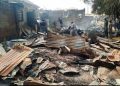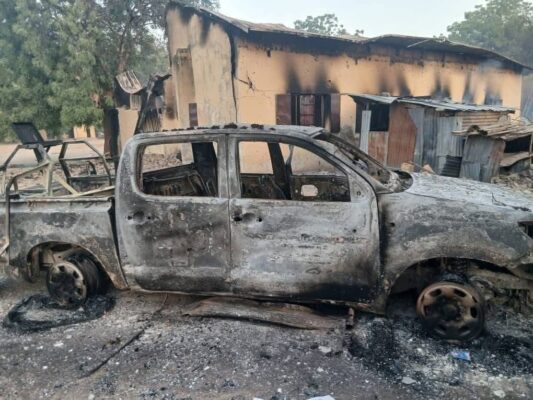

Suspected Islamic State West Africa Province (ISWAP) fighters have killed at least nine soldiers and a civilian imam, and abducted scores of women and children in a coordinated attack on a farming community in Borno State, delivering another devastating blow to agricultural livelihoods and human security in Nigeria’s conflict-ravaged northeast. The assault on a military outpost and surrounding village in the Guzamala Local Government Area underscores the persistent insecurity that constrains economic activity, displaces farming populations, and compounds the humanitarian crisis in a region struggling to recover from nearly two decades of insurgency.
The attackers, arriving in multiple gun trucks and on motorcycles, overwhelmed a military position before moving into the nearby village, where they abducted an unknown number of women and children and killed the local imam. Security sources confirmed that nine soldiers were killed in the initial assault, with reinforcements later repelling the attackers and pursuing them toward their enclaves. The incident marks one of the most significant attacks on military personnel and civilians in recent months, highlighting ISWAP’s continued operational capacity despite sustained counter-insurgency efforts.
Agricultural Devastation and Food Security
For Nigeria’s economy, each such attack compounds the cumulative damage inflicted on the agricultural sector, which remains the backbone of livelihoods in the northeast. Borno State, once a significant producer of sorghum, millet, maize, and groundnuts, has seen agricultural output plummet as farmers abandon their lands due to persistent insecurity. The Lake Chad Basin, a historically productive agricultural zone straddling Nigeria, Niger, Chad, and Cameroon, has become a epicentre of violence, disrupting cross-border trade and regional food systems.
The abduction of women and children carries particularly severe economic consequences. In rural agrarian societies, women play critical roles in planting, harvesting, processing, and marketing agricultural produce. Their removal from communities disrupts household economies, reduces agricultural output, and creates long-term dependency on humanitarian assistance. Children abducted may be subjected to forced labour, indoctrination, or use as combatants, permanently severing their contributions to future economic productivity.
The attack also disrupts the upcoming farming season, which typically begins with land preparation in March and April. Farmers in affected areas face impossible choices: risk returning to their fields and encountering insurgents, or abandon their livelihoods and join the growing population of internally displaced persons (IDPs) in camps around Maiduguri and other towns. Each farmer who chooses displacement represents lost agricultural output, reduced food availability, and increased pressure on already strained humanitarian resources.
Military and Fiscal Implications
The loss of nine soldiers in a single engagement carries both immediate operational consequences and longer-term fiscal implications. Each fallen soldier represents an investment in training, equipment, and support that is lost, requiring replacement and retraining that imposes costs on the defence budget. The attack also raises questions about force protection, intelligence gathering, and the adequacy of military resources deployed across the vast and difficult terrain of the northeast.
Nigeria’s defence expenditure has increased substantially in recent years, with the 2026 budget allocating significant resources to the military and security agencies. However, the persistent ability of insurgent groups to mount large-scale attacks suggests that simply increasing spending may be insufficient without corresponding improvements in strategy, intelligence, and civil-military coordination. The economic cost of insecurity extends far beyond direct military expenditure to encompass lost economic activity, displaced populations, and foregone investment across the region.
The attack also carries implications for Nigeria’s relations with neighbouring countries and international partners. The Lake Chad Basin Commission, comprising Nigeria, Niger, Chad, Cameroon, and Benin, has coordinated counter-insurgency efforts through the Multinational Joint Task Force (MNJTF). However, cross-border coordination remains challenging, and insurgent groups exploit porous borders to regroup, resupply, and launch attacks. The recent withdrawal of some international partners from counter-insurgency support further complicates regional efforts.
Humanitarian and Development Costs
The abduction of women and children adds to the already staggering humanitarian toll of the insurgency. According to the International Organization for Migration (IOM), over 2 million people remain displaced across the northeast, with women and children comprising the majority of displaced populations. Each new attack generates additional displacement, stretching already inadequate humanitarian resources and complicating efforts to deliver education, healthcare, and livelihood support.
The psychological impact on affected communities also carries economic consequences. Trauma, grief, and persistent fear reduce productivity, impair decision-making, and undermine the social cohesion essential for economic recovery. Children who witness violence or lose parents face long-term developmental challenges that affect their future earning potential and contributions to the economy.
The destruction of infrastructure, including schools, health centres, and markets, compounds the economic damage. Rebuilding these facilities requires substantial investment that diverts resources from development priorities elsewhere. The opportunity cost of rebuilding in conflict-affected areas is measured in foregone investments in infrastructure, education, and healthcare in more stable regions.
Path Forward
The Guzamala attack demonstrates that despite territorial gains against insurgent groups, the underlying conditions that fuel conflict—poverty, marginalisation, weak governance, and lack of economic opportunity—remain largely unaddressed. Sustainable peace requires not only military operations but comprehensive strategies that provide alternative livelihoods, strengthen local governance, and rebuild the social fabric of affected communities.
For Nigeria’s economy, the cost of continued insecurity in the northeast is measured in billions of naira in lost agricultural output, millions of displaced persons requiring humanitarian support, and countless lives disrupted or destroyed. Each attack like the one in Guzamala deepens the economic hole from which the region must eventually climb, making eventual recovery more difficult and more expensive. The imperative for effective, comprehensive, and sustainable solutions has never been more urgent.