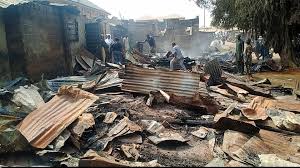

A midnight fire gutted the Maganda Road Wood Market in Kano State early Monday, destroying goods, vehicles and heavy machinery worth millions of naira and leaving hundreds of traders counting heavy losses. The blaze started around 3:00 a.m. in the wood section before spreading across the road to the metals cluster, consuming large portions of the market by the time traders and residents arrived.
More than 50 business premises were affected, with thousands of traders operating in the market. Engineer Abdulwahab Ilori, who lost his workshop, lamented the destruction of lathes, welding equipment and drilling machines valued at millions of naira. He also reported that several auto spare parts shops were burnt, including a newly delivered car valued at about N14 million. Cars brought for repairs were similarly damaged.
The Kano State Fire Service has yet to ascertain the full extent of the losses or determine the exact cause of the incident. Trader Nura Umar noted that all were at home when the fire started at night, leaving no immediate explanation for how it ignited. In the aftermath, affected traders appealed to the government and wealthy individuals for assistance, as many have lost their primary livelihoods.
From an economic standpoint, the destruction hits a critical node in Kano’s informal commercial network. The Maganda Road market serves as a hub for wood, metals and auto spare parts, supplying construction activities and repair services across northern Nigeria. The loss of heavy machinery, in particular, may disrupt local fabrication and maintenance work, with ripple effects on employment and small‑scale manufacturing.
The incident also highlights persistent gaps in fire‑safety infrastructure and emergency response systems. While the fire service eventually arrived, the speed of the blaze and the timing in the early morning hours suggest that preventive measures, such as improved night monitoring and fire‑resistant storage protocols, may need to be strengthened. For traders operating without comprehensive insurance, the disaster represents a severe shock to their working capital and future earning capacity.