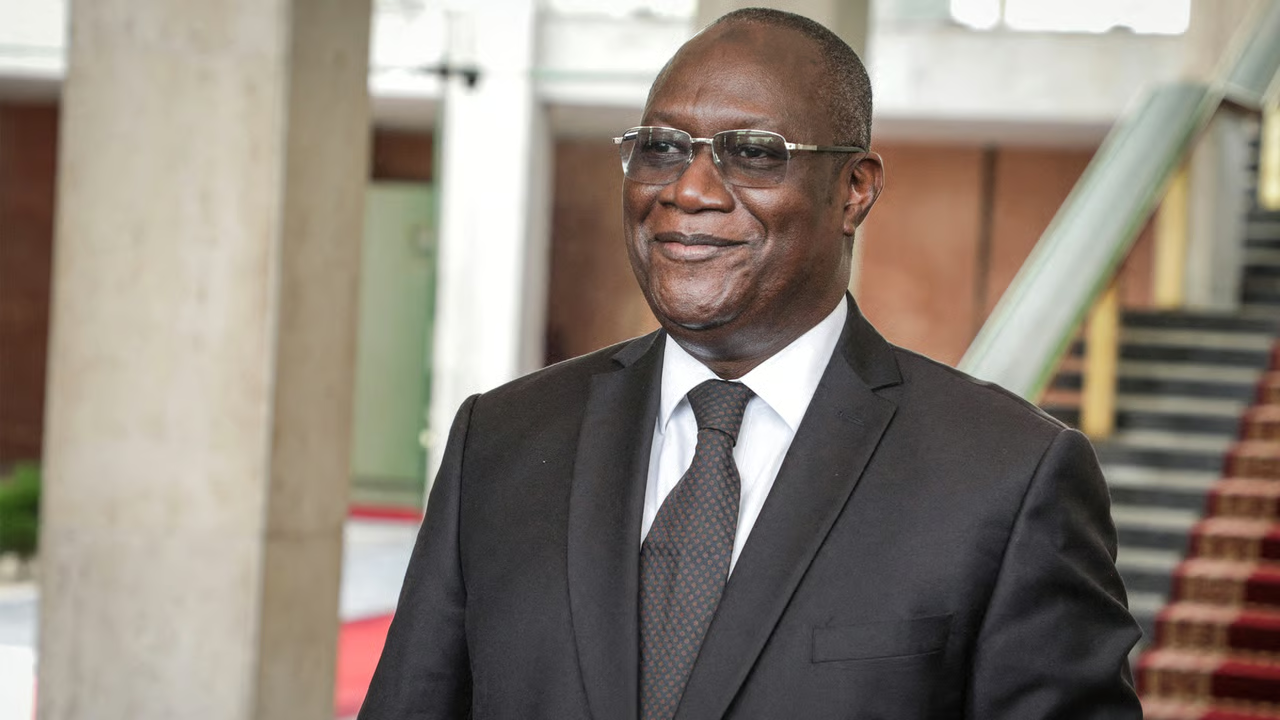

Téné Birahima Ouattara, the younger brother of President Alassane Ouattara, is widely expected to assume the presidency of Côte d’Ivoire’s National Assembly later this month, according to political sources. He is set to succeed Adama Bictogo, marking a significant step in his gradual rise within the ruling Rassemblement des Houphouëtistes pour la Démocratie et la Paix (RHDP) party. The anticipated transition, supported explicitly by the president, reflects broader efforts to consolidate power, ensure political continuity, and shape the legislative agenda ahead of upcoming electoral and economic challenges.
Currently serving as the defence minister, Téné Birahima Ouattara has grown into one of the most influential figures in Ivorian politics. His potential elevation to lead the lower house not only strengthens his personal political stature but also positions him as a key actor in legislative decision-making, granting the president’s inner circle tighter control over the country’s law-making processes. Analysts note that the move signals strategic succession planning within the ruling party, aimed at ensuring institutional stability while reinforcing the Ouattara family’s political influence.
The context of this leadership change is critical. Following President Ouattara’s recent re-election, the RHDP has embarked on a period of institutional reshaping, consolidating key positions across executive and legislative branches. Bictogo, a longstanding ally of the president, is expected to step aside as part of an internal reorganisation rather than a rupture, signalling continuity within the party while mitigating potential factional tensions. By positioning Téné Birahima at the helm of the National Assembly, the RHDP appears intent on securing a legislative partner that can expedite government priorities, including economic reform programmes, fiscal policy implementation, and investment legislation.
The economic implications of Téné Birahima’s rise are notable. Côte d’Ivoire remains one of West Africa’s fastest-growing economies, driven by cocoa exports, mining, and a nascent digital economy, but it faces persistent challenges, including infrastructure deficits, public debt pressures, and the need for improved governance to attract foreign investment. A National Assembly aligned closely with the executive is likely to smooth legislative approval of reforms designed to improve the business climate, secure foreign capital inflows, and manage debt sustainability. Investors and international partners often view political continuity and institutional cohesion as signals of reduced policy risk, which can positively influence sovereign credit assessments, capital markets, and foreign direct investment.
However, the consolidation of power within a single family network raises questions about political inclusivity and long-term governance. While centralised control can enhance policy efficiency in the short term, critics warn that excessive concentration may hinder debate, weaken checks and balances, and limit broader political participation. For a country still navigating social and economic inequality, maintaining confidence in democratic institutions will be crucial to sustaining investor trust and public support.
Historically, the Ouattara family has maintained a strong presence in government since Alassane Ouattara first assumed the presidency in 2011, helping to stabilise Côte d’Ivoire after years of political turbulence. The family’s influence extends into economic policymaking, security oversight, and regional diplomacy, giving the president and his inner circle considerable leverage in steering both domestic and foreign policy agendas. Téné Birahima’s ascent to legislative leadership effectively formalises this influence within the parliamentary framework, providing continuity across the executive-legislative interface.
From a legislative perspective, the change could accelerate the passage of key bills. Priority areas for the Ouattara administration include public sector reform, infrastructure financing, energy sector regulation, and investment codes that align with the government’s economic diversification strategy. A National Assembly led by a trusted ally of the president can facilitate the adoption of measures aimed at boosting economic growth, improving fiscal management, and reinforcing the country’s position as a regional hub for trade and finance.
The timing of Téné Birahima’s expected promotion is also strategic. Côte d’Ivoire faces upcoming economic challenges, including managing debt service obligations, sustaining cocoa production amid global price fluctuations, and addressing rising expectations for job creation and social development. Consolidated legislative support could be instrumental in implementing reforms to attract foreign investment, expand public-private partnerships, and modernise critical sectors such as energy, transport, and telecommunications.
In conclusion, Téné Birahima Ouattara’s anticipated elevation to president of the National Assembly is more than a personal career milestone; it reflects a calculated effort by President Ouattara and the RHDP to secure institutional continuity, reinforce political stability, and align the legislature with executive priorities. Economically, this alignment could improve policy predictability, accelerate structural reforms, and enhance investor confidence, all of which are vital for sustaining Côte d’Ivoire’s growth trajectory. At the same time, the concentration of power within the president’s family underscores the ongoing challenge of balancing effective governance with inclusivity, transparency, and long-term democratic resilience.