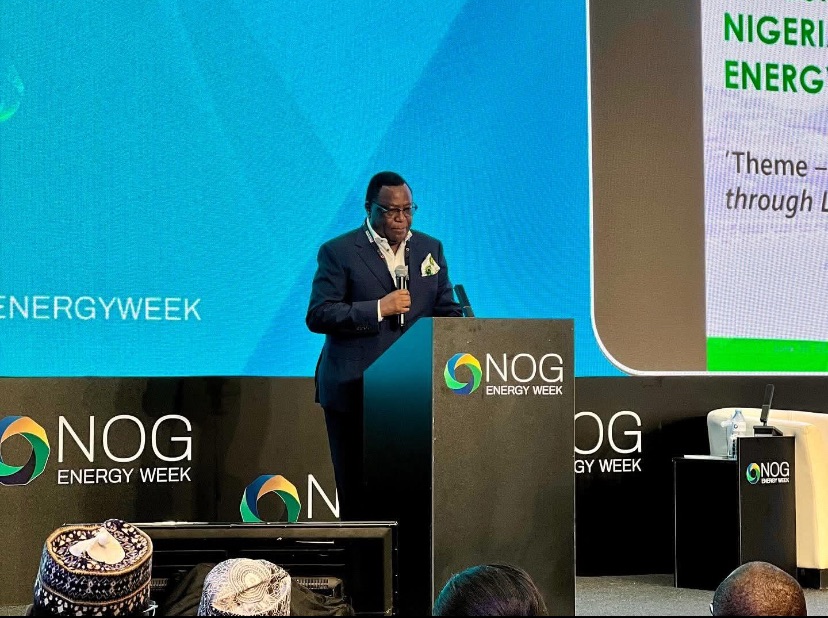

The Nigerian Content Development and Monitoring Board (NCDMB) has announced new measures aimed at ensuring that only qualified Nigerian companies receive oil and gas contracts. The move is part of a wider effort to strengthen local content, promote fairness, and stop companies without real capacity from acting as middlemen.
The announcement was made by the Executive Secretary of the NCDMB, Felix Ogbe, during the opening of the 2026 Nigeria Oil and Gas (NOG) Energy Week in Abuja. Ogbe was represented at the event by the Board’s Director of Capacity Building, Abayomi Bamidele.
According to Ogbe, the new initiative is being carried out in partnership with the Nigerian Upstream Petroleum Regulatory Commission (NUPRC), the Nigerian Petroleum Exchange (NipeX), the Petroleum Technology Association of Nigeria (PETAN), the Oil Producers Trade Section (OPTS), and other key industry stakeholders. The reforms also support the Presidential Directive on Local Content Compliance.
A major part of the new policy is a nationwide capacity verification exercise that will begin in the third quarter of 2026. Instead of relying on documents, presentations, or online submissions, officials will physically inspect company facilities to confirm that businesses have the equipment, workforce, and technical ability to deliver oil and gas projects.
Ogbe explained that this process will ensure contracts are awarded only to companies with proven capacity. He said the era of winning contracts through attractive proposals without the ability to execute the work is coming to an end.
He noted that many companies currently secure contracts and later hand them over to other firms that actually have the skills and equipment to carry out the work. According to him, this practice has prevented capable indigenous manufacturers and service providers from benefiting directly from industry opportunities despite investing heavily in their facilities.
The NCDMB believes the new verification exercise will create a more transparent and fair system where businesses that genuinely possess the required expertise receive contracts directly.
Another important reform is the introduction of a single contractor grading system for the oil and gas industry. At present, different regulatory agencies classify contractors using separate standards, which often leads to conflicting ratings for the same company.
Under the new arrangement, the NCDMB, NUPRC, NipeX, and other industry partners will adopt one unified five-level grading system. This will provide consistency across the sector and make it easier for companies to understand their classification.
The Board also believes the nationwide audit will provide government agencies and investors with accurate information about Nigeria’s industrial capabilities. The findings will help identify sectors where local companies are already strong and areas where more investment and support are needed.
The reforms come as Nigeria prepares for several major deep-water oil projects expected to increase business activities across the petroleum industry. Ogbe said it is important to know which Nigerian companies have the capacity to participate in these projects so they can benefit from the opportunities.
He reaffirmed the Board’s commitment to increasing Nigerian participation in the oil and gas sector. According to him, local content has improved significantly from less than five percent before the Nigerian Oil and Gas Industry Content Development Act was introduced to about 61 percent today.
Despite this progress, Ogbe acknowledged that many local manufacturers still face challenges such as limited patronage, lack of modern technology, and difficulty accessing finance. He stressed that businesses will only continue investing in expansion if they are confident they will receive enough contracts.
The NCDMB expressed confidence that the new reforms will improve transparency, encourage greater participation by indigenous companies, and ensure that qualified Nigerian firms play a leading role in the country’s future oil and gas development.