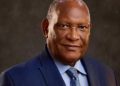

President Bola Tinubu’s nomination of Taiwo Oyedele as Minister of State for Finance represents a strategic consolidation of the administration’s fiscal reform momentum, positioning the architect of Nigeria’s most ambitious tax overhaul in recent history at the heart of economic policy implementation. The appointment, which requires Senate confirmation, elevates a technocrat whose Presidential Committee on Fiscal Policy and Tax Reforms has fundamentally reshaped discourse around revenue generation, compliance simplification, and the investment climate.
Oyedele’s trajectory from committee chair to ministerial nominee carries profound implications for the business community and multilateral partners monitoring Nigeria’s reform credentials. His committee’s outputs—including the proposed harmonisation of multiple taxes, streamlining of compliance procedures, and emphasis on digital revenue collection—have been widely embraced by the organised private sector as necessary correctives to a historically fragmented and opaque fiscal landscape. By placing the reforms’ chief architect in a line ministry role, Tinubu signals that the administration intends not merely to propose changes but to drive their administrative embedding within the federal bureaucracy.
The 50-year-old economist and accountant brings four decades of private sector rigour to public service, having spent 22 years at PwC, ultimately serving as Africa Tax Leader. His academic appointments at Babcock University and Lagos Business School suggest a practitioner committed to bridging theoretical frameworks with operational realities—a combination particularly valuable as Nigeria navigates the delicate balance between expanding the tax base and avoiding overburdening formal sector enterprises. His educational foundation at Yaba College of Technology and Oxford Brookes University, supplemented by executive programmes at leading global institutions, provides a profile calibrated for engaging both domestic stakeholders and international investors.
The reshuffle that moves Doris Anite-Uzoka to the Ministry of Budget and National Planning—her third portfolio in this administration—reflects the President’s effort to match technical expertise with institutional requirements. Anite-Uzoka’s experience across multiple dossiers may prove valuable in ensuring coherence between revenue projections and expenditure planning, particularly as the government pursues fiscal consolidation targets. However, the spotlight inevitably falls on Oyedele, whose confirmation would place him at the nexus of policy design and implementation at a moment when state governments are receiving significantly enhanced revenue allocations under the new VAT sharing formula.
For investors monitoring Nigeria’s sovereign risk profile, Oyedele’s elevation offers reassurance that the tax reform agenda retains presidential backing. His deep familiarity with multinational corporate taxation—honed during his PwC tenure—positions him to address long-standing investor grievances about multiplicity of levies and unpredictable fiscal treatments. If confirmed, his challenge will be translating committee recommendations into administrative reality, navigating the federal character principles and vested interests that have historically complicated tax administration reform. The nomination, therefore, represents both an endorsement of technocratic expertise and a test of whether Nigeria’s political economy can accommodate the systemic changes its fiscal architecture requires.