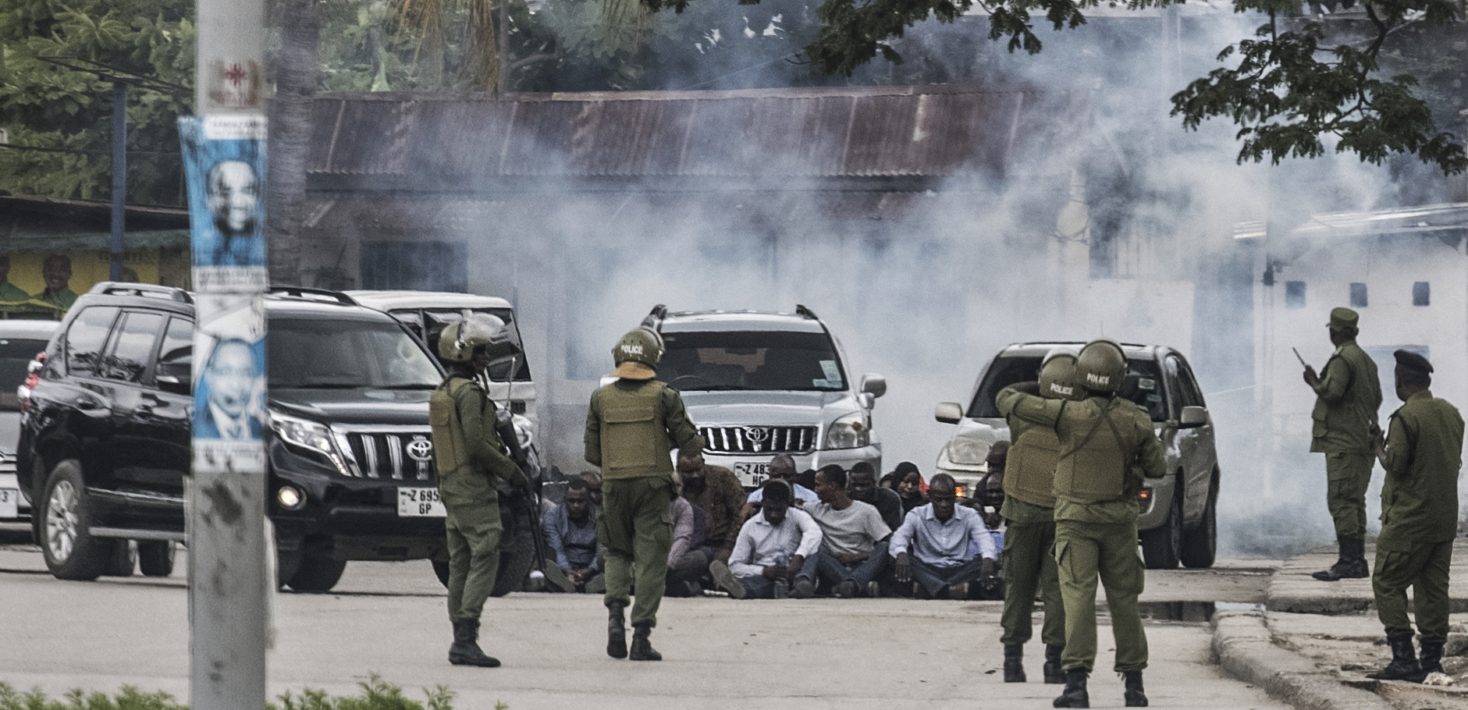

Tanzania’s commercial capital, Dar es Salaam, was placed under a dusk-to-dawn curfew on Wednesday following violent protests over a disputed general election widely expected to secure President Samia Suluhu Hassan another term in office. The disturbances, which spread from Dar es Salaam to the northern city of Arusha, erupted after the electoral commission disqualified two prominent opposition figures, Tundu Lissu of CHADEMA and Luhaga Mpina of ACT-Wazalendo, from contesting. Their exclusion has fuelled accusations that the ruling Chama Cha Mapinduzi (CCM) party is seeking to tighten its political grip ahead of the vote.
The unrest marks one of the most serious outbreaks of violence in Tanzania in recent years. Eyewitnesses reported seeing smoke rising from government buildings and petrol stations set ablaze, as security forces used tear gas and rubber bullets to disperse crowds. Videos circulating online before access was cut showed demonstrators waving the national flag and chanting, “We want our country.” Human rights groups say dozens have been arrested, though authorities have not confirmed any figures.
Internet connectivity across Tanzania dropped sharply on Wednesday afternoon, according to global monitoring organisation NetBlocks, which said access to major social media platforms and messaging services was restricted. Analysts described the move as a deliberate attempt to stifle the flow of information and prevent protest coordination. The government has not publicly acknowledged ordering the shutdown, but the pattern mirrors tactics seen during the 2020 elections, when online access was similarly curtailed during periods of unrest.
President Hassan’s administration has dismissed claims of electoral manipulation and human rights violations. Government spokesperson Gerson Msigwa said the restrictions were necessary to “protect lives and property” and accused “foreign-funded groups” of attempting to destabilise the country. The National Electoral Commission, meanwhile, insisted that the disqualifications were based on procedural grounds, not political interference.
Beyond the immediate political tensions, the turmoil has raised concerns about the economic fallout for one of East Africa’s fastest-growing economies. Dar es Salaam, the country’s main commercial hub and port city, is central to Tanzania’s trade network, handling exports and imports for landlocked neighbours such as Zambia, Rwanda and Burundi. The curfew has disrupted port operations and logistics, prompting fears of delays in cargo shipments and a temporary slowdown in regional trade flows.
Tourism, which accounts for roughly 17 percent of Tanzania’s GDP and employs more than four million people, is also at risk. Travel operators reported a spike in cancellations following images of burning vehicles and heavy police presence circulating before the internet blackout. The unrest could undermine recent efforts by the government to rebuild investor confidence and revive the sector after years of pandemic-related decline.
Tanzania’s shilling weakened slightly in offshore trading following reports of the protests, while yields on government bonds edged up, reflecting investor caution. Economists warn that if unrest persists, it could increase borrowing costs and dampen capital inflows at a time when the country is seeking to attract foreign investment for infrastructure and energy projects.
Political analysts argue that the crisis reflects deeper tensions over Tanzania’s democratic trajectory. President Hassan, who took office in 2021 following the death of John Magufuli, was initially hailed for restoring diplomatic ties and softening the country’s international image. However, critics say her administration has since reverted to authoritarian practices, including restrictions on opposition activities, press freedom and civil society groups.
The exclusion of Lissu, a long-time critic of the government who survived an assassination attempt in 2017, has been particularly controversial. His supporters view his disqualification as an attempt to eliminate any meaningful competition. “This election has been stolen before a single vote is cast,” said a CHADEMA spokesperson in a statement issued before the internet outage.
Regional observers, including the African Union and the East African Community, have expressed concern over the escalating situation. Diplomatic missions from the European Union and the United States have urged restraint, calling on authorities to guarantee transparency and respect citizens’ rights to peaceful assembly.
While the government insists that the situation is “under control,” the protests and accompanying information blackout have left many Tanzanians anxious about the country’s direction. For a nation that has prided itself on stability in a volatile region, the current unrest represents a significant test for President Hassan’s leadership.
As the curfew remains in effect and the internet blackout continues, businesses and citizens alike face uncertainty over how long the restrictions will last, and whether Tanzania’s reputation as one of Africa’s most stable democracies can withstand the current storm.